The Kitchen Fire Is Out — But Is Your Home Safe?
A grease fire on the stove. A forgotten pot. A malfunctioning appliance. Kitchen fires are the most common type of house fire in the United States, and many of them are quickly contained. The fire department arrives, extinguishes the flames, and within an hour everything looks manageable. The obvious question that follows: can you stay in your home tonight?
The answer is not as straightforward as many homeowners expect. Even a small kitchen fire that was contained to one area can produce enough smoke, soot, and toxic residue to make your entire home temporarily unsafe for occupancy. Understanding the risks and getting a professional assessment are essential before making that decision.
Visible Damage Does Not Tell the Whole Story
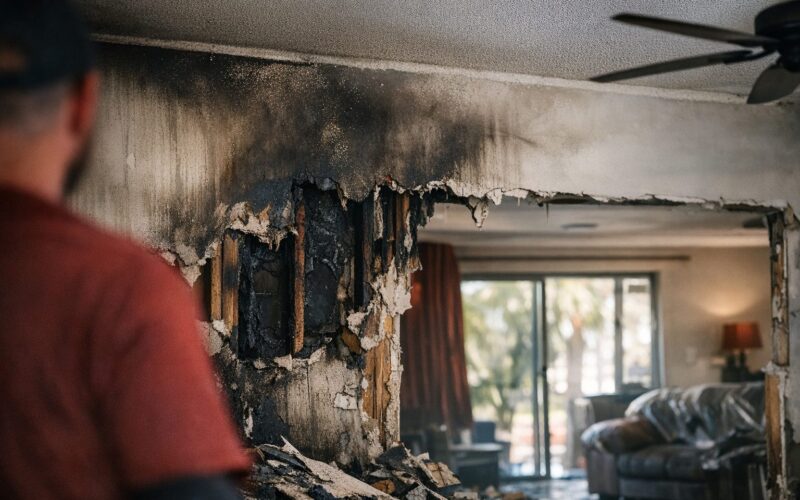
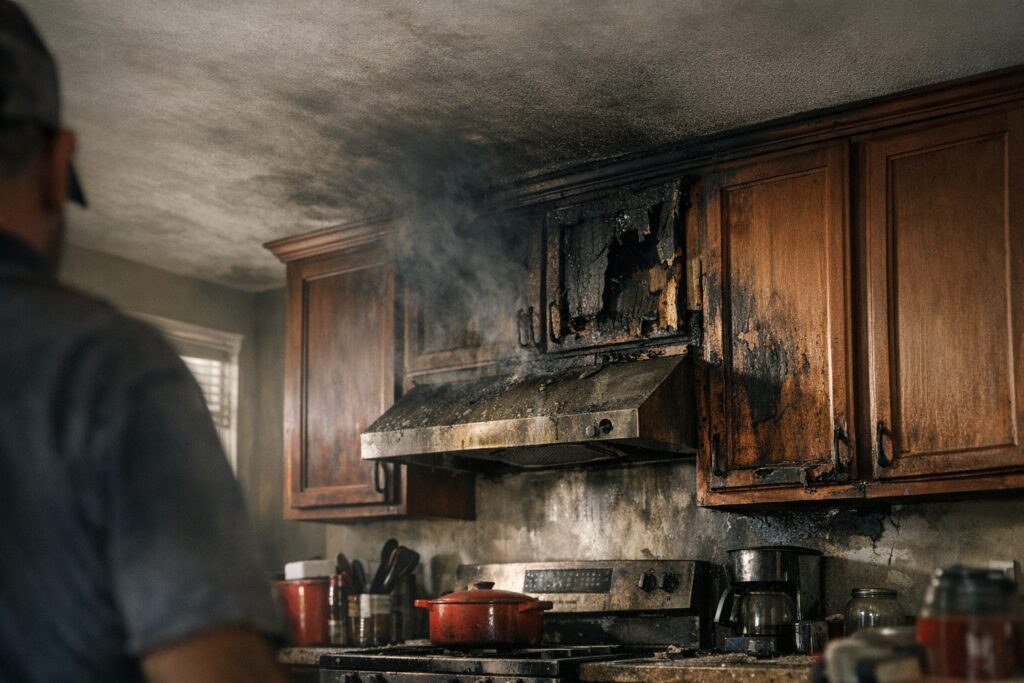
After a kitchen fire, the visible damage is usually limited to the immediate area — charred cabinets, a melted microwave, scorched countertops, and soot-stained walls and ceiling. It is tempting to look at the rest of the house, see no obvious damage, and conclude that only the kitchen needs attention.
However, smoke behaves like a gas. During a fire, heat creates pressure differentials that push smoke throughout the entire structure. In a matter of minutes, smoke travels through doorways, hallways, HVAC ducts, wall cavities, and any gap or opening in the building envelope. A kitchen fire that burned for just five minutes can deposit smoke residue in every room of the house, inside closets, and throughout the attic space.
What Smoke Leaves Behind
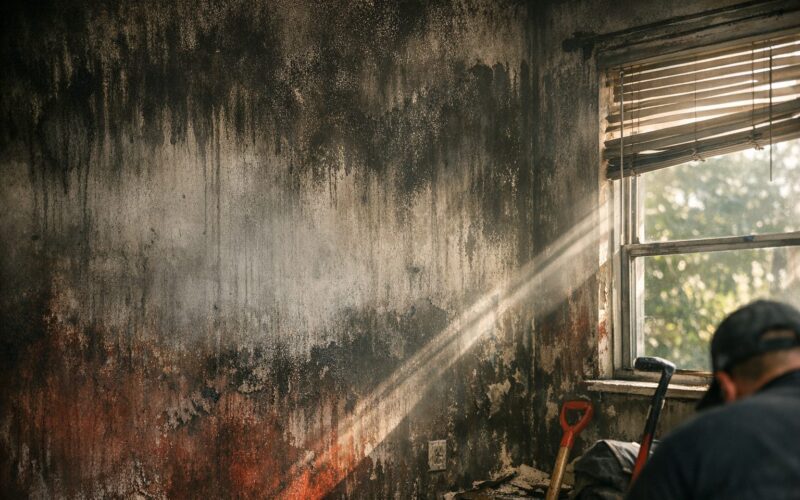
The residue from a kitchen fire is particularly problematic because it typically involves burning grease, plastic, synthetic materials, and food products. This combination produces:
- Protein residue: Nearly invisible but produces a pungent, nauseating odor that intensifies with heat and humidity — a significant problem in Florida
- Synthetic residue: Sticky, black soot from burning plastics and polymers that smears when touched and contains toxic compounds
- Grease residue: Oily film that coats surfaces and attracts additional dirt and particulate matter
- Volatile organic compounds (VOCs): Off-gassing from heated and partially burned materials that degrade indoor air quality
Health Risks of Staying in a Smoke-Damaged Home
The health risks of occupying a smoke-damaged home are real and well documented. Even when you cannot see smoke residue, microscopic particles remain airborne and settle on every surface. Exposure to these contaminants can cause:
- Respiratory irritation: Coughing, wheezing, shortness of breath, and aggravation of asthma or COPD
- Eye and skin irritation: Burning eyes, itchy skin, and rashes from contact with soot and chemical residue
- Headaches and nausea: Common responses to VOC exposure, especially in enclosed spaces
- Long-term risks: Prolonged exposure to combustion byproducts has been linked to cardiovascular and respiratory disease
Children, elderly individuals, and anyone with pre-existing respiratory conditions are particularly vulnerable. If anyone in your household falls into these categories, erring on the side of caution is strongly advised.
Factors That Determine Whether You Can Stay
Several factors determine whether a home is safe for occupancy after a small kitchen fire. A professional fire damage assessment evaluates each of these:
1. Extent of Smoke Spread
Did smoke remain confined to the kitchen, or did it travel throughout the house? If you can smell smoke in bedrooms, bathrooms, or other areas away from the kitchen, the contamination has spread and professional cleaning is needed before the home is safe to occupy.
2. HVAC System Status
Was your air conditioning or heating system running during the fire? If so, the ductwork has almost certainly distributed smoke throughout the entire house. Every supply and return vent becomes a source of contaminated air until the system is professionally cleaned. In Florida, where air conditioning runs nearly year-round, this is almost always a factor.
3. Structural Integrity
Even a small fire can weaken structural components. Heat damages wood framing, melts electrical wiring insulation, and can compromise connections between structural members. A professional inspection ensures the floor, walls, and ceiling in and around the fire area are structurally sound.
4. Electrical Safety
Fire and heat damage to electrical wiring is one of the most dangerous hidden consequences of a kitchen fire. Melted wire insulation, heat-damaged breakers, and compromised connections create a fire-reignition risk that may not be visible without removing drywall and inspecting the wiring.
5. Water Damage from Suppression
If the fire department used water or if a sprinkler system activated, the water damage may be more extensive than the fire damage itself. Standing water, soaked drywall, and saturated insulation create conditions for mold growth within 24 to 48 hours in Florida’s climate.
What a Professional Fire Damage Assessment Includes
Before deciding whether to stay in your home, you should have a professional assessment performed. At WrightWay Emergency Services, our fire damage assessments include:
- Visual inspection of all rooms for smoke, soot, and heat damage
- Air quality evaluation to detect elevated particulate levels and VOCs
- HVAC system inspection to determine if ductwork is contaminated
- Electrical safety check in and around the fire area
- Moisture detection if water was used for fire suppression
- Structural evaluation of fire-affected framing and connections
Based on this assessment, we provide a clear recommendation: safe to occupy with precautions, safe to occupy certain areas, or temporary relocation recommended. We also provide a detailed scope of work for the restoration needed.
If You Can Stay: Precautions to Take
Need restoration help in Southwest Florida right now? WrightWay is on site in under 2 hours from three Florida offices, and we answer with a live human.
If the professional assessment determines your home is safe for limited occupancy during restoration, follow these precautions:
- Do not use the HVAC system until it has been inspected and cleaned — running it circulates contaminants
- Keep windows open when weather permits to improve ventilation (though Florida’s humidity limits this approach)
- Close off the kitchen and any directly affected rooms to limit cross-contamination
- Use portable HEPA air purifiers in bedrooms and living areas
- Avoid cooking until the kitchen is professionally cleaned — heat reactivates smoke odors
- Wash hands frequently and avoid touching soot-stained surfaces
- Launder all bedding and clothing that was exposed to smoke, even if it does not appear dirty
If You Need to Relocate: What to Know
If temporary relocation is recommended, your homeowner’s insurance policy likely covers Additional Living Expenses (ALE). This coverage typically pays for:
- Hotel or rental housing costs
- Restaurant meals above your normal food budget
- Additional transportation costs
- Pet boarding if needed
- Laundry and other essential services
WrightWay works directly with your insurance company to document why relocation is necessary and helps coordinate the claims process so you are not paying out of pocket while your home is being restored.
The Restoration Process for Kitchen Fire Damage
Professional restoration after a kitchen fire typically follows this sequence:
- Emergency board-up and securing if windows or doors were damaged
- Water extraction and drying if suppression water is present
- Soot and smoke residue cleaning throughout all affected areas
- HVAC system cleaning including ductwork, coils, and air handler
- Odor treatment using professional-grade deodorization equipment
- Contents cleaning for salvageable belongings
- Reconstruction of damaged cabinets, countertops, flooring, and drywall through general reconstruction services
Do Not Wait — Get a Professional Assessment Today
If you have had a kitchen fire, no matter how small it seemed, the safest course of action is a professional assessment before deciding to stay in your home. Smoke damage is deceptive — what looks like a minor incident on the surface can conceal serious air quality and safety concerns.
WrightWay Emergency Services responds 24/7 throughout Sarasota, Bradenton, Venice, Fort Myers, Cape Coral, Naples, and all of Southwest Florida. Call us at (941) 379-8669 for a prompt, thorough assessment. Your safety comes first — we will help you make an informed decision about occupancy and guide you through every step of the restoration process.
WrightWay handles every restoration job from emergency response through licensed reconstruction.
One IICRC-certified team, one project manager, one phone call. Available 24/7 across Sarasota, Manatee, Charlotte, Lee, and Collier counties.
Add us as a preferred source and our storm updates, claim guides and restoration answers show up higher when you search.