

Crews Available Now - 24/7
Professional Mold Remediation in Southwest Florida
Florida-licensed mold remediation contractor (MRSR) with IICRC AMRT-certified technicians. We coordinate independent third-party mold assessors for testing, then handle full containment, removal, and remediation - documenting everything for your insurance claim. Serving 9 counties across Southwest Florida.
AVAILABLE NOW - 24/7
Need Mold Remediation?
Mold spreads fast in Florida's humidity. Tell us what you're dealing with - we'll coordinate with an independent licensed mold assessor for testing, then our AMRT-certified crew handles the remediation.
- Florida-licensed remediator (MRSR)
- Independent third-party assessment
- We work with all insurance
Or call directly: (941) 379-8669
Our Process
How Our Mold Remediation Process Works
Florida mold projects have to be handled with more structure than basic cleanup. Assessment, protocol writing, containment, remediation, and final clearance each play a different role in getting the property back to a safe baseline.
Independent Assessment Required
Containment and Negative Air Control
Post-Remediation Clearance Testing
Phase 01
Independent Mold Assessment
Florida law requires that mold assessment and mold remediation be performed by separate licensed companies - protecting you from conflicts of interest. We coordinate with an independent, licensed mold assessor (MRSA) who inspects your property, collects air and surface samples, and sends them to an accredited laboratory for species identification and spore counts.
Phase 02
Assessment Report & Remediation Protocol
The independent assessor delivers a written mold assessment report identifying the species, spore counts, and affected areas. This report establishes the scope of remediation required and provides a baseline for post-clearance testing. WrightWay then prepares a detailed remediation plan and Xactimate estimate based on the assessor's findings.
Phase 03
Containment & Negative Air
Before any mold is disturbed, we seal the affected area with polyethylene sheeting, establish negative air pressure with HEPA-filtered air scrubbers, and create a decontamination corridor. This prevents cross-contamination to clean areas of your home.
Phase 04
Removal & Antimicrobial Treatment
Our AMRT-certified technicians remove contaminated materials following IICRC S520 protocols. Salvageable surfaces are cleaned with HEPA vacuums and treated with EPA-registered antimicrobial agents. Non-salvageable materials (drywall, insulation, carpet) are bagged and disposed of properly.
Phase 05
Post-Remediation Clearance Testing
After remediation, an independent environmental consultant performs clearance testing - verifying that spore counts have returned to normal levels. You receive a written clearance report, and we don't consider the job complete until you have it in hand.
Ready for immediate help?
Speak with a live dispatcher now for response timing, next steps, and a clear plan for mitigation and repair.
Read the transcript
- That musty smell? It is not old house smell.
- It is mold, and in Florida humidity, it spreads fast.
- Then we seal it off with containment and negative air, and remove what is damaged.
- HEPA scrubbers clear the spores. Bye, Musty.
- WrightWay Emergency Services. When things go wrong, we make them Wright. Call (941) 379-8669. 24/7/365 live answer, Tampa to Naples. Florida licence CBC1253650, IICRC Certified Firm.
Why That Musty Smell Is Not Old-House Smell
In Florida humidity, mold does not wait. The smell is usually the first symptom people notice and the last one they act on. This is what proper remediation looks like: sealed off, under negative air, removed, then scrubbed.
- Containment and negative air before anything is disturbed
- Damaged material removed, not painted over
- HEPA scrubbers to clear airborne spores
- Independent clearance testing before we call it done
Call (941) 379-8669
Report a loss online
A live WrightWay dispatcher answers, 24/7/365. Not an answering service.


Our Team
Your Mold Remediation Crew
AMRT-certified professionals who handle containment, removal, and treatment across Southwest Florida.

Jeffrey Vargo
Area Project Manager

Darren Boatwright
Area Project Manager

Louie Agosto
Area Project Manager

Rickey Duby
Area Project Manager

Ryan Hoeberling
Area Project Manager

Alex Hoeberling
Mitigation Technician

Anatoliy Vigil
Mitigation Technician
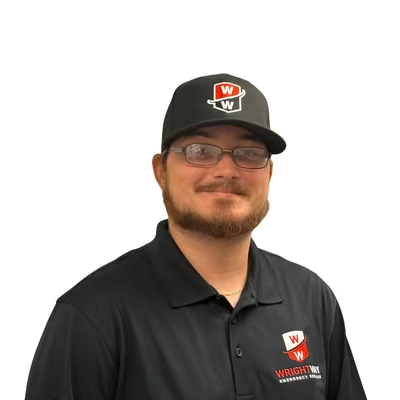
Bailey Antlsperger
Mitigation Technician

Beau Burello
Technician

Joshua Perez
Mitigation Technician

Lindsey Lesniak
Contents Manager

Omar Pimentel
Mitigation Technician
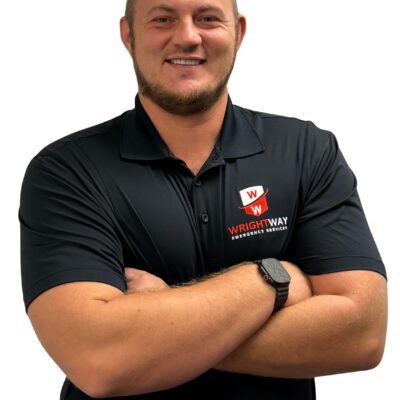
Sean Wisenbarger
Mitigation Technician
Services
Common Causes of Mold in Florida Homes
Florida's year-round humidity makes mold a constant threat. Here are the most common sources we treat.
Post-Water Damage Mold
Mold begins growing within 24–48 hours of a water event. Even professionally dried properties can develop hidden mold if moisture was missed behind walls or under flooring.
Learn MoreAC & HVAC System Mold
Clogged condensate drains, dirty evaporator coils, and ductwork condensation are Florida's #1 mold source. Spores circulate through your entire home via the air handler.
Learn MoreBathroom & Kitchen Mold
Poor ventilation, leaking fixtures, and chronic moisture behind tile create ideal conditions for mold in bathrooms and kitchens - especially behind vanities and under sinks.
Learn MoreAttic & Roof Leak Mold
Roof leaks saturate attic insulation and ceiling joists. In Florida's heat, attic mold can grow for months before you notice staining on ceilings below.
Learn MoreCrawl Space & Foundation Mold
Crawl spaces trap ground moisture against floor joists and subfloor sheathing. Without proper vapor barriers and ventilation, mold colonizes structural wood throughout.
Learn MoreHurricane & Flood Mold
Storm surge and flooding introduce Category 3 contaminated water. Properties not properly dried within 48 hours develop extensive mold requiring full remediation.
Learn MoreBedroom & Closet Mold
HVAC condensation on exterior walls, closet humidity, and furniture-blocked airflow create hidden mold in the rooms where you sleep.
Learn MoreCommercial Mold
Large-scale mold remediation for offices, retail, healthcare, and multi-tenant buildings with compliance documentation and minimal disruption.
Learn MoreWindow & Ceiling Mold
Condensation on windows, failed seals, and AC drip from above feed persistent mold on sills, frames, and ceiling surfaces.
Learn MoreHow We Work
Our Core Values: RESTORE
We do more than restore buildings. We help restore peace of mind, trust, and stability after damage or disaster.
RESTORE Operating Standard
When disaster affects a home or business, the damage is never just structural. Families are displaced, routines are interrupted, tenants need answers, and insurance decisions carry real consequences. At WrightWay Emergency Services, our job is not only to restore property. It is to help restore peace of mind, trust, and stability when people need it most.
RESTORE defines how we operate every day, from the first phone call through mitigation, documentation, reconstruction, and final follow-through. It shapes how we serve homeowners, property managers, condo associations, and insurance partners in the moments when responsiveness, clarity, and care matter most.
24/7 Emergency Response
Insurance-Ready Documentation
One Contractor Start to Finish
RESTORE Model
Each letter highlights the standard our team follows in the field, in communication, and in closeout.
Respectful
We meet customers, teammates, and partners with professionalism and empathy, especially when a loss has disrupted daily life. We listen first, communicate calmly, and treat every home, business, and jobsite with care.
Exude Honesty
We communicate clearly and tell the truth, even when the update is difficult. That means transparent estimates, realistic timelines, and straightforward conversations about scope, cost, and expectations.
Support Others
Emergency work moves fast, and strong outcomes depend on strong teamwork. We back up our teammates, coordinate closely with adjusters and property managers, and step in quickly to solve problems before they grow.
Thoughtfully Care for Customers
Every property we enter represents someone's home, routine, investment, or livelihood. We work with compassion, protect what can be saved, and pay attention to the details that help customers feel secure during recovery.
Optimize Time
In restoration, delays can make damage worse. We respond with urgency, stay organized on site, and focus first on the actions that protect safety, prevent further loss, and move the project toward stability.
Reliable
We do what we say we will do. We show up when promised, stay responsive throughout the process, and follow through until the work is complete and the customer knows where things stand.
Exemplify Excellence
We hold ourselves to high standards in workmanship, documentation, cleanliness, and service. From emergency mitigation to final reconstruction, we aim to deliver work that earns trust long after the job is finished.
Cost & Insurance
What Does Mold Remediation Cost in Florida?
Mold remediation pricing depends on the size of the affected area, how deeply contamination has spread into finishes or framing, and whether containment, HVAC cleaning, demolition, or reconstruction are needed after the remediation work is complete.
Small Area (< 50 sq ft)
$1,500–$4,000
Single room, surface mold, no structural involvement.
Usually limited to one contained area with modest material removal
Moderate (50–200 sq ft)
$4,000–$12,000
Multiple rooms, drywall removal, HVAC cleaning.
Common when contamination has moved beyond one isolated room
Extensive (200+ sq ft)
$12,000–$30,000+
Structural involvement, full containment, reconstruction.
Often includes major demolition, rebuild coordination, and post-clearance scope
What influences your cost
Every loss is priced around contamination level, material impact, and how far the damage has already spread.
- The square footage and number of contained work areas
- Whether drywall, insulation, cabinetry, or flooring must be removed
- How much HVAC cleaning, decontamination, or filtration is required
- Whether an underlying water source or reconstruction scope is still active
- The final clearance and rebuild scope after remediation is complete
Insurance Coverage
How coverage and documentation usually work
What May Be Covered
Many Florida policies cover mold remediation when it results from a covered water loss such as a burst pipe or storm-related intrusion. Mold tied to long-term neglect or deferred maintenance is often excluded.
What WrightWay Documents
We build remediation scope from the independent assessor's report, prepare Xactimate estimating documentation, and maintain containment, removal, and treatment records that help support the claim file.
How We Help With the Claim
Our team documents the water-source connection when one exists, communicates scope clearly, and helps owners avoid getting stuck between the assessor, the carrier, and the reconstruction phase.
Need clarity fast?
Need a real mold scope and remediation estimate? We can help coordinate assessment, explain what the protocol is likely to require, and map out what remediation and repair scope may look like before the project expands.
Google Reviews
Patricia Mastrorilli
7 months ago
We had the best experience with Wrightway! We had a flooding incident from our AC system that seeped into the walls and under the laminate flooring. They were prompt, professional and did a great job drying out and cleaning up everything for us! We also had them do the repairs and we were 100% impressed with their work! Everyone we came in contact with in the office and into our home were respectful and knowledgeable. They worked with us on a great price! We can't say enough about a great experience during a stressful time! A special shout out to Alicia who was great to work with! Thank you all so much!
Verify on Google →Madison Jones
11 months ago
Richie Correa with Wright Way was fantastic. He was punctual, efficient and educated me through the whole process of cleaning and sanitizing our air vents. Answered all my questions and was honest and knowledgeable with over 25 years experience. Highly recommend!
Verify on Google →Russell Titus
5 months ago
Had a great experience with Wrightway. 3 weeks ago my townhouse had major water intrusion, wet drywall, and water everywhere. The HOA called them at 3pm and by 5pm the crew was onsite with dryers and tearing out the wet drywall. The techs wore shoe covers, were very professional, and made sure to cover and drape unexposed areas. Fernando the project lead called me every other day to keep me updated on the dry out and remediation. The had infrared moisture meters and some pretty high tech stuff. Fernando coordinated with the exterior work to fix the leak, and the interior drywall replacement. I have heard horror stories about remediation companies ripping people off, but this is absolutely not the case with Wrightway. They turned a horrible situation into nothing more than a mild inconvenience. 5 stars for everyone I came in contact with. Great job
Verify on Google →
Related Service
Dealing With Water Damage Too? Most mold problems start with an unresolved water source. If your property still has an active leak, roof intrusion, or flooding issue, our water damage team can stabilize the loss fast and reduce the chance of the mold scope spreading further.
Locations
Mold Remediation Near You
Licensed mold contractors available across all 9 counties.
Common Questions
Mold Remediation FAQ
Straight answers on response timing, insurance documentation, and what to expect once emergency mitigation is underway.
Fast response guidance
Insurance-aware answers
Local service expectations
Common signs include musty or earthy odors, visible discoloration on walls or ceilings, peeling paint or wallpaper, chronic respiratory irritation, and a history of water damage or high humidity. However, mold often grows hidden behind walls, under flooring, and inside HVAC systems - professional testing with laboratory analysis is the only way to know for certain.
Yes - and Florida law requires it be performed by a separately licensed mold assessor, not the remediation company. This protects homeowners from conflicts of interest. The independent assessor identifies the species present, measures spore concentrations, and maps the extent of contamination. WrightWay coordinates with licensed mold assessors and can arrange testing as part of your project.
A typical residential mold remediation project takes 3 to 7 days, depending on the extent of contamination and the materials involved. This includes containment setup, removal, antimicrobial treatment, and drying. Post-remediation clearance testing adds 2 to 3 business days for laboratory results. Reconstruction of removed materials (drywall, flooring) is handled separately.
Many Florida policies cover mold remediation when it results from a "covered peril" - such as a burst pipe, appliance failure, or storm damage. Mold from long-term neglect, deferred maintenance, or pre-existing conditions is typically excluded. WrightWay documents the connection between the water source and the mold growth to support your insurance claim.
The EPA recommends professional remediation for mold areas larger than 10 square feet. Disturbing mold without proper containment releases millions of spores into the air, potentially spreading contamination throughout your home and creating a health hazard. Professional remediation requires HEPA filtration, negative air pressure, antimicrobial agents, and proper disposal - equipment and protocols beyond consumer-grade products.
All indoor mold should be addressed, but certain species pose greater health risks. Stachybotrys chartarum ("black mold"), Aspergillus, and Chaetomium are commonly found in Florida water-damaged properties and can cause respiratory problems, allergic reactions, and other health effects. Laboratory testing identifies the specific species present so the appropriate remediation protocol can be applied.
Mold removal implies eliminating all mold, which is impossible - mold spores exist naturally in all indoor and outdoor environments. Mold remediation means returning spore levels to normal, safe concentrations by removing contaminated materials, treating surfaces, and addressing the moisture source. WrightWay follows IICRC S520 remediation protocols and verifies results with post-clearance testing.
Mold will not return if the underlying moisture source is eliminated. WrightWay identifies and addresses the water source as part of every remediation project - whether it's a plumbing leak, roof issue, condensation problem, or inadequate ventilation. We also provide recommendations for humidity control to prevent future growth in Florida's climate.
Florida law requires that post-remediation clearance testing be performed by an independent licensed mold assessor - not the remediation company. After WrightWay completes remediation, the assessor collects new air and surface samples and submits them to an accredited laboratory. We don't consider the job complete until the independent assessor issues a written clearance report confirming spore levels have returned to normal.
Yes. Florida's combination of year-round humidity (averaging 70–80%), warm temperatures, frequent rain, and hurricane exposure creates ideal conditions for mold growth. The Florida DBPR requires separate licensing for mold assessment (MRSA) and mold remediation (MRSR) - WrightWay holds the MRSR remediation license and IICRC AMRT (Applied Microbial Remediation Technician) certifications, and coordinates with independently licensed assessors for testing.

Emergency Response
Need Emergency Restoration?
Our team is standing by 24/7 to help stabilize the property, document the loss, and move the job forward fast.
- 24/7 live dispatch and emergency response
- Insurance-ready documentation and coordination
- Mitigation, contents, and rebuild under one roof
Resources
Mold Resources
Useful reads on inspection, containment, and post-remediation verification.

Mold
July 30, 2026 · 6 min read
Buying a Florida Home with Mold: What to Negotiate
🦠 Did you know mold can be a bargaining chip when buying a Florida home? Don’t let it scare you away! Learn to assess the situation, negotiate repairs, and safeguard your investment. Here's what to do...

Mold
July 26, 2026 · 6 min read
Mold in Your Florida Condo: HOA vs Owner Responsibility
🦠 Did you know mold responsibility in your Florida condo can be a tricky situation? It's all about the source and your HOA's rules. Here's what to know about owner vs. HOA obligations!

Mold
July 21, 2026 · 6 min read
Mold After Hurricane Damage: Why the 48-Hour Window Matters
🦠 Did you know you only have 48 hours after hurricane damage before mold starts to grow in your Florida home? Acting fast is crucial! Here's what to do to protect your space...