

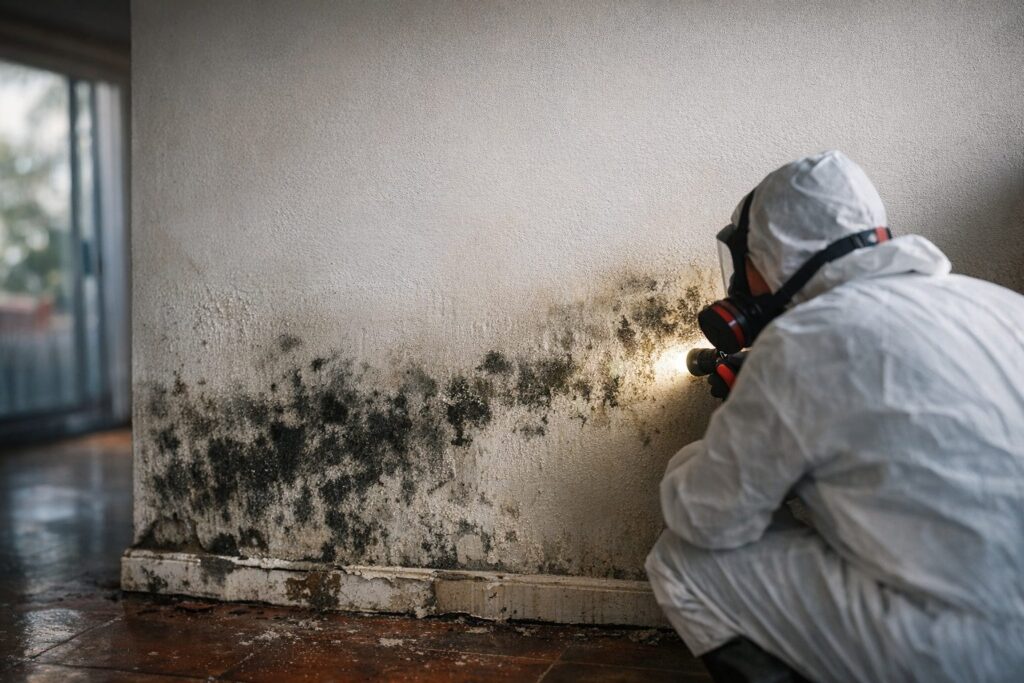
Mold in a Home You Want to Buy: Do Not Panic
You have found your ideal Florida home — the right neighborhood, the right size, the right price. Then the home inspection report comes back with a finding that makes your stomach drop: mold. Your first instinct may be to walk away. But before you do, understand that mold findings during home inspections in Florida are extremely common, and they do not automatically mean you should abandon the deal.
Mold is a fact of life in Florida’s humid climate. The question is not whether a home has ever had mold — most have. The question is how serious the current mold issue is, what is causing it, what it will cost to remediate, and whether the deal can be structured to protect you financially. This guide walks you through evaluating a mold finding and negotiating from a position of knowledge.
Evaluate the Severity
Not all mold findings are created equal. The severity of the mold issue determines whether it is a minor maintenance item, a negotiation point, or a genuine deal breaker.
Minor Mold (Usually Not a Deal Breaker)
- Surface mold on bathroom caulk or grout — common in every Florida home and easily addressed with recaulking
- Small spots of mold on a window frame or sill from condensation — typically resolved by cleaning and improving ventilation
- Minor mold in the garage or on exterior surfaces — normal in Florida’s climate
Moderate Mold (Negotiation Opportunity)
- Mold on drywall in a closet, bathroom, or laundry room covering less than 10 square feet
- Mold in the HVAC system (evaporator coil, drain pan) from maintenance neglect
- Mold in the attic on a limited area of roof sheathing
- Mold associated with a known, repairable moisture source (leaky pipe, failed caulk)
Serious Mold (Proceed with Caution)
- Extensive mold contamination covering large areas or multiple rooms
- Mold identified as Stachybotrys (black mold) or Chaetomium, which indicate chronic water damage
- Mold with no identifiable or easily repairable moisture source
- Structural damage from prolonged moisture and mold exposure
- Mold combined with evidence of previous concealment or cosmetic cover-ups
Get Professional Testing
If the home inspector identifies or suspects mold, the next step is professional mold testing by a licensed mold assessor. This is different from the home inspector’s visual observation. Professional testing provides:
- Air quality sampling: Quantifies the types and concentrations of airborne mold spores inside the home compared to outdoor baseline levels
- Surface sampling: Identifies the specific mold species growing on affected surfaces
- Moisture mapping: Uses moisture meters and thermal imaging to identify all areas of active moisture intrusion — not just the areas with visible mold
- Written report: Provides objective data you can use in negotiations
In Florida, mold assessors and mold remediators must be licensed by the state (Florida Statutes 468.84-468.8424), and the assessor and remediator cannot be the same company on the same project. This separation ensures independent, unbiased assessment.
Get Remediation Estimates
Once you have the mold assessment report, obtain remediation estimates from one or more licensed mold remediation companies. A professional estimate should include:
- Scope of work based on the assessment findings
- Containment and air filtration plan
- Materials to be removed and replaced
- Post-remediation clearance testing
- Itemized pricing
Having a firm remediation cost gives you concrete numbers for negotiation rather than guesses.
Negotiation Strategies
Armed with a mold assessment and remediation estimates, you have several negotiation options. The right approach depends on the severity of the mold, the seller’s motivation, and local market conditions.
Option 1: Request Seller Remediation Before Closing
You can request that the seller hire a licensed mold remediation company to remediate the mold before closing. This is often the strongest position because:
- The mold is fully addressed before you take ownership
- Post-remediation clearance testing must pass before you close
- The seller bears the cost and risk
Important: If you take this route, specify in the addendum that remediation must be performed by a licensed mold remediation company (not a handyman), that the underlying moisture source must be repaired, and that independent post-remediation clearance testing must be performed by a licensed mold assessor. Retain the right to approve the remediation company and review the clearance report before closing.
Option 2: Negotiate a Price Reduction
If you prefer to handle the remediation yourself after closing — perhaps because you want to choose the contractor or manage the scope — negotiate a price reduction equal to or greater than the remediation cost. Add a margin above the estimate (15 to 25 percent) to account for the possibility that remediation reveals additional issues once walls are opened.
Option 3: Request a Closing Credit
A closing credit (seller concession) applied to your closing costs achieves a similar result to a price reduction but is structured differently in the transaction. Your lender may have limits on seller concessions, so confirm with your mortgage broker before requesting this approach.
Option 4: Request an Escrow Holdback
In some transactions, a portion of the seller’s proceeds can be held in escrow until the mold is remediated and cleared. This protects you because the funds are available if the remediation cost exceeds estimates, and the seller is motivated to ensure the work is completed.
What to Include in Your Negotiation Request
Licensed mold remediation with containment, HEPA filtration, and clearance-ready documentation. Get a real price range before anyone starts cutting drywall.
Regardless of which option you choose, your repair addendum or negotiation request should include:
- The specific mold findings from the professional assessment report
- The remediation estimate(s) from licensed companies
- A requirement for the moisture source to be identified and repaired
- A requirement for post-remediation clearance testing by a licensed independent assessor
- Specific standards the work must meet (IICRC S520)
- Your right to review clearance results before closing
- A contingency that allows you to withdraw if clearance fails
Red Flags That Should Make You Walk Away
While most mold situations in Florida are manageable with proper negotiation, certain findings justify walking away from the deal:
- Evidence of concealment: Fresh paint over mold stains, new drywall patches without documentation, or attempts to mask musty odors suggest the seller is hiding a known problem rather than addressing it honestly
- Extensive structural damage: If mold has compromised structural framing, roof sheathing, or subfloor to the point of requiring major reconstruction, the cost and complexity may exceed what is reasonable
- No identifiable moisture source: If the cause of the mold cannot be determined, remediation may fail because the underlying problem will continue
- Seller refuses to negotiate: A seller who will not acknowledge a documented mold problem or refuses reasonable remediation requests is a seller who may have other undisclosed issues
- Recurrence: Evidence that mold has been remediated previously and has returned suggests a chronic, unresolved moisture problem
After Closing: Protecting Your New Home
Whether the seller remediated before closing or you handled it after, take these steps to prevent mold recurrence in your new Florida home:
- Maintain AC at 78 degrees or below and keep indoor humidity under 55 percent
- Service the HVAC system within 30 days of closing
- Inspect the attic, under sinks, and around water-using appliances within the first week
- Address any moisture findings immediately — do not let minor issues become major problems
- Establish a relationship with a local restoration company for future needs
Buying a Home with Mold? WrightWay Can Help
If you are buying a Florida home and the inspection has revealed mold, WrightWay Emergency Services can provide a professional remediation estimate that gives you solid numbers for negotiation. We also perform post-closing remediation for buyers who negotiate credits or price reductions. Our team serves Sarasota, Bradenton, Fort Myers, Cape Coral, Naples, and all of Southwest Florida.
Call us at (941) 379-8669 for a consultation. We will review the mold assessment, provide a clear estimate, and help you make an informed decision about your Florida home purchase.
WrightWay handles every restoration job from emergency response through licensed reconstruction.
One IICRC-certified team, one project manager, one phone call. Available 24/7 across Sarasota, Manatee, Charlotte, Lee, and Collier counties.
Add us as a preferred source and our storm updates, claim guides and restoration answers show up higher when you search.


