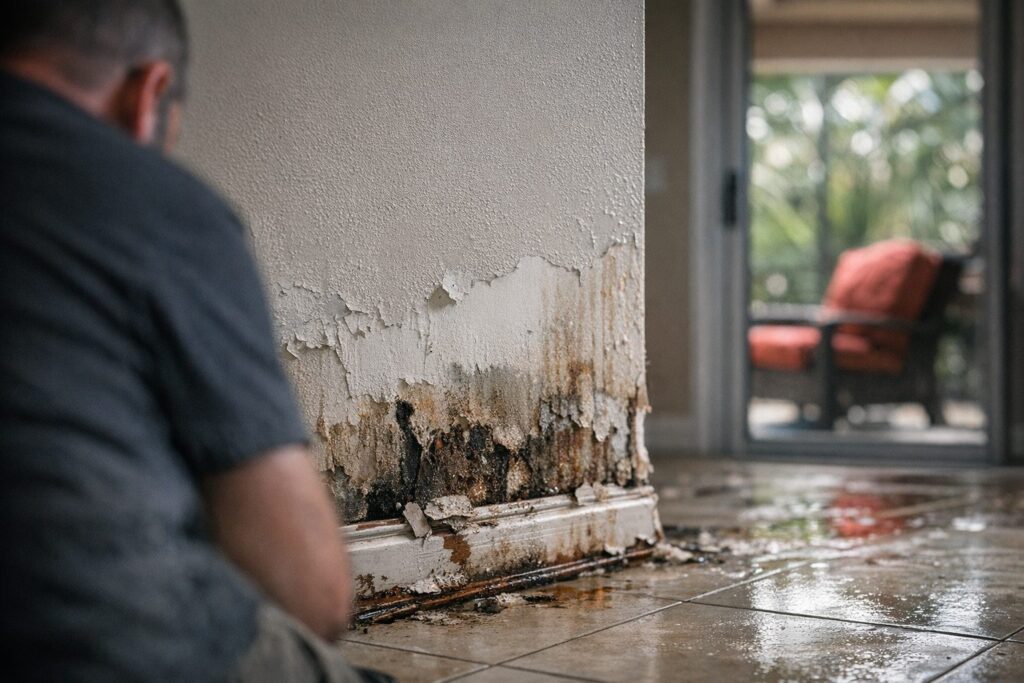
When Water Damage Meets HIPAA: A Unique Restoration Challenge
Water damage in any commercial property is disruptive. Water damage in a medical office is a regulatory crisis. Beyond the standard concerns of structural drying, mold prevention, and business continuity, medical facilities must navigate the strict requirements of the Health Insurance Portability and Accountability Act (HIPAA) throughout every phase of the restoration process.
A pipe burst in a dental office, a roof leak in a physician’s practice, or a flooding event in a specialty clinic does not just damage the building. It potentially compromises protected health information (PHI), contaminates clinical environments, and creates compliance exposures that can result in penalties of up to $1.5 million per violation category per year.
At WrightWay Emergency Services, we work with medical practices, dental offices, outpatient clinics, and healthcare facilities across Southwest Florida. We understand the regulatory landscape and build HIPAA compliance into our restoration process from the first phone call.
HIPAA Concerns During Water Damage Restoration
HIPAA’s Privacy Rule and Security Rule create specific obligations that affect how restoration work is conducted in medical environments:
Physical Records and Paper Charts
Despite the push toward electronic health records (EHR), many medical offices maintain paper records, intake forms, insurance documents, and printed reports that contain PHI. When water damages these records, several HIPAA obligations are triggered:
- Containment: Wet records containing PHI must be secured immediately. They cannot be left in open areas where restoration workers or unauthorized individuals can view them.
- Salvage vs. destruction: Records that can be salvaged must be dried and preserved in a manner that maintains their integrity. Records that cannot be salvaged must be destroyed in compliance with HIPAA destruction standards, not simply thrown in a dumpster.
- Chain of custody: The handling of all PHI-containing materials must be documented, including who accessed them, when, and for what purpose.
- Breach assessment: If PHI was exposed to unauthorized individuals during the water event or restoration, a breach risk assessment under HIPAA’s Breach Notification Rule may be required.
Electronic Systems and Equipment
Water damage to servers, workstations, and electronic medical record systems creates both data loss and security concerns:
- Hard drives and storage media that contained PHI and are damaged beyond repair must be physically destroyed per NIST guidelines, not simply discarded
- Network equipment that was exposed to water may need to be replaced, with proper data migration and security configuration
- Backup verification: Before any damaged equipment is disposed of, verify that all data is recoverable from backups
Restoration Worker Access
Restoration technicians are not healthcare workers and are not covered employees under your HIPAA compliance plan. Their access to areas containing PHI must be managed:
- PHI-containing areas should be cleared of visible patient information before restoration workers enter
- Paper records should be boxed, sealed, and labeled before work begins in record storage areas
- Computer screens should be logged out and monitors turned off or covered
- Restoration companies working in medical environments should have confidentiality agreements in place
Infection Control During Medical Office Restoration
Beyond HIPAA, medical offices must maintain infection control standards during restoration. Water damage introduces contaminants, and demolition generates dust and debris that can compromise clinical spaces.
Clinical Area Separation
If the medical office is attempting to maintain partial operations during restoration, strict separation between the work area and active clinical spaces is essential. This includes:
- Polyethylene barriers with sealed edges between work zones and clinical areas
- Negative air pressure in the work zone to prevent dust and contaminants from migrating to clinical spaces
- HEPA-filtered air scrubbers running continuously in the work zone
- Dedicated entry and exit points for restoration crews that do not pass through clinical areas
Medical Equipment and Supplies
Any medical equipment, pharmaceuticals, or sterile supplies exposed to water or elevated humidity must be evaluated:
- Sterile supplies with compromised packaging must be discarded
- Pharmaceuticals exposed to temperature or humidity excursions may be compromised and should be evaluated by the prescribing authority or pharmacist
- Medical equipment exposed to water must be inspected, cleaned, and recertified by the manufacturer or a qualified biomedical technician before returning to clinical use
Business Continuity for Medical Practices
If water reached walls, flooring seams, or sat overnight, fans alone rarely save the materials. A free moisture inspection tells you exactly what is wet and what it costs to fix.
Medical offices face unique business continuity pressures. Patients depend on access to their healthcare providers, and extended closures can have health consequences beyond the financial impact on the practice.
Temporary Relocation
For practices that cannot maintain operations during restoration, temporary relocation options include:
- Shared space arrangements with colleagues in unaffected offices
- Telehealth services for non-physical appointments
- Temporary office trailers equipped for clinical use
- Phased restoration that allows one section of the office to operate while another is being restored
Patient Communication
HIPAA-compliant communication with patients about the disruption is important. Notify patients about schedule changes, temporary locations, and any impact to their records through secure, approved communication channels. Do not disclose details about the damage that could compromise security of the facility.
Documentation for Insurance and Compliance
Medical office water damage claims require more thorough documentation than standard commercial claims:
- Standard damage documentation (photos, moisture readings, scope of damage)
- Inventory of all PHI-containing materials affected
- Chain of custody logs for all PHI handling during restoration
- Infection control measures implemented and maintained
- Equipment decontamination or replacement records
- Insurance claims documentation including business interruption losses
Choosing a Restoration Company for Medical Facilities
Not every restoration company is equipped to handle medical office restoration. When selecting a provider, ask about:
- Experience with healthcare facility restoration
- Understanding of HIPAA requirements during restoration
- Infection control protocols and ICRA compliance capabilities
- Willingness to sign confidentiality and business associate agreements
- Ability to work during off-hours to minimize disruption to patient care
- Documentation practices that support both insurance claims and compliance audits
Protect Your Practice — Call WrightWay
WrightWay Emergency Services has extensive experience restoring medical offices, dental practices, and healthcare facilities across SW Florida. We understand the intersection of property restoration and regulatory compliance, and we build HIPAA awareness into every project.
For emergency response or to discuss an emergency response program for your medical practice, call (941) 379-8669. We respond 24/7 and we understand what is at stake for your practice, your patients, and your compliance.
WrightWay handles every restoration job from emergency response through licensed reconstruction.
One IICRC-certified team, one project manager, one phone call. Available 24/7 across Sarasota, Manatee, Charlotte, Lee, and Collier counties.
Add us as a preferred source and our storm updates, claim guides and restoration answers show up higher when you search.