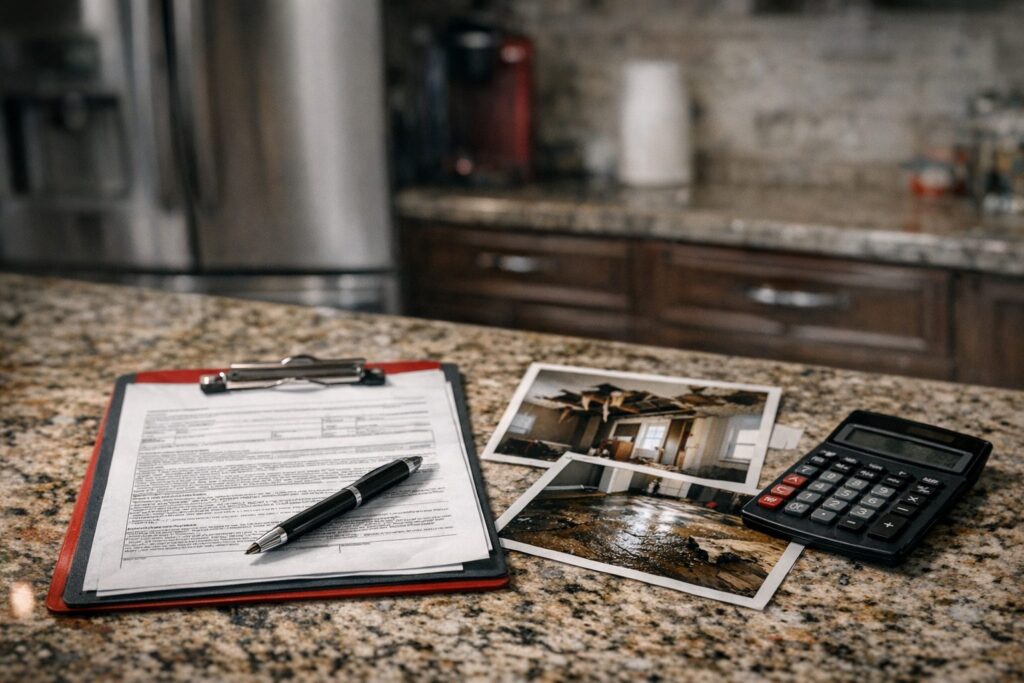
What Does Insurance Non-Renewal Mean?
You open your mail and find a letter from your homeowners insurance company informing you that your policy will not be renewed when it expires. This is different from a cancellation (which terminates your policy mid-term). A non-renewal means the insurer has decided not to continue your coverage at the end of the current policy period.
In Florida’s volatile insurance market, non-renewal notices have become alarmingly common. Thousands of homeowners across the state receive them each year as insurers exit the market, reduce their exposure, or tighten their underwriting criteria. If you have received a non-renewal notice, you are not alone, and you have options.
Why Insurers Non-Renew Policies in Florida
Insurance companies non-renew Florida homeowners policies for a variety of reasons:
- Excessive claims history: If you have filed multiple claims in a short period, insurers may view your property as high-risk
- Roof age or condition: Many Florida insurers will not renew policies on homes with roofs older than 15 to 20 years, regardless of the roof’s actual condition
- Geographic risk: The insurer may be reducing exposure in your area due to hurricane, flood, or sinkhole risk
- Market exit: The insurer is leaving the Florida market entirely or reducing its book of business
- Property condition: Inspection findings reveal maintenance issues, code violations, or hazardous conditions
- Underwriting changes: The company has changed its risk appetite and your property no longer meets their criteria
- Prior claims of certain types: Water damage or mold claims may trigger non-renewal even if the damage was fully repaired
Your Rights Under Florida Law
Florida Statute 627.4133 requires insurers to give you at least 120 days’ notice before the effective date of non-renewal (100 days for certain types of non-renewals). This notice must:
- Be provided in writing
- State the specific reason for the non-renewal
- Inform you of your right to seek coverage elsewhere
If the insurer fails to provide proper notice, you may be entitled to continued coverage until proper notice is given. Review the notice carefully and note the exact date your coverage ends.
Step-by-Step: What to Do After Receiving a Non-Renewal Notice
Step 1: Understand the Reason
Read the non-renewal letter carefully. The stated reason determines your best strategy:
- If the reason is roof age, getting a roof inspection or replacement may resolve the issue with other carriers
- If the reason is claims history, focus on finding a carrier that does not weigh your CLUE report as heavily
- If the reason is market exit, the issue is not your property, and multiple carriers may be competing for your business
Step 2: Contact Your Agent Immediately
Your insurance agent should begin shopping for replacement coverage as soon as you receive the notice. A good agent will:
- Submit applications to multiple carriers simultaneously
- Explore both admitted (regulated) and surplus lines (non-regulated) markets
- Advise you on any property improvements that could improve your insurability
- Explain the implications of different coverage options and deductible structures
Step 3: Address the Underlying Issue
If the non-renewal is related to a correctable condition, fix it:
| Non-Renewal Reason | Potential Solution |
|---|---|
| Roof age (15-20+ years) | Get a roof inspection; if sound, provide the inspection report. If needed, replace the roof. |
| Prior water damage claims | Provide documentation showing professional restoration was completed and no ongoing issues exist |
| Property condition | Address cited deficiencies (tripping hazards, electrical issues, tree trimming) and document the repairs |
| Outdated electrical (aluminum wiring, Federal Pacific panel) | Have a licensed electrician remediate and provide a certificate |
| Missing wind mitigation features | Install hurricane shutters, roof straps, or other mitigation measures and get an updated wind mitigation inspection |
Step 4: Explore All Coverage Options
If the private admitted market will not insure you, additional options include:
Citizens Property Insurance
Citizens is the insurer of last resort for Florida homeowners who cannot find coverage in the private market at or below Citizens’ rates. To qualify:
- You must demonstrate that you cannot obtain comparable private coverage at or below Citizens’ premium
- Your property must meet Citizens’ eligibility requirements (inspection, value limits, etc.)
- You must apply through a licensed agent
Surplus Lines Carriers
Surplus lines (also called excess and surplus, or E&S) insurers operate outside Florida’s rate regulation system. They can offer coverage when admitted carriers will not, but with some differences:
- Rates are not regulated and may be higher
- Policies are not backed by the Florida Insurance Guaranty Association (FIGA) if the carrier becomes insolvent
- Coverage terms may differ from standard policy forms
- They can be a good bridge solution while you address the underlying issue
Federal Programs
- National Flood Insurance Program (NFIP): If flood coverage is the issue, the NFIP provides coverage regardless of your homeowners insurance status
- My Safe Florida Home: This state program provides grants and inspections to help homeowners improve their home’s wind resistance, which can improve insurability
How Claims History Affects Non-Renewal
WrightWay documents every loss to insurance standards, photos, moisture logs, and itemized scopes your adjuster can approve without back-and-forth.
Your CLUE (Comprehensive Loss Underwriting Exchange) report tracks insurance claims on your property for seven years. Multiple claims, especially water damage claims, raise red flags for underwriters. If claims history is driving your non-renewal:
- Obtain a copy of your CLUE report to verify accuracy (you are entitled to one free copy annually from LexisNexis)
- Dispute any inaccurate entries
- Provide restoration documentation showing claims were properly resolved
- Consider self-insuring smaller claims in the future to keep your claims history clean
Do Not Let Coverage Lapse
A lapse in homeowners insurance coverage creates serious problems:
- Your mortgage company will force-place expensive, limited-coverage insurance and charge you for it
- Future insurers will view a coverage gap as a red flag
- You are personally liable for any damage or liability during the gap
- Some carriers will not write a policy on a home with a prior lapse in coverage
Start shopping for replacement coverage immediately upon receiving a non-renewal notice. Do not wait until the last week.
How Proper Restoration Documentation Helps
If a prior claim contributed to your non-renewal, professional restoration documentation can help you find new coverage. When WrightWay Emergency Services restores a property, we provide comprehensive documentation including moisture clearance certificates, mold testing results, photo records, and completion reports. New insurers reviewing your history can see that the prior damage was professionally resolved, which improves your risk profile.
If you need property damage restoration, insurance claims assistance, or documentation to support your insurability, call WrightWay at (941) 379-8669. We serve homeowners across Southwest Florida 24 hours a day, 7 days a week.
WrightWay handles every restoration job from emergency response through licensed reconstruction.
One IICRC-certified team, one project manager, one phone call. Available 24/7 across Sarasota, Manatee, Charlotte, Lee, and Collier counties.
Add us as a preferred source and our storm updates, claim guides and restoration answers show up higher when you search.