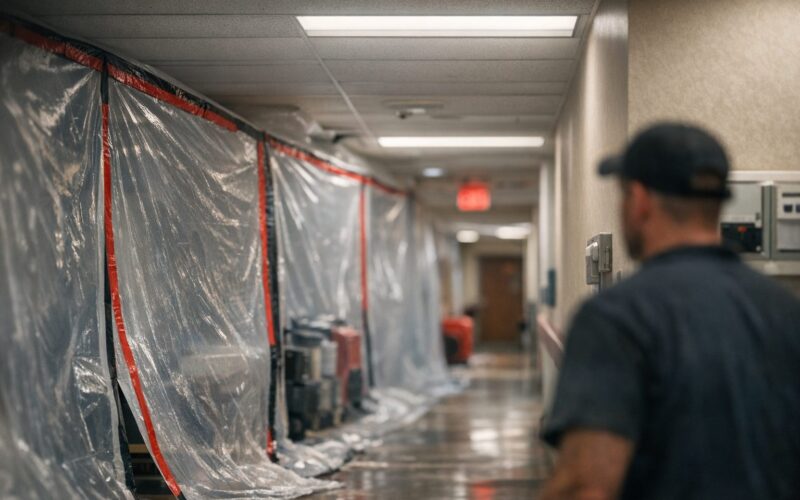
When Restoration Becomes Reconstruction
Not every disaster requires a full reconstruction. Many water damage events and small fires are resolved through restoration — cleaning, drying, and repairing existing materials. But when the damage is extensive enough that major structural elements must be replaced, the project crosses from restoration into reconstruction. This is a fundamentally different process with different timelines, costs, trades, permits, and complexities.
At WrightWay Emergency Services, we handle both restoration and reconstruction as a licensed general contractor. This guide explains what full reconstruction involves so you can set realistic expectations and make informed decisions throughout the process.
Phase 1: Emergency Mitigation (Days 1-7)
Before reconstruction can begin, the emergency must be stabilized:
- Secure the structure: Board up openings, install temporary roofing, and prevent further damage from weather or intrusion
- Water extraction and drying: If water damage is involved, all standing water must be extracted and the structure dried to verified dry standard
- Fire and smoke cleanup: If fire damage is involved, soot, smoke residue, and char must be addressed to prevent ongoing damage to salvageable materials
- Contents packout: Salvageable personal belongings are inventoried, packed, and moved to a secure location for cleaning and storage
- Hazardous material handling: Asbestos, lead paint (in older homes), and other hazardous materials must be identified and handled according to EPA and state regulations before demolition begins
Phase 2: Damage Assessment and Scope Development (Weeks 1-3)
This phase determines exactly what needs to be rebuilt and how much it will cost:
Structural Engineering Assessment
For severe damage, a licensed structural engineer evaluates the integrity of the foundation, framing, roof structure, and load-bearing elements. The engineer’s report dictates what must be replaced versus what can remain.
Scope of Work Development
The reconstruction scope is a detailed, line-by-line document specifying every task, material, and trade required to restore the home to its pre-loss condition (or better, if code upgrades are required). This scope typically includes:
- Demolition and debris removal
- Structural framing repairs or replacement
- Roofing
- Exterior envelope (stucco, siding, windows, doors)
- Electrical system
- Plumbing system
- HVAC system
- Insulation
- Drywall, tape, and texture
- Interior trim, doors, and hardware
- Cabinetry and countertops
- Flooring
- Paint
- Appliances and fixtures
Insurance Scope Agreement
The scope is submitted to your insurance company’s adjuster for review. This negotiation phase is critical — the adjuster and your contractor must agree on every line item before work begins. At WrightWay, we use Xactimate (the insurance industry’s standard estimating software) to write scopes in the format adjusters expect, which streamlines the approval process and reduces disputes.
Phase 3: Permitting (Weeks 2-6)
Full reconstruction in Florida requires building permits. Depending on the scope, you may need:
- General building permit
- Electrical permit
- Plumbing permit
- Mechanical (HVAC) permit
- Roofing permit
Permit timelines vary by jurisdiction. Sarasota County typically processes permits in 2 to 4 weeks; Lee County and Collier County timelines can be longer, especially after major storm events when the building departments are backlogged.
If the damage exceeds 50 percent of the home’s assessed value, the structure may be classified as “substantially damaged” under Florida building code, triggering requirements to bring the entire structure into compliance with current code — not just the damaged areas. This can significantly increase the scope and cost of reconstruction.
Phase 4: Demolition (Weeks 4-6)
Controlled demolition removes all damaged materials down to the structural elements that will remain:
- Remove flood-damaged or fire-damaged drywall, insulation, flooring, and trim
- Remove damaged framing members identified in the structural assessment
- Remove damaged roofing, windows, and exterior materials as needed
- Dispose of all debris according to local regulations (asbestos-containing materials and lead paint require specialized disposal)
- Clean the remaining structure to prepare for new material installation
Phase 5: Structural and Rough-In Work (Weeks 6-12)
This is the heavy construction phase where the “bones” of the home are rebuilt:
- Structural framing: Replace damaged studs, rafters, joists, headers, and any other structural members. Install new framing for any layout changes.
- Roof structure: Repair or replace roof trusses, decking, and underlayment. Install new roofing materials meeting current Florida building code requirements.
- Windows and exterior doors: Install impact-rated windows and doors as required by Florida code for the building’s wind zone.
- Rough electrical: Install new wiring, circuits, outlets, switches, and panel upgrades as needed.
- Rough plumbing: Install or replace supply lines, drain lines, and vent piping.
- HVAC rough-in: Install ductwork, refrigerant lines, and drain lines for the air conditioning system.
- Insulation: Install wall and ceiling insulation meeting current Florida energy code requirements.
Each trade requires inspection by the local building department before the next phase can proceed. Scheduling inspections and coordinating multiple trades is one of the most complex aspects of reconstruction management.
Phase 6: Interior Finish Work (Weeks 10-18)
Need restoration help in Southwest Florida right now? WrightWay dispatches in 60 to 90 minutes from three Florida offices, and we answer with a live human.
With the structure rebuilt and rough-in inspections passed, the finish work transforms the construction site back into a home:
- Drywall: Hang, tape, texture, and prime all wall and ceiling surfaces. We recommend moisture-resistant drywall for all Florida rebuilds.
- Cabinets and countertops: Install kitchen and bathroom cabinetry and countertops.
- Interior trim: Install baseboards, door casings, crown molding, and window trim.
- Interior doors: Hang and install all interior doors with hardware.
- Flooring: Install flood-resistant flooring throughout — typically LVP for living areas and tile for wet areas in Florida.
- Paint: Apply finish paint to all walls, ceilings, and trim.
- Fixtures and appliances: Install plumbing fixtures (sinks, toilets, faucets), light fixtures, outlets, switches, and appliances.
- HVAC completion: Install air handler, condenser, thermostat, and perform start-up testing.
Phase 7: Final Inspections and Punch List (Weeks 16-20)
The final phase ensures everything is right:
- Final building inspections: The building department inspects all permitted work (structural, electrical, plumbing, mechanical, roofing) and issues a final approval or Certificate of Occupancy.
- Punch list walkthrough: You walk through the home with the project manager and identify any items that need correction — paint touch-ups, adjustment of doors, minor finish details.
- Punch list completion: All identified items are corrected.
- Final cleaning: Professional construction cleaning prepares the home for occupancy.
- Contents return: Your packed-out belongings are returned and placed in their designated locations.
Typical Reconstruction Timelines in Florida
| Damage Level | Typical Timeline | Example |
|---|---|---|
| Partial reconstruction (1-2 rooms) | 6-10 weeks | Kitchen fire damage rebuild |
| Moderate reconstruction (half the home) | 10-16 weeks | Ground floor flood rebuild |
| Full reconstruction (entire home) | 16-26 weeks | Hurricane damage with structural involvement |
| Full reconstruction with code upgrades | 20-32+ weeks | Substantially damaged home requiring wind and flood code compliance |
These timelines assume permits are obtained without significant delays and that material availability is normal. After a major storm event, both permitting and material timelines can extend significantly.
WrightWay: One Company From Emergency to Move-In
WrightWay Emergency Services is one of the few Southwest Florida companies that handles every phase of the process — from emergency mitigation through complete reconstruction. This single-source approach eliminates the coordination problems, finger-pointing, and accountability gaps that occur when the mitigation company hands off to a separate general contractor.
Call (941) 379-8669 for 24/7 emergency response or to discuss a reconstruction project. We serve Sarasota, Bradenton, Fort Myers, Naples, and all of Southwest Florida.
WrightWay handles every restoration job from emergency response through licensed reconstruction.
One IICRC-certified team, one project manager, one phone call. Available 24/7 across Sarasota, Manatee, Charlotte, Lee, and Collier counties.
Add us as a preferred source and our storm updates, claim guides and restoration answers show up higher when you search.