Understanding Loss of Use Coverage on Your Florida Homeowners Policy
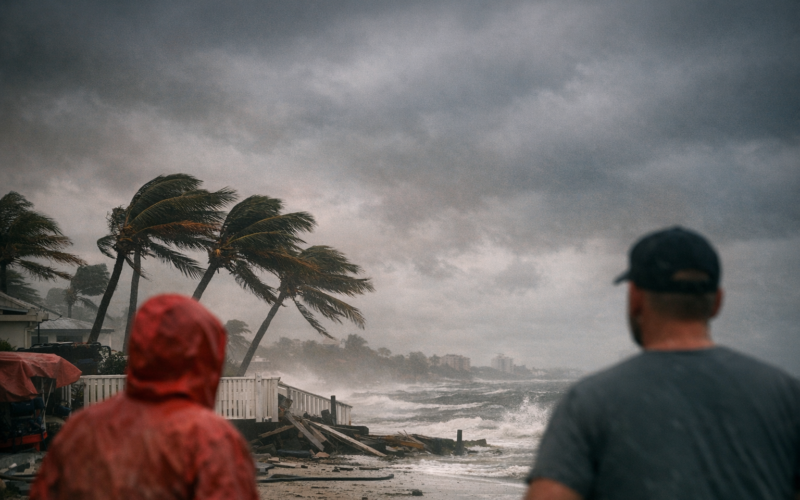
A burst pipe floods half your home. A kitchen fire renders your house uninhabitable. A hurricane tears the roof off. In any of these scenarios, you cannot live in your home while repairs are being made, and that means you need somewhere else to stay. The cost of temporary housing, meals, and other expenses adds up fast, sometimes to thousands of dollars per month. That is where loss of use coverage comes in.
Loss of use coverage, also called Coverage D or Additional Living Expenses (ALE) on your homeowners policy, pays for the increased costs you incur because you cannot live in your home due to a covered loss. It is one of the most valuable but least understood parts of your insurance policy.
What Loss of Use Coverage Pays For
Loss of use coverage reimburses you for expenses above and beyond what you would normally spend. The key concept is the difference between your normal living costs and your increased costs while displaced.
Commonly Covered Expenses
- Hotel or rental housing: The cost of temporary lodging while your home is being repaired
- Increased food costs: If you normally spend $600 per month on groceries but spend $1,200 eating out because you have no kitchen, the $600 difference is covered
- Laundry expenses: If you normally do laundry at home but now use a laundromat
- Pet boarding: If your temporary housing does not allow pets
- Storage fees: Costs to store your belongings while construction is underway
- Moving expenses: Costs to move into and out of temporary housing
- Increased commuting costs: If temporary housing is farther from your workplace
- Utility setup fees: Deposits and connection fees for temporary housing utilities
What Is NOT Covered
- Normal mortgage or rent payments you would make regardless of the damage
- Normal utility bills at your regular rate
- Normal grocery costs at your regular spending level
- Upgrades or luxuries beyond what you need to maintain your normal standard of living
- Expenses that are not a direct result of your displacement
How Florida Loss of Use Limits Work
Your policy sets a maximum amount for loss of use coverage, typically expressed as either a dollar amount or a percentage of your dwelling coverage. Common structures include:
| Policy Type | Typical Loss of Use Limit | Example (on $300,000 dwelling) |
|---|---|---|
| Standard HO-3 | 20-30% of dwelling coverage | $60,000 – $90,000 |
| Citizens Property Insurance | 10% of dwelling coverage | $30,000 |
| Some budget policies | Fixed dollar amount | $10,000 – $25,000 |
There may also be a time limit. Most policies cover additional living expenses for the shortest time required to repair or replace your home, or until your policy limit is exhausted, whichever comes first. Some policies impose specific time caps such as 12 or 24 months.
Qualifying for Loss of Use Benefits
To trigger loss of use coverage, three conditions must be met:
- The damage must be from a covered peril. If your policy covers the event that damaged your home (fire, wind, sudden water damage, etc.), loss of use applies. If the damage is excluded (flood without flood insurance, earth movement, etc.), loss of use is also excluded.
- Your home must be uninhabitable or significantly impaired. You do not need to be completely unable to enter the home. If the damage makes it unreasonable to live there (no working kitchen, no functioning bathroom, exposed structural elements, active mold, or safety hazards), you qualify.
- A civil authority may order evacuation. If a government entity restricts access to your home (common after hurricanes or wildfires), loss of use coverage kicks in even if your specific home was not damaged, as long as the restriction resulted from a covered peril.
How to Maximize Your Loss of Use Benefits
Keep Detailed Records of All Expenses
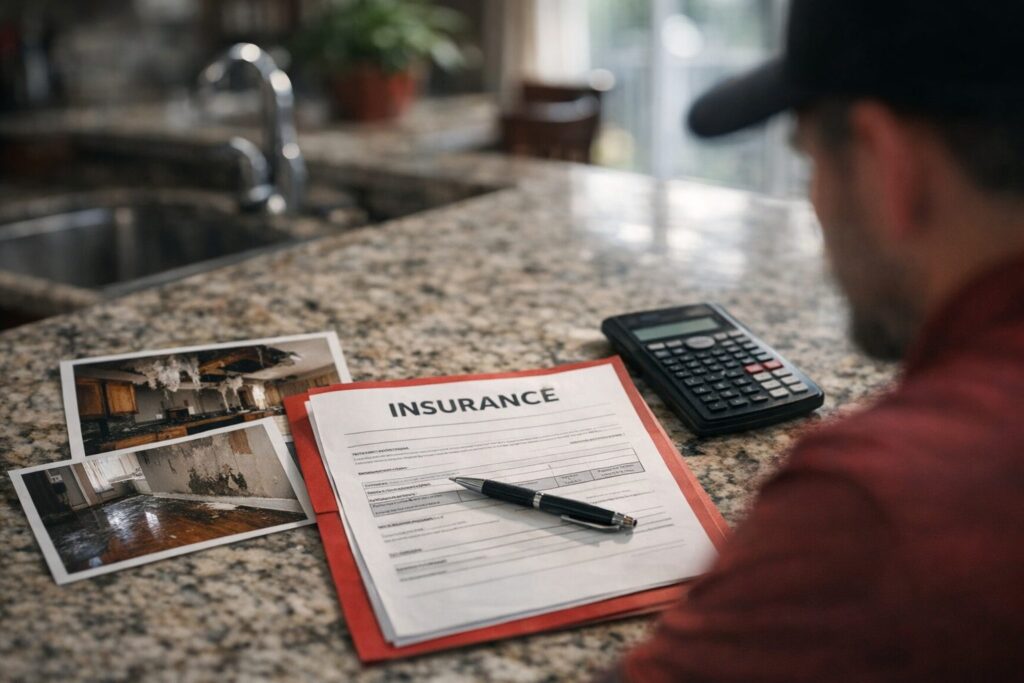
Save every receipt. Create a spreadsheet tracking each expense, the date, and why it was necessary. Categorize expenses clearly (lodging, food, transportation, storage, etc.). Your insurer will require documentation before reimbursing you.
Understand the “Normal Expense” Baseline
Your insurer will only reimburse the additional cost above what you normally spend. Gather documentation of your normal monthly expenses:
- Three months of grocery receipts or bank statements showing food spending
- Your normal utility bills
- Your regular commuting costs
The more precisely you can demonstrate your normal expenses, the easier it is to calculate and prove your additional costs.
Choose Reasonable Temporary Housing
Your insurer expects you to maintain your normal standard of living, not upgrade it. If you normally live in a three-bedroom home, a comparable three-bedroom rental is appropriate. A luxury resort is not. However, you are not required to accept substandard housing either. A reasonable standard means comparable in size, location, and amenities to your pre-loss home.
Communicate with Your Insurer Regularly
Keep your insurance company informed about the timeline for repairs. If reconstruction takes longer than expected, notify them in writing and explain why. Provide your contractor’s updated timeline so the insurer can plan for ongoing ALE payments.
Loss of Use and the Restoration Timeline
Need restoration help in Southwest Florida right now? WrightWay dispatches in 60 to 90 minutes from three Florida offices, and we answer with a live human.
The duration of your displacement depends on the scope of damage and the speed of restoration. Working with a single company that handles both mitigation and reconstruction can significantly reduce the timeline by eliminating gaps between contractors.
Typical displacement timelines for common losses:
- Moderate water damage (one to two rooms): 2 to 6 weeks
- Significant water damage with mold: 4 to 12 weeks
- Kitchen or bathroom fire: 6 to 16 weeks
- Major fire damage: 4 to 12 months
- Hurricane damage (roof and interior): 3 to 12 months
Every week your restoration is delayed is another week of ALE expenses that erodes your coverage limit. Fast, efficient restoration keeps you in your home sooner and preserves more of your loss of use benefit for essential expenses.
What If Your Loss of Use Limit Runs Out?
If your additional living expenses exceed your policy limit, you are responsible for the remaining costs. This is why the speed of reconstruction matters so much. To avoid exhausting your ALE coverage:
- Choose a restoration company with the capacity to move quickly
- Approve scopes of work promptly so contractors can begin
- Respond quickly to any requests from your insurer or contractor for decisions or approvals
- Consider whether partial occupancy is possible once the most affected areas are restored
WrightWay Helps You Get Home Faster
WrightWay Emergency Services understands that every day you are displaced from your home costs money and causes stress. We streamline the restoration process by handling emergency mitigation, structural drying, mold remediation, and complete reconstruction under one roof. Our team coordinates directly with your insurance company to keep the project moving forward.
If property damage has displaced you from your Southwest Florida home, call us at (941) 379-8669. We work around the clock to get you back home as quickly as possible.
WrightWay handles every restoration job from emergency response through licensed reconstruction.
One IICRC-certified team, one project manager, one phone call. Available 24/7 across Sarasota, Manatee, Charlotte, Lee, and Collier counties.
Add us as a preferred source and our storm updates, claim guides and restoration answers show up higher when you search.