

What Is Ordinance and Law Coverage?
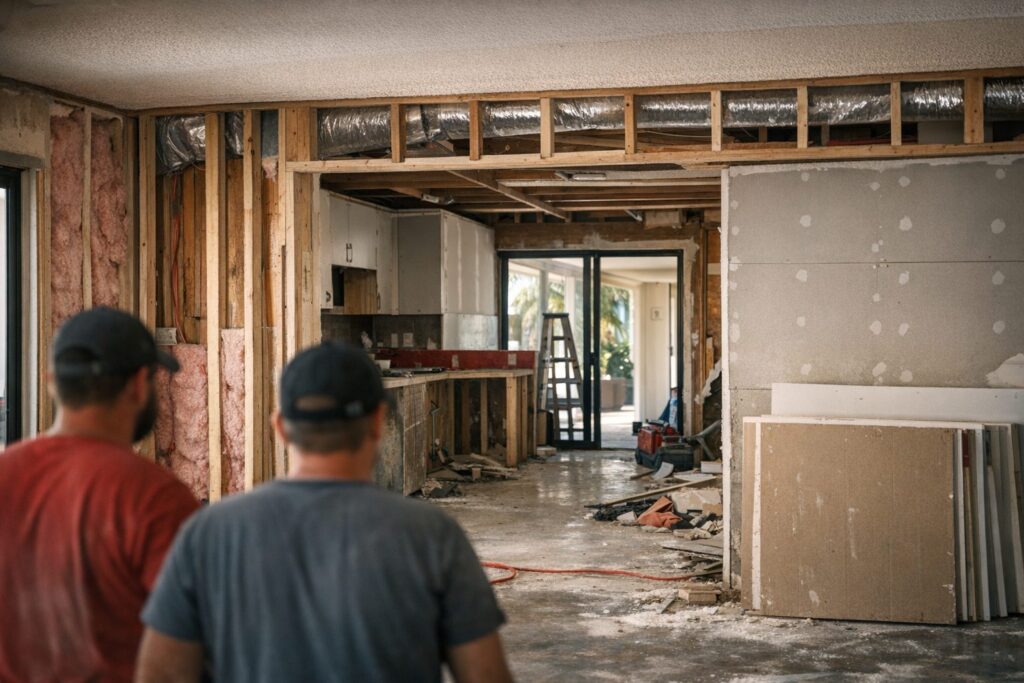
When your home suffers significant damage and needs to be rebuilt, you might assume your insurance policy will cover the full cost of reconstruction. But there is a gap many homeowners do not anticipate: building code upgrades. If your home was built under older codes, your local municipality may require you to bring the damaged portions (or even the entire structure) up to current standards during reconstruction. Standard homeowners insurance does not automatically cover these additional costs. That is where ordinance and law coverage comes in.
For Florida homeowners, this coverage is particularly important. Florida’s building codes have been substantially updated multiple times since the state adopted the Florida Building Code in 2002, with major revisions following each devastating hurricane season. A home built in the 1990s or earlier may face tens of thousands of dollars in mandatory upgrades when significant reconstruction is required.
The Three Components of Ordinance and Law Coverage
Ordinance and law coverage typically provides three distinct types of protection:
Coverage A: Loss to the Undamaged Portion
If a building code or local ordinance requires you to demolish or rebuild portions of your home that were not damaged in the loss, this coverage pays for that additional work. For example, if wind damages 60 percent of your roof and local code requires a complete roof replacement when more than 50 percent is damaged, Coverage A pays for tearing off and replacing the undamaged 40 percent.
Coverage B: Demolition Cost
This covers the cost of demolishing the undamaged portion of the structure when code requires it. Using the roof example, this would cover the labor and disposal costs for removing the undamaged section before the new roof is installed.
Coverage C: Increased Cost of Construction
This is the most commonly used component. It pays for the additional cost of rebuilding to current code when current code requirements exceed what existed when your home was originally built. Common examples include:
- Electrical upgrades: Bringing wiring up to current National Electrical Code standards including AFCI/GFCI requirements
- Plumbing upgrades: Replacing outdated pipe materials or configurations to meet current code
- Hurricane impact protection: Installing impact-resistant windows or shutters as required by current Florida Building Code
- Roof tie-down systems: Adding hurricane straps or clips to connect roof framing to wall framing
- Energy efficiency requirements: Meeting current insulation, HVAC efficiency, and air sealing standards
- ADA compliance: When applicable, updating for accessibility requirements
- Fire separation: Adding required fire-rated assemblies between units or between the garage and living space
Why Florida Homeowners Face Higher Code-Upgrade Costs
Florida has some of the most stringent building codes in the nation, driven by decades of hurricane experience. Since the Florida Building Code was adopted in 2002 and updated through subsequent editions including the 7th Edition (2020) and beyond, significant changes have increased construction requirements in areas including:
| Building Element | Typical Code Upgrade Required | Estimated Additional Cost |
|---|---|---|
| Roof system | Secondary water barrier, proper nailing patterns, FBC-rated materials | $3,000 – $15,000 |
| Windows and doors | Impact-rated or approved shutter systems (wind-borne debris region) | $5,000 – $30,000+ |
| Electrical system | Updated panel, AFCI/GFCI protection, aluminum wiring remediation | $2,000 – $8,000 |
| Roof-to-wall connections | Hurricane clips or straps meeting current wind load requirements | $1,500 – $5,000 |
| Insulation | Current R-value requirements in walls and attic | $1,000 – $4,000 |
These costs add up quickly. A home built in the 1980s undergoing major reconstruction in Sarasota County could face $15,000 to $50,000 or more in code-required upgrades that a standard insurance policy would not cover without ordinance and law protection.
How Much Coverage Do You Need?
Ordinance and law coverage is typically offered as a percentage of your dwelling coverage (Coverage A). Common options are 10 percent, 25 percent, and 50 percent. For a home insured at $300,000:
- 10 percent: $30,000 in ordinance and law coverage
- 25 percent: $75,000 in ordinance and law coverage
- 50 percent: $150,000 in ordinance and law coverage
For older homes in Florida’s high-wind zones, particularly those built before the Florida Building Code was adopted, 25 percent is a reasonable minimum. Homes built before 1992 (pre-Hurricane Andrew building standards) may benefit from even higher limits, especially if the home has never undergone significant renovation.
Is Ordinance and Law Coverage Included in Your Policy?
Need restoration help in Southwest Florida right now? WrightWay dispatches in 60 to 90 minutes from three Florida offices, and we answer with a live human.
This varies by insurer and policy type:
- Some policies include basic ordinance and law coverage (often 10 percent) as a standard feature
- Many policies require you to purchase it as an endorsement for an additional premium
- Some budget policies exclude it entirely and do not offer it as an option
Check your declarations page (the summary page of your policy) and look for “Ordinance or Law” listed with a coverage amount. If you do not see it, call your agent and ask about adding it. The additional premium is typically modest relative to the protection it provides.
How Ordinance and Law Coverage Works During a Claim
When you file a property damage claim and reconstruction triggers code-upgrade requirements, the process works like this:
- Your restoration contractor identifies the scope of reconstruction needed
- The local building department reviews the plans and identifies code-upgrade requirements
- Your contractor prepares an estimate for the additional cost of meeting current code
- The code-upgrade costs are submitted to your insurer as part of the claim
- Your insurer reviews the costs against your ordinance and law coverage limits
- Approved costs are paid in addition to your standard dwelling coverage
At WrightWay Emergency Services, we handle both emergency mitigation and general reconstruction. Our project managers work with local building departments to identify code requirements early in the process and incorporate those costs into your insurance claim, ensuring you receive the ordinance and law benefits your policy provides.
The 50 Percent Rule: A Florida Trap
Many Florida municipalities enforce a 50 percent rule (sometimes called the substantial improvement rule): if the cost of repairs exceeds 50 percent of the building’s market value, the entire structure must be brought up to current code, not just the damaged portions. This rule, often tied to flood plain regulations and the National Flood Insurance Program, can dramatically increase reconstruction costs and makes adequate ordinance and law coverage critical.
Review Your Coverage Today
If you do not have ordinance and law coverage or your limits are low, contact your insurance agent before the next storm. The cost of adding or increasing this coverage is a small price compared to facing $20,000 or more in code-upgrade costs that your standard policy will not cover.
For questions about reconstruction, code upgrades, or insurance claims in Southwest Florida, call WrightWay Emergency Services at (941) 379-8669. We help homeowners navigate every aspect of the restoration and rebuild process.
WrightWay handles every restoration job from emergency response through licensed reconstruction.
One IICRC-certified team, one project manager, one phone call. Available 24/7 across Sarasota, Manatee, Charlotte, Lee, and Collier counties.


