Understanding Subrogation in Florida Property Damage Claims
Subrogation is a term that often surfaces after a water damage insurance claim, but most homeowners and property managers hear it for the first time only when their insurer has already paid the bill and is now going after someone else. In simple terms, subrogation occurs when your insurer steps into your shoes, pays your covered loss, and then pursues the party whose negligence caused the damage to recover what it paid. The process is designed so the financial burden of an incident falls on the party at fault, not on the innocent homeowner or property manager who did nothing wrong.
For SW Florida property owners dealing with water intrusion from a plumbing failure, a neighbor’s burst pipe, or a contractor’s mistake, understanding subrogation can mean getting your deductible back and keeping your claim history clean. This guide explains how subrogation works in Florida, what the current legal deadlines are, and how proper documentation from your restoration contractor protects the claim from start to finish.
What Is Subrogation and Why Does It Matter?
When your insurance company pays a covered water damage claim, it has a legal right – inherited from you – to pursue whoever caused the loss. This right is called subrogation, and it exists under both your policy’s terms and Florida’s insurance statutes. The insurer essentially “stands in your shoes” and sues or negotiates with the at-fault party or their insurer.
Why does this matter to you as the property owner? Two reasons. First, a successful subrogation recovery may result in your deductible being refunded – proportionally to the amount your insurer recovers. Second, because the claim was covered by insurance and not caused by your negligence, it should not count against you in the same way a self-caused loss would. But only if subrogation rights are preserved correctly from day one.
When Does Subrogation Apply in Restoration Scenarios?
Subrogation can apply any time a third party’s negligence or breach of duty caused the water damage your insurer covered. Common scenarios in SW Florida include:
- Plumber error: A licensed plumber improperly installs a supply line, fitting, or valve, causing a slow leak or sudden burst that damages flooring, drywall, and cabinetry. Your insurer pays, then pursues the plumber’s general liability policy.
- Neighbor’s plumbing failure in a multi-family building: A unit above yours overflows, or a washing machine hose in an adjacent unit fails. Your insurer covers your loss and may pursue the neighbor’s homeowner or renter’s policy.
- HVAC contractor mistake: A technician fails to properly reconnect a condensate drain line, leading to weeks of slow moisture intrusion behind a wall. Subrogation targets the contractor’s liability carrier.
- Condo association pipe failure: A common-area pipe or riser maintained by the association fails and floods several units. Under Florida Statute Section 718.111, how subrogation flows between association and unit owner policies depends on the master policy terms.
- Roof contractor error: A roofer leaves flashing improperly seated, and the next rain event drives water into the attic and living space. The roofing contractor’s liability carrier is the subrogation target.
Florida’s Statute of Limitations for Subrogation Claims
This is the most legally sensitive part of any subrogation situation, and the rules changed significantly in 2023. Property owners and their insurers need to understand both the traditional framework and the post-reform timeline.
The 2023 HB 837 Reform: Negligence Claims Now Have a 2-Year Deadline
Florida’s Section 95.11 of the Florida Statutes sets the statute of limitations for civil claims. Before March 24, 2023, negligence claims – including property damage caused by negligence – had a four-year limitations period. That changed when Governor DeSantis signed HB 837 into law on March 24, 2023.
Under the reformed statute, negligence claims now carry a two-year statute of limitations. This shorter window applies to causes of action that accrued on or after March 24, 2023. Because most water damage subrogation claims are founded on negligence – a plumber’s careless work, a contractor’s breach of duty, a neighbor’s failure to maintain their unit – your insurer now has substantially less time to pursue recovery than it did before the reform.
Practical implications for SW Florida property owners:
- For incidents that occurred before March 24, 2023, the old four-year window still applies.
- For incidents that occurred on or after March 24, 2023, insurers should treat the limitations period as two years to avoid a statute-barred claim – even though the interplay between the negligence and property-damage subsections of 95.11 continues to be litigated.
- The two-year clock starts from the date of the damage event, not from when the claim was settled or the restoration was completed.
- Delay in reporting, delay in completing IICRC-compliant documentation, or signing releases without your insurer’s consent can all blow the deadline.
Because of this reform, prompt reporting and thorough documentation are more important than ever. The Florida Department of Financial Services Division of Consumer Services provides homeowner resources on insurance claims and can assist if you have questions about your insurer’s handling of a subrogation claim.
Preserving Your Subrogation Rights
Your insurer cannot pursue subrogation if you accidentally give away that right. Homeowners must avoid two common mistakes:
- Do not release the responsible party: Never sign a release, a “full and final settlement,” or any document waiving claims against the at-fault party without first getting written consent from your insurer. A release signed without consent can void your insurer’s subrogation rights, and some policies will then deny your own claim on those grounds.
- Do not settle independently: If the plumber, contractor, or neighbor’s insurer contacts you directly and offers to pay for the damage themselves, do not accept payment without looping in your own insurer. Your insurer has a financial stake in how that settlement is structured.
Florida courts take subrogation waivers seriously. A Florida appellate court ruled that a condo association’s insurer could sue the association itself for breach of contract after the association signed releases that cut off the insurer’s subrogation rights. The lesson: preserving subrogation rights protects everyone, including the association.
The Anti-Subrogation Rule in Florida Condos
Condominium settings add a layer of complexity because two insurance programs – the association’s master policy and each unit owner’s HO-6 policy – can both be in play when a pipe fails or water migrates between units.
Florida addressed a long-standing imbalance with a statutory fix that took effect July 1, 2021. Under Florida Statute Section 627.714(4), if the condo association’s master policy waives subrogation against unit owners, then an individual unit owner’s HO-6 policy cannot in turn subrogate against the association. This creates a reciprocal protection: the association shields unit owners from its own insurer’s pursuit, and unit owners cannot use their individual policies to do an end-run around the association’s waiver.
Before this change, associations often had a waiver of subrogation for unit owners, but HO-6 policies for individual owners sometimes lacked the same reciprocal protection – meaning a unit owner could inadvertently expose the association to a subrogation action through their own policy. Section 627.714(4) closed that gap.
What this means practically for SW Florida condo owners and property managers:
- Review the master association policy for any waiver of subrogation language before assuming you are protected.
- Review your own HO-6 policy to confirm it carries a reciprocal waiver if the association’s policy does.
- Understand that Section 718.111(11) governs the scope of the association’s insurance obligation and interacts with subrogation rights when common-area pipes cause unit damage.
- Neighbor-to-neighbor claims (Unit B’s overflow damages Unit A) are governed by different rules and depend on whether the master policy covers both units or the incident falls outside common-area coverage.
Documenting Restoration to Support Subrogation
Subrogation cases are won or lost on documentation. An insurer pursuing a plumber or contractor for $40,000 in water damage needs evidence that ties the cause directly to the third party’s negligence and confirms the scope of loss was reasonable. This is where your restoration contractor becomes a critical ally.
IICRC-certified contractors like WrightWay Emergency Services follow the S500 Standard for Professional Water Damage Restoration, which establishes the documentation protocols that hold up in subrogation proceedings. Proper documentation includes:
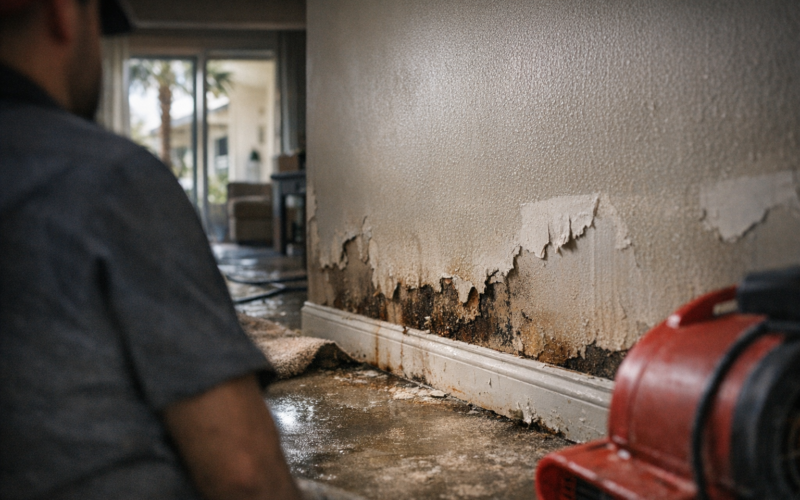
- Time-stamped photos and video: Capture the damage before any extraction begins, including the source of loss, affected materials, and moisture migration path. These images can establish the proximate cause of damage.
- Moisture readings before and after: A complete log of psychrometric readings – temperature, relative humidity, and moisture content of affected materials – demonstrates the actual scope of damage and validates the drying scope.
- Cause-of-loss report: Your contractor should produce a written narrative identifying the apparent source and mechanism of water intrusion. This document is often the centerpiece of the subrogation demand.
- Contractor and equipment records: Detailed logs of equipment deployed, hours of operation, and readings taken on each visit create an auditable drying record that supports the restoration invoice.
- Third-party evidence preservation: If the defective part (a failed fitting, a cracked supply line, an improperly installed valve) can be preserved, do not discard it. Notify your insurer before any repairs are made to the source.
The stronger your documentation package, the more leverage your insurer has in subrogation negotiations. A well-documented claim settles faster and often results in a higher recovery, which means a better chance of getting your deductible back.
What Happens When Your Insurer Pursues Subrogation?
WrightWay documents every loss to insurance standards, photos, moisture logs, and itemized scopes your adjuster can approve without back-and-forth.
Once your insurer has paid the claim and reviewed the documentation, the subrogation process typically follows these steps:
- Investigation: The insurer’s subrogation unit reviews the claim file, restoration reports, and cause-of-loss documentation to assess liability and identify the at-fault party.
- Demand: A formal demand letter is sent to the responsible party or their insurer, setting out the insurer’s subrogation right and the amount claimed.
- Negotiation: Most subrogation cases settle without litigation. The at-fault party’s carrier may accept liability, dispute the amount, or contest the causal connection – which is why thorough documentation matters so much.
- Litigation (if needed): If negotiation fails before the statute of limitations expires, the insurer may file suit. Remember: under HB 837, that window is now two years for negligence-based claims accruing after March 24, 2023.
- Recovery and deductible reimbursement: Once recovery is complete, your insurer is required to apply recovered funds first to make you whole under Florida’s “made whole” doctrine before retaining any net recovery. If the recovery covers your deductible, that amount is returned to you.
Neighbor-Caused Water Damage in Florida Condos and Multi-Family Buildings
Water damage caused by a neighbor’s negligence is one of the most common subrogation scenarios in SW Florida’s dense condo and multi-family housing stock. The process is the same in principle – your insurer pays, then pursues the neighbor – but several factors make these cases more nuanced:
- Which policy covers the pipe? In many condos, pipes within the walls are the association’s responsibility; appliance supply lines inside the unit are the unit owner’s. The master policy often covers the former; the unit owner’s carrier pursues the latter.
- Does the neighbor have coverage? If the at-fault neighbor is uninsured or underinsured, your insurer’s recovery may be partial, limiting your deductible reimbursement.
- Notice requirements: Florida condo law requires unit owners to report damage to the association promptly. Delay in notification can create disputes about the extent of damage that was association-responsibility versus unit-owner-responsibility.
The Florida Department of Financial Services offers a consumer helpline at (850) 413-3089 for homeowners who believe their insurer is mishandling a subrogation claim or improperly denying deductible reimbursement.
When Subrogation Might Not Apply
Not every water damage event has a subrogation target. Common situations where subrogation does not apply:
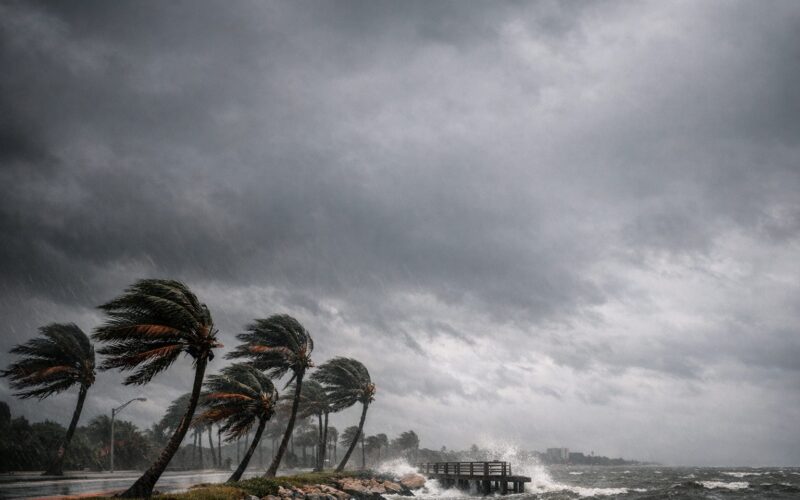
- Acts of nature: Flooding from a named storm, wind-driven rain, or storm surge is typically not attributable to any third party’s negligence. There is no one to subrogate against.
- Your own maintenance failures: If the damage originated from your own failure to maintain a supply line, appliance, or plumbing fixture, your insurer cannot subrogate against yourself.
- Contractual waivers already in place: Some construction contracts and property management agreements include mutual waivers of subrogation. If such a waiver governs the relationship with the contractor who caused the damage, it may bar recovery.
- Expired statute of limitations: If more than two years have passed since a negligence-based incident (post-March 2023), the claim may be time-barred even if liability is clear.
Working with Your Restoration Contractor
Choosing an IICRC-certified restoration contractor is not just a quality decision – it is a subrogation strategy. WrightWay Emergency Services (CBC1253650) produces cause-of-loss narratives, full psychrometric drying logs, and photographic documentation designed to support your insurer’s recovery efforts. We work in the Sarasota, Manatee, Charlotte, Lee, and Collier county markets and carry IICRC certification in water damage restoration.
When you call us immediately after discovering water damage, we can preserve cause-of-loss evidence before it disappears during the mitigation process. That first-hour documentation is often the most valuable evidence your insurer’s subrogation team will have.
Frequently Asked Questions
What is subrogation in simple terms?
Subrogation is when your insurance company pays for your water damage claim and then pursues the party whose negligence caused the damage to recover what it paid. If successful, you may get your deductible back.
How long does my insurer have to pursue subrogation in Florida?
This depends on when the damage occurred. For incidents before March 24, 2023, the old four-year period under Section 95.11 of the Florida Statutes applies. For incidents on or after March 24, 2023, HB 837 reduced the negligence statute of limitations to two years. Because most water damage subrogation claims are negligence-based, insurers should treat the deadline as two years for post-reform claims. Consult a Florida property insurance attorney for guidance specific to your situation.
Can I settle with the responsible party on my own?
No – not without your insurer’s written consent. Settling directly with the at-fault party or accepting payment without your insurer’s involvement can waive the insurer’s subrogation rights. Many policies treat this as a policy violation and can deny the original claim on that basis.
What documentation is needed to support subrogation?
Essential documentation includes time-stamped photos of the damage and its source, moisture readings before and after drying, a written cause-of-loss report from your restoration contractor, equipment logs, and if possible, the defective component itself (preserved before repair). IICRC-compliant restoration documentation is the industry standard for supporting subrogation demands.
Will I get my deductible back if subrogation is successful?
Potentially, yes. Under Florida’s “made whole” doctrine, recovered subrogation funds must first be applied to make you whole, which includes your out-of-pocket deductible. If the insurer recovers the full amount it paid, you should receive your full deductible back. Partial recoveries may result in partial reimbursement.
Does the anti-subrogation rule protect me as a condo unit owner?
It can. Under Florida Statute Section 627.714(4), if the condo association’s master policy contains a waiver of subrogation against unit owners, your own HO-6 policy cannot subrogate against the association either. Review both your policy and the master policy to confirm the protection is in place for your specific building.
For 24/7 emergency water damage restoration across SW Florida, call WrightWay at (941) 379-8669. We serve Sarasota, Manatee, Charlotte, Lee, and Collier counties and are on site within hours of your call.
WrightWay handles every restoration job from emergency response through licensed reconstruction.
One IICRC-certified team, one project manager, one phone call. Available 24/7 across Sarasota, Manatee, Charlotte, Lee, and Collier counties.
Add us as a preferred source and our storm updates, claim guides and restoration answers show up higher when you search.