

Understanding SBA Disaster Loans for Florida Businesses in 2026
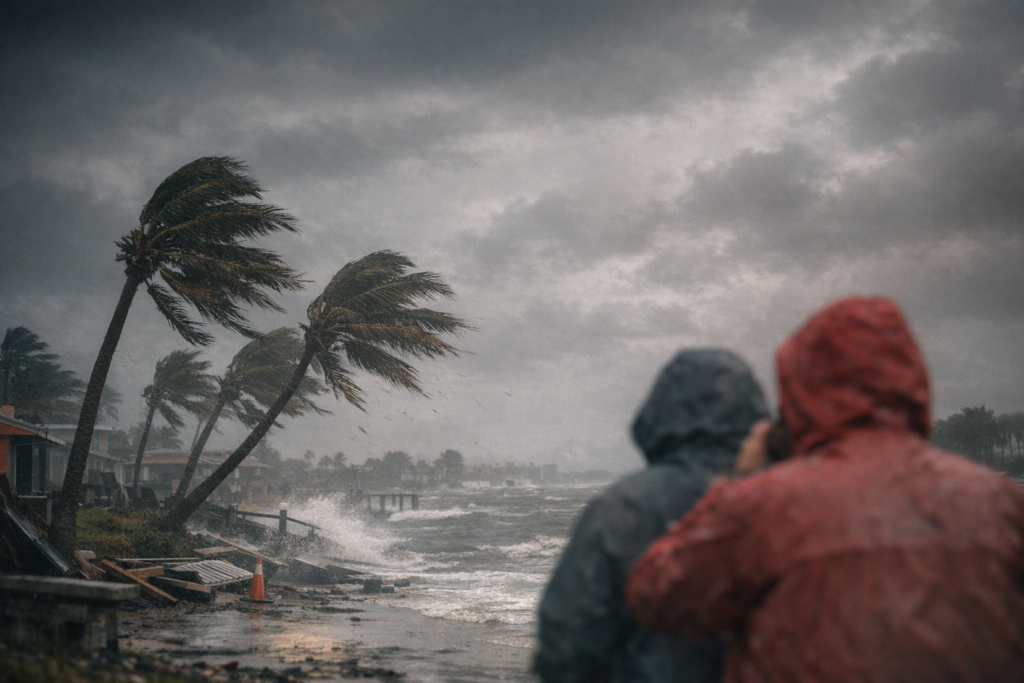
When hurricanes and floods hit Southwest Florida, the financial damage can outlast the physical destruction by months. Insurance gaps, lost revenue, and replacement costs pile up fast. The U.S. Small Business Administration (SBA) Disaster Loan Program exists precisely for this situation, offering low-interest federal loans to businesses, nonprofits, homeowners, and renters in officially declared disaster areas.
This guide covers what SW Florida business owners and property managers need to know about SBA disaster loans in 2026, including verified interest rates, loan limits, the application process, and how thorough damage documentation from a licensed contractor can strengthen your application.
The Two Main SBA Disaster Loan Types for Businesses
Business Physical Disaster Loans
Business Physical Disaster Loans are designed to repair or replace property your business owned before the disaster. This covers real estate, machinery, equipment, inventory, and other tangible assets. Businesses of any size and most private nonprofit organizations located in a declared disaster area can apply for up to $2 million through SBA’s physical damage loan program.
One important benefit: if you incorporate mitigation measures into your repairs, such as elevating equipment or installing flood barriers, the SBA may lend up to 20% above your verified physical damage amount to cover those improvements. This can reduce exposure to future storm losses significantly.
Economic Injury Disaster Loans (EIDL)
The Economic Injury Disaster Loan (EIDL) program provides working capital to small businesses and private nonprofits that suffered substantial economic loss even if they had no physical property damage. These loans are capped at $2 million and cover ordinary operating expenses your business cannot meet because of the disaster, including payroll, rent, utilities, and accounts payable.
A business can receive both a Business Physical Disaster Loan and an EIDL for the same event, but the combined total generally may not exceed $2 million.
Current Interest Rates and Repayment Terms
SBA disaster loan interest rates are set per disaster declaration and depend on whether the borrower can obtain credit elsewhere. Based on recent Florida disaster declarations:
- Small businesses that cannot obtain credit elsewhere: rates as low as 4% per year
- Small businesses that can obtain credit elsewhere: rates up to 8% per year
- Private nonprofit organizations: 3.625%
- Homeowners and renters: 3% (for residential physical damage loans)
The SBA makes the credit-elsewhere determination during the underwriting process. Most small businesses recovering from a major hurricane or flood qualify for the lower rate. The maximum repayment term is 30 years, with no prepayment penalties. Importantly, no interest accrues and no payments are due for the first 12 months after your first loan disbursement, giving you time to stabilize before payments begin.
Who Is Eligible in Florida
To qualify, your business must be located in a county covered by a federal disaster declaration. Florida counties that have been declared disaster areas after recent major storms include Sarasota, Manatee, Charlotte, Lee, Collier, DeSoto, Hardee, Hillsborough, and Pinellas, among others. Each declaration specifies primary and neighboring counties, so check the SBA’s active disaster declarations page or the Florida Division of Emergency Management for the current list tied to your event.
The program is open to businesses of any size, though EIDLs are limited to small businesses and nonprofits. Independent contractors, sole proprietors, and self-employed individuals are eligible for EIDL. Agricultural enterprises and aquaculture operations follow separate USDA rules and are generally not covered under SBA disaster loans.
What SBA Loans Can Cover That Insurance Often Does Not
Insurance policies frequently leave significant gaps after a catastrophic storm. SBA disaster loans are designed to fill those gaps. Covered expenses can include:
- Inventory replacement for goods lost or damaged in the storm
- Equipment repair or replacement (machinery, vehicles, tools)
- Leasehold improvements to a rented commercial space
- Real estate repair on business-owned buildings
- Business assets not covered by your policy deductibles or exclusions
- Operating expenses during the recovery period (through EIDL)
- Mitigation improvements to reduce future storm damage
One important rule: SBA loans cannot duplicate benefits from insurance settlements or FEMA grants. Your loan amount will be reduced by any covered insurance payout for the same damage. Always document your uninsured losses carefully and separately from covered losses.
Application Deadlines: What You Need to Know
Application deadlines for SBA disaster loans are set per disaster declaration and are NOT a uniform 12 months from the disaster date. Physical damage loan deadlines typically fall 60 days after the declaration, while economic injury deadlines are usually set nine months after the declaration date. The SBA can and does extend deadlines, but extensions are not guaranteed.
For example, after Hurricanes Helene and Milton, the SBA set a final physical damage deadline of late April 2025 for affected Florida counties. For the 2025 Florida severe storm declarations, economic injury deadlines extended into mid-2026. Check the SBA’s disaster assistance page for the exact deadline tied to your specific declaration number.
Apply as early as possible. Earlier applications are processed first, and funds disburse as loans close, not all at once. Waiting risks missing the deadline if documentation takes time to gather.
The SBA and FEMA Connection
For businesses, SBA and FEMA operate through separate channels. Individuals and households go through DisasterAssistance.gov (FEMA’s portal) first; businesses generally apply directly to the SBA. However, in some disaster declarations, FEMA may refer businesses that apply for Individual Assistance to the SBA loan program as a prerequisite for certain FEMA grants.
If you are a homeowner who also owns a business, you may need to apply to both programs. FEMA handles residential individual assistance; SBA handles both business recovery and residential physical damage loans above FEMA’s assistance cap. Do not assume one application covers both needs.
Required Documentation
Need restoration help in Southwest Florida right now? WrightWay dispatches in 60 to 90 minutes from three Florida offices, and we answer with a live human.
Having your paperwork ready before you start the application will speed up the process considerably. The SBA typically requires:
- Federal tax returns for the most recent three years (the SBA uses IRS Form 4506-T to pull these directly)
- Current year-to-date profit and loss statement and balance sheet
- A complete list of damaged or destroyed property with estimated replacement costs
- Insurance declarations and any settlement information you have received
- Your business’s EIN and Social Security number (for owners)
- Deed or lease documentation for the affected property
If records were lost or damaged in the storm, the SBA provides guidance on obtaining copies. Contact their customer service center at (800) 659-2955 for help. The Florida Small Business Development Center (SBDC) also provides free one-on-one consulting to help business owners prepare their applications.
How to Apply
The fastest way to apply is online at sba.gov/disaster. You can also call the SBA Customer Service Center at (800) 659-2955, email [email protected], or visit an in-person Disaster Loan Outreach Center if one is open in your county following the declaration.
Once the SBA receives a complete application, it aims to make a loan determination within 2 to 3 weeks. After loan approval, an initial disbursement of up to $25,000 for physical damage (and up to $25,000 for working capital under EIDL) is released quickly, with remaining funds disbursed as you document expenses and repairs progress.
Strengthen Your Application with Professional Damage Documentation
One of the most important things you can do before submitting your SBA loan application is obtain a thorough, professional damage assessment from a licensed contractor. The SBA uses documentation of your verified physical losses to calculate your loan amount. Vague estimates or incomplete records can result in a lower award, delays, or a denial.
WrightWay Emergency Services (license CBC1253650), IICRC certified, provides detailed written documentation of storm and flood damage throughout SW Florida, including Sarasota, Manatee, Charlotte, Lee, and Collier counties. Our inspection reports include itemized damage lists, moisture readings, photo evidence, and scope-of-work details that meet the standards SBA reviewers and insurance adjusters expect. If you need documentation to support an SBA loan application, call us at (941) 379-8669. We respond 24/7 and provide free initial assessments.
Additionally, if you plan to include mitigation improvements in your loan request, your contractor’s documentation of those measures can support the 20% mitigation add-on. Work with your contractor to clearly separate standard repair costs from mitigation upgrade costs in the written scope.
For 24/7 Emergency Restoration
If your SW Florida business or property suffered hurricane or flood damage, WrightWay Emergency Services is ready to help right now. We handle water extraction, structural drying, mold remediation, and storm damage restoration across Sarasota, Manatee, Charlotte, Lee, and Collier counties. We work directly with insurance adjusters and can provide the documented damage assessments you need for your SBA loan application.
Call WrightWay 24/7 at (941) 379-8669. Licensed (CBC1253650) and IICRC certified.
Frequently Asked Questions
What types of businesses are eligible for SBA disaster loans?
Businesses of any size located in a federally declared disaster area can apply for Business Physical Disaster Loans. Economic Injury Disaster Loans are limited to small businesses, small agricultural cooperatives, nurseries, and private nonprofit organizations. Independent contractors and sole proprietors are eligible for EIDL. Check the specific disaster declaration for your county to confirm coverage.
What interest rate will I receive on an SBA disaster loan?
The rate depends on whether the SBA determines you can obtain credit elsewhere. For most small businesses without other credit options, the rate is as low as 4% for Business Physical Disaster Loans and EIDL. If the SBA finds you can access conventional credit, the rate may be up to 8%. Nonprofit organizations receive a rate of 3.625%. No interest accrues for the first 12 months after your first disbursement.
How long does it take to receive funds after applying for an SBA disaster loan?
The SBA targets a loan determination within 2 to 3 weeks of receiving a complete application. After closing, an initial disbursement of up to $25,000 releases quickly. Remaining funds are disbursed as repairs proceed and expenses are documented. Applying early with complete documentation gives you the fastest path to funding.
Can SBA disaster loans cover losses not covered by insurance?
Yes. SBA disaster loans are specifically designed to cover uninsured and underinsured losses. They can fund inventory replacement, equipment repair, leasehold improvements, and working capital shortfalls that your insurance policy excludes or underpays. The loan amount is reduced by any insurance settlement that covers the same losses, so accurate documentation of your uninsured gap is critical.
Is there a deadline for applying for an SBA disaster loan?
Yes, and deadlines vary by disaster declaration. Physical damage loan deadlines are typically set 60 days after the declaration; economic injury deadlines are usually nine months after the declaration. The SBA sometimes extends deadlines, but you should not count on an extension. Apply as early as possible to ensure timely processing. Visit sba.gov and search for your specific disaster declaration to find your exact deadline.
What documentation is needed to apply for an SBA disaster loan?
You will need three years of federal tax returns (SBA pulls these via Form 4506-T), a current profit and loss statement, a balance sheet, a complete list of damaged property with estimated costs, insurance settlement information, your EIN, and deed or lease documents. Having a professional damage assessment from a licensed contractor like WrightWay Emergency Services can significantly strengthen your application and help ensure the loan amount reflects your actual losses.
WrightWay handles every restoration job from emergency response through licensed reconstruction.
One IICRC-certified team, one project manager, one phone call. Available 24/7 across Sarasota, Manatee, Charlotte, Lee, and Collier counties.


