

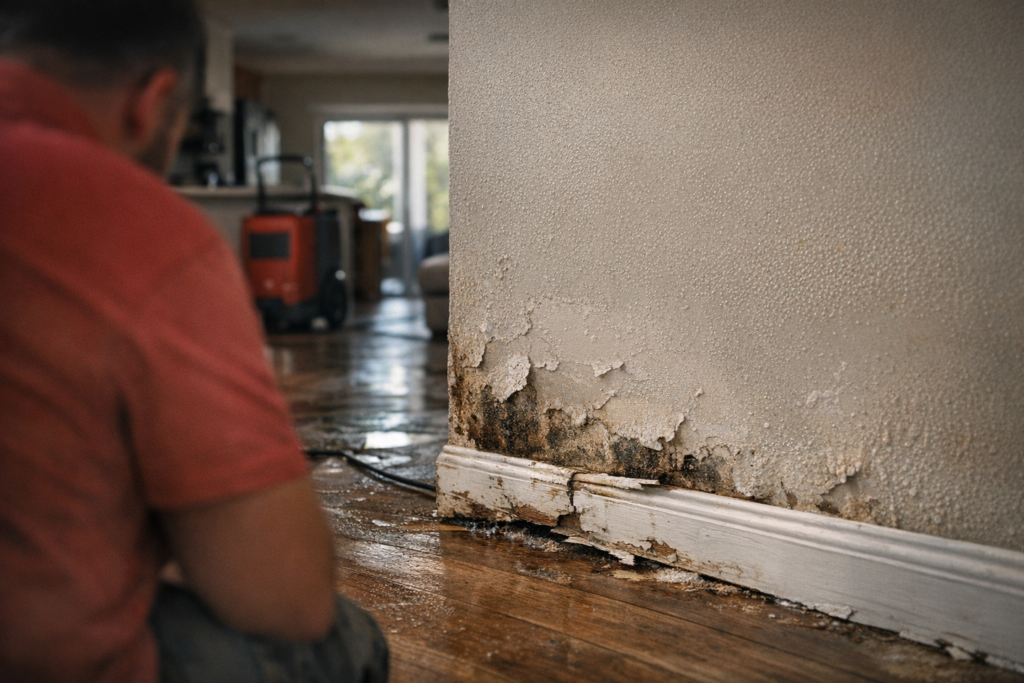
Sarasota Water Damage Costs in 2026: What Homeowners in Key Neighborhoods Are Paying
Water damage restoration costs vary significantly depending on the scope of the damage and the specific neighborhood within Sarasota County. Understanding realistic cost ranges before disaster strikes helps homeowners and property managers make faster, smarter decisions when every hour counts. This guide covers what SW Florida homeowners are actually paying in 2026 and the neighborhood-specific factors that push costs up or keep them manageable.
Sarasota County Housing Stock: Why Age Matters for Restoration Costs
Sarasota County’s housing inventory spans nearly a century of construction eras, and the decade your home was built has a direct impact on what you will pay after water damage. Older properties carry hidden liabilities – deteriorating materials, outdated plumbing systems, and regulated substances – that simply do not exist in newer construction.
Neighborhoods like Gulf Gate Estates and Sarasota Springs contain significant concentrations of homes built between the 1950s and early 1970s. According to the U.S. Environmental Protection Agency, homes built before 1980 commonly contain asbestos-containing materials in insulation, floor tiles, pipe wrap, and textured ceiling coatings. When water damage occurs and these materials are disturbed, testing and abatement become legally required steps before restoration can proceed – adding both time and cost.
Cast iron drain pipes are another major cost driver in pre-1975 Sarasota homes. Most cast iron lines installed in that era have a usable lifespan of 40 to 60 years, meaning many pipes running under Gulf Gate Estates slabs are already well past their design life. Florida’s high water table, sandy soil, coastal humidity, and salt air accelerate corrosion significantly faster than the national average. When these pipes fail silently under a concrete slab, the resulting Category 2 or Category 3 water intrusion can spread through an entire structure before a homeowner notices anything.
In contrast, Palmer Ranch and Prestancia saw most of their development in the 1980s and 1990s. These homes generally use PVC drain lines, lack asbestos-containing materials, and dry faster, which keeps restoration costs lower. Newer master-planned communities like Lakewood Ranch and Wellen Park represent another generation of construction with modern moisture barriers, impact windows, and tighter building envelopes – all factors that limit damage spread when a leak occurs.
2026 Cost Ranges for Sarasota Water Damage Restoration
The ranges below reflect current SW Florida market pricing, factoring in the regional cost of labor, equipment rental, and material supply. All estimates assume professional restoration following IICRC S500 Standard for Professional Water Damage Restoration protocols, which govern drying timelines, moisture measurement, and documentation requirements.
- Minor Appliance Leak, Single Room (Category 1 Clean Water): $1,300 to $4,500. Includes water extraction, commercial drying equipment, and minor drywall or flooring repair. Fast response keeps this range low – delays past 24 hours can push Category 1 water toward Category 2 contamination.
- Bathroom or Laundry Room Flood (Category 2 Grey Water): $3,500 to $9,000. Grey water from appliance overflows or toilet leaks requires additional containment, antimicrobial treatment, and disposal of porous materials that cannot be safely dried in place.
- Burst or Failed Pipe Affecting Multiple Rooms: $8,000 to $30,000. The wide range reflects whether the water reached a slab-on-grade foundation (requiring injection drying), whether drywall cavities were saturated, and the number of flooring types involved.
- Major Storm or Hurricane Water Intrusion: $25,000 to $90,000 and higher for significant events. Structural sheathing damage, roof deck exposure, and simultaneous damage to multiple systems compound costs rapidly. FEMA and FEMA’s FloodSmart program note that standard homeowners policies do not cover rising water – separate flood coverage through the National Flood Insurance Program applies.
- Sewage Backup (Category 3 Black Water): $7,000 to $22,000 for residential scope. Black water restoration requires full personal protective equipment protocols, hard demolition of any porous materials in contact with sewage, and post-remediation clearance testing before rebuilding begins.
- Mold Remediation Added Cost: Mold discovered during restoration typically adds $1,200 to $5,500 depending on square footage affected and whether it has penetrated framing or HVAC components. Florida’s warm, humid climate means mold can establish visible colonies within 48 to 72 hours of water intrusion.
Neighborhood-Specific Cost Factors Across Sarasota County
The same burst pipe that costs $10,000 to restore in a Lakewood Ranch villa may cost $22,000 in a Gulf Gate Estates ranch home. Here is what drives the difference across Sarasota’s key neighborhoods.
- Gulf Gate Estates (1960s-1970s construction): This is Sarasota’s highest-risk neighborhood profile for elevated restoration costs. Homes in this area frequently have cast iron drain lines that are at or beyond end-of-life. Florida’s coastal conditions – salt air, humidity, and a high water table – accelerate pipe corrosion relative to inland markets. Any renovation or restoration work that disturbs pre-1980 materials also triggers mandatory asbestos testing under Florida Department of Environmental Protection rules. Testing runs $300 to $700; abatement, if required, adds $2,000 to $8,000 before restoration can begin.
- Siesta Key Beach Cottages: Coastal exposure creates its own cost multiplier. Saltwater intrusion accelerates corrosion of metal fasteners, fixtures, and structural hardware. Older cottages near the water often have elevated humidity baselines that slow drying cycles and extend equipment rental duration. Some cottage-zone structures also carry wind mitigation requirements that affect how repairs are permitted and inspected.
- Downtown Sarasota Condos: High-rise and mid-rise condo restoration introduces complexity not present in single-family work. Shared plumbing stacks mean a leak on one floor can appear two or three stories below. HOA notification requirements, common-area liability, and the need for freight elevator scheduling for equipment access all add cost and time. Condo unit owners should review their association’s master policy carefully – the dividing line between unit coverage and master policy coverage is often the origin of the leak, not where the damage appears.
- Palmer Ranch: Homes built in the 1980s and 1990s use PVC plumbing, lack regulated materials, and typically dry faster because of better vapor barriers and tighter construction. Restoration costs here trend toward the lower end of their damage-category ranges.
- Lakewood Ranch: Modern construction with impact-rated windows, concrete block walls, and code-compliant moisture management systems limits damage spread. When water does enter, the absence of legacy materials keeps restoration straightforward and documentation cleaner for insurance purposes.
- Osprey and Nokomis (Coastal Ranch Homes): Similar age profile to Gulf Gate in many sections, with the additional factor of proximity to tidal waterways. Homes in FEMA flood zones face additional permit complexity and may require elevation certificate updates before permitted repairs can be closed out.
What Drives Restoration Costs Higher
Beyond the damage category itself, several Sarasota-specific factors consistently push final invoices above initial estimates.
- Delayed response: The IICRC documents that clean water (Category 1) can degrade to grey water (Category 2) within 24 to 48 hours in Florida’s warm climate. Each contamination upgrade raises both the scope of demolition required and the cost of disposal. Calling a restoration contractor within the first hour – not the first day – is the single most effective cost-control measure available to homeowners.
- Asbestos testing and abatement: Any home built before 1980 should be tested before demolition work begins. The EPA recommends leaving suspected asbestos-containing materials undisturbed if they are in good condition, but water damage frequently compromises those materials. Testing and abatement add $2,300 to $8,500 to a Sarasota restoration project when required.
- Slab drying requirements: Sarasota County’s prevalent slab-on-grade construction means water regularly migrates under concrete. Drying a saturated slab requires specialty low-profile equipment and extended drying cycles of 5 to 10 days, adding to equipment rental costs that would not apply in a crawlspace-foundation market.
- Permit requirements: Sarasota County requires permits for structural repairs, electrical work, and significant drywall replacement triggered by water damage. The county now operates under the 8th Edition 2023 Florida Building Code, effective December 31, 2023. Storm-related repairs are expedited through the county’s building department, but permits still add processing time and inspection fees to the project timeline. WrightWay handles permitting as part of the restoration process.
- Mold remediation: Any water intrusion that goes undetected for more than 48 hours in a Sarasota home carries meaningful mold risk. Mold found during restoration must be remediated under separate protocols before reconstruction begins, adding cost and extending the timeline. Early detection through moisture mapping and thermal imaging is the most reliable way to prevent mold from compounding an already stressful situation.
- Insurance coverage gaps: Standard homeowners policies cover sudden and accidental water damage but exclude gradual leaks, sewer backup (unless an endorsement was purchased), and flood water from any external source. The National Flood Insurance Program covers rising water damage separately – and FEMA data shows that nearly one-third of NFIP claims come from properties outside designated high-risk flood zones. Review your policy before a loss, not after.
How WrightWay Prices Sarasota Restoration Jobs
We handle both sides of condo losses, the association side and the unit-owner side, and document everything so responsibility is clear. Free damage assessment, live answer 24/7.
WrightWay Emergency Services prices every job using Xactimate estimating software – the same platform used by virtually every major insurance carrier in the country. Xactimate produces line-item estimates with local market pricing built in, which means our estimates align with what your adjuster is working from and dramatically reduces back-and-forth during the claims process.
Every estimate includes itemized line items for labor, materials, equipment, and disposal. There are no hidden mobilization fees, no after-hours surcharges for emergency response calls, and no pressure to approve scope before you have reviewed the documentation. Our IICRC-certified technicians follow IICRC S500 and S520 standards for water damage and mold remediation respectively, which means your documentation will meet insurer requirements and hold up to adjuster review.
License CBC1253650 is current and verifiable through the Florida Department of Business and Professional Regulation.
Insurance Coverage vs. Out-of-Pocket Costs
A standard Sarasota homeowners policy typically covers sudden and accidental water damage – a burst pipe, a failed water heater, or an appliance overflow. What it does not cover includes gradual leaks (a slow drip under a sink that goes unnoticed for months), maintenance-related failures, sewer or drain backup without a specific endorsement, and any water that enters from outside the structure during a storm or flood.
The distinction between “water damage” and “flood damage” is one of the most common sources of claim disputes in SW Florida. Water that comes through the roof during a hurricane is typically covered under your wind or homeowners policy. Water that enters because surrounding ground water rises and flows in from the ground level is flood damage and requires separate NFIP coverage. FloodSmart.gov provides a coverage comparison and licensed agent locator to help homeowners understand what they currently have.
Deductibles in Florida have risen significantly in recent years. Many Sarasota homeowners now carry 2% wind deductibles and $2,500 to $5,000 all-other-perils deductibles. Knowing your out-of-pocket exposure before a claim helps you make informed decisions about emergency services and temporary repairs.
WrightWay Response Time to Sarasota Neighborhoods
WrightWay Emergency Services operates from Nokomis, positioning our crews within rapid driving distance of virtually every Sarasota County neighborhood. Our target response is 30 minutes to most of Sarasota proper, with Gulf Gate Estates, Siesta Key, Palmer Ranch, and Downtown Sarasota all within that window under normal traffic conditions. Osprey and South Sarasota County locations are typically within 20 minutes.
Response time is not just a customer service metric – it directly affects your restoration cost. Getting extraction equipment running within the first 60 to 90 minutes of a water event is the most impactful action available to limit damage spread, protect contents, and keep the job within a manageable scope. Our dispatch line operates 24 hours a day, 7 days a week, including all holidays.
For 24/7 emergency restoration across SW Florida, call WrightWay at (941) 379-8669.
Frequently Asked Questions
What should I do immediately after discovering water damage?
First, ensure safety by turning off electricity to affected areas if water has reached outlets, panels, or appliances. Do not enter standing water until you have confirmed power is off. Then call a professional restoration contractor immediately – every hour of delay increases contamination risk and potential mold exposure. WrightWay can be reached 24/7 at (941) 379-8669. Document everything with photos and video before any cleanup begins, as this documentation supports your insurance claim.
Does homeowners insurance cover all types of water damage?
No. Coverage varies significantly by policy and by the source of the water. Sudden and accidental water damage from internal sources (burst pipes, failed appliances, roof leaks) is typically covered. Gradual leaks, maintenance-related failures, sewer backup without an endorsement, and flood water from external sources are commonly excluded. Review your policy declarations page and call your agent to clarify coverage before you need to file a claim. The National Flood Insurance Program provides separate coverage for flood-related losses.
How long does the water damage restoration process take?
A contained single-room leak with Category 1 water can be dried and ready for repairs in 3 to 5 days. Multi-room events involving saturated drywall, flooring, and insulation typically require 7 to 14 days for structural drying, followed by reconstruction that may take several additional weeks depending on permit timelines and material availability. Mold remediation, when required, adds its own timeline before reconstruction can begin. WrightWay provides a project timeline with each estimate so you know what to expect.
Can I handle water damage restoration myself?
Small surface spills in non-porous areas can sometimes be managed with consumer equipment. However, any event that has saturated drywall, flooring, insulation, or framing requires professional assessment. IICRC standards require moisture measurement at multiple depths and calibrated drying documentation that consumer equipment cannot provide. Inadequate drying is the primary cause of mold growth after water events, and mold discovered months later during a home sale or renovation can cost far more to remediate than a proper initial restoration would have.
Do I need a permit for water damage repairs in Sarasota County?
It depends on the scope of work. Cosmetic repairs like replacing damaged drywall in limited areas may not require a permit. Structural repairs, electrical work, plumbing modifications, and significant material replacement typically do require permits from Sarasota County Building and Development Services. Storm-related repairs receive expedited processing. WrightWay pulls all required permits as part of our standard restoration process – you do not need to navigate the permit office independently.
What is the importance of using a licensed contractor like WrightWay?
Florida law requires licensure for contractors performing structural repairs, roofing, and most trade work above defined thresholds. Using an unlicensed contractor exposes you to liability if work fails, voids manufacturer warranties, and can create title problems when you sell. WrightWay (license CBC1253650) is fully licensed, insured, and IICRC certified. Our documentation meets insurance carrier standards, which means fewer claim disputes and faster settlements. You can verify our license status at any time through the Florida DBPR online portal.
WrightWay handles every restoration job from emergency response through licensed reconstruction.
One IICRC-certified team, one project manager, one phone call. Available 24/7 across Sarasota, Manatee, Charlotte, Lee, and Collier counties.
Add us as a preferred source and our storm updates, claim guides and restoration answers show up higher when you search.


