

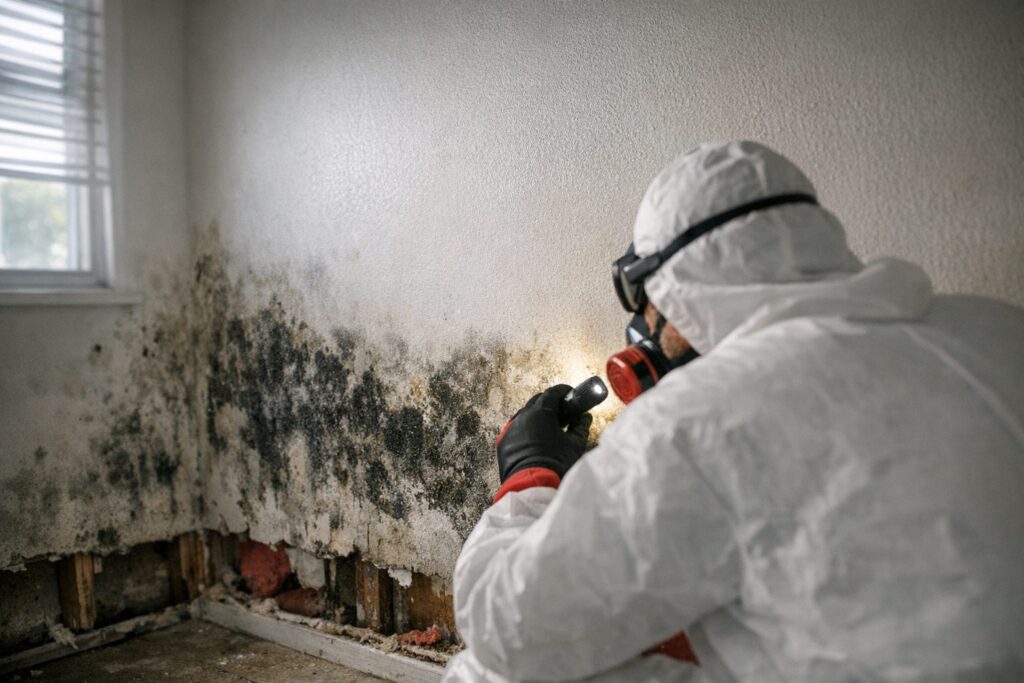
Building Back Better After Mold Damage
When your Florida home requires reconstruction after mold remediation or water damage, you have an opportunity that most homeowners never get: the chance to rebuild with materials that are specifically engineered to resist mold growth in humid climates. Choosing the right materials during reconstruction is one of the most cost-effective investments you can make, because it dramatically reduces the likelihood of facing the same problem again.
Standard building materials used in most Florida construction — paper-faced drywall, fiberglass batt insulation, OSB sheathing — are essentially food sources for mold when they get wet. Replacing them with mold-resistant alternatives during reconstruction adds modest upfront cost but delivers significant long-term protection in Florida’s demanding climate.
Mold-Resistant Drywall Options
Standard drywall is made with a gypsum core sandwiched between paper facings. That paper is a cellulose-based material and one of mold’s preferred food sources. When standard drywall gets wet, mold colonizes the paper face rapidly — often within 24 to 48 hours in Florida’s conditions.
Fiberglass-Faced Drywall
Fiberglass-faced drywall (such as Georgia-Pacific DensArmor Plus or National Gypsum Gold Bond eXP) replaces the paper facing with a fiberglass mat. Since fiberglass is inorganic, it does not provide a food source for mold.
- Best for: Bathrooms, kitchens, laundry rooms, and any wall cavity prone to moisture exposure
- Cost premium: Approximately 30-50% more than standard drywall
- Performance: Achieves a score of 10 (the highest) on the ASTM D3273 mold resistance test
- Limitation: The gypsum core can still absorb water, so it is not waterproof — but it eliminates the primary mold food source
Moisture-Resistant (Green Board) Drywall
Green board drywall has a water-resistant paper facing and a moisture-resistant gypsum core. It is better than standard drywall in humid areas but still uses paper facing, which means it is not truly mold-resistant.
- Best for: Areas with elevated humidity but no direct water exposure
- Cost premium: Approximately 15-25% more than standard drywall
- Limitation: The paper face can still support mold if it remains damp. Not recommended for shower areas or flood-prone locations.
Cement Board
Cement board (Durock, HardieBacker, Wonderboard) is made from Portland cement and does not contain organic material. It is completely mold-proof and waterproof.
- Best for: Shower surrounds, tub surrounds, and areas subject to direct water contact
- Cost premium: Significantly more expensive than drywall and requires different finishing techniques
- Limitation: Heavier, harder to cut and install, and cannot be finished the same way as drywall for living areas
Insulation Choices
Insulation selection has a major impact on mold resistance because insulation occupies wall and ceiling cavities where moisture problems develop.
Closed-Cell Spray Foam
Closed-cell spray polyurethane foam is the gold standard for mold-resistant insulation in Florida. It provides several advantages:
- Acts as a vapor barrier: At 2 inches thick, closed-cell foam achieves a perm rating below 1.0, preventing moisture migration through the wall assembly
- Does not absorb water: The closed-cell structure repels moisture even if the wall cavity gets wet
- No organic food source: Polyurethane is not a mold food source
- Seals air leaks: Spray foam fills gaps and cracks, reducing the air infiltration that brings humid outdoor air into wall cavities
- Higher R-value: R-6 to R-7 per inch vs. R-3.5 for fiberglass batts
Cost: $1.50 to $3.00 per square foot installed, significantly more than fiberglass batts. However, the combined benefits of insulation, air sealing, and moisture control often justify the cost in Florida’s climate.
Open-Cell Spray Foam
Open-cell spray foam is less expensive than closed-cell but does absorb water. It is not recommended for areas prone to water intrusion in Florida homes. However, it can be appropriate for interior walls and ceiling applications where water exposure is unlikely.
Fiberglass Batt Insulation
Standard fiberglass batts are the most common and least expensive insulation option. The fiberglass itself does not support mold, but the kraft paper facing does, and fiberglass batts absorb and hold water readily. When a wall cavity gets wet, fiberglass batts trap moisture against the framing and drywall, creating extended wet conditions that promote mold growth.
- If using fiberglass: Choose unfaced batts and use a separate vapor retarder. Replace any batts that have been wet — they do not dry effectively and harbor moisture.
Flooring Materials
Flooring selection is critical in Florida, where slab moisture and water intrusion are constant threats.
Best Choices for Mold Resistance
| Material | Mold Resistance | Best Application |
|---|---|---|
| Porcelain or ceramic tile | Excellent — inorganic, waterproof | Bathrooms, kitchens, entryways, entire home |
| Luxury vinyl plank (LVP) | Excellent — waterproof, no organic content | Living areas, bedrooms, whole-house flooring |
| Polished or stained concrete | Excellent — inorganic, seamless | Modern homes, garages, utility areas |
| Engineered hardwood | Moderate — more stable than solid wood but core can absorb moisture | Living areas with proper moisture barriers |
| Solid hardwood | Poor — absorbs moisture, swells, supports mold | Not recommended for Florida slab construction |
| Carpet | Poor — absorbs and holds moisture, organic fibers are mold food | Minimize use; avoid in bathrooms and on slabs without vapor barriers |
Underlayment Matters
Regardless of the finish flooring, the underlayment (the layer between the slab or subfloor and the finish floor) plays a critical role. Use synthetic, moisture-resistant underlayment rather than organic felt paper. For slab installations, a vapor barrier membrane between the slab and flooring prevents moisture migration from causing problems above.
Framing and Sheathing
Licensed mold remediation with containment, HEPA filtration, and clearance-ready documentation. Get a real price range before anyone starts cutting drywall.
When framing must be replaced during reconstruction:
- Treated lumber: Pressure-treated framing resists mold and wood-decay fungi. It costs more than standard pine but is far more durable in Florida’s moisture-heavy environment.
- Plywood over OSB: When replacing sheathing, plywood handles moisture exposure significantly better than OSB. OSB swells permanently when wet and is more susceptible to mold colonization.
- Steel framing: For interior walls in high-moisture areas, light-gauge steel framing eliminates the organic food source entirely. It is more expensive and requires different fastening methods but provides permanent mold resistance.
Paint and Coatings
- Mold-resistant paint: Products containing antimicrobial additives (such as Zinsser Perma-White or Benjamin Moore Aura Bath and Spa) provide a surface coating that resists mold growth on painted surfaces
- Mold-resistant primer: Apply before finish paint in bathrooms, kitchens, and any reconstructed areas
- Encapsulant coatings: After remediation, antimicrobial encapsulants can be applied to treated framing before closing up walls to provide an additional layer of protection
WrightWay Rebuilds with Mold-Resistant Materials
When WrightWay Emergency Services handles mold remediation and reconstruction, we recommend and install mold-resistant materials appropriate for each area of the home. Our team guides homeowners through material selections that balance cost, performance, and long-term protection in Florida’s climate.
If your home needs reconstruction after water damage or mold remediation, call us at (941) 379-8669. We serve Sarasota, Bradenton, Fort Myers, Cape Coral, Naples, and all of Southwest Florida. Let us help you rebuild smarter and more resilient.
WrightWay handles every restoration job from emergency response through licensed reconstruction.
One IICRC-certified team, one project manager, one phone call. Available 24/7 across Sarasota, Manatee, Charlotte, Lee, and Collier counties.
Add us as a preferred source and our storm updates, claim guides and restoration answers show up higher when you search.


