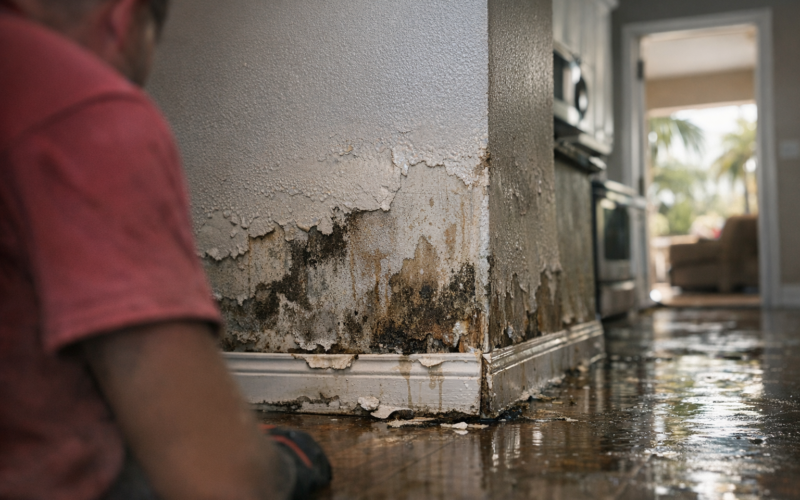
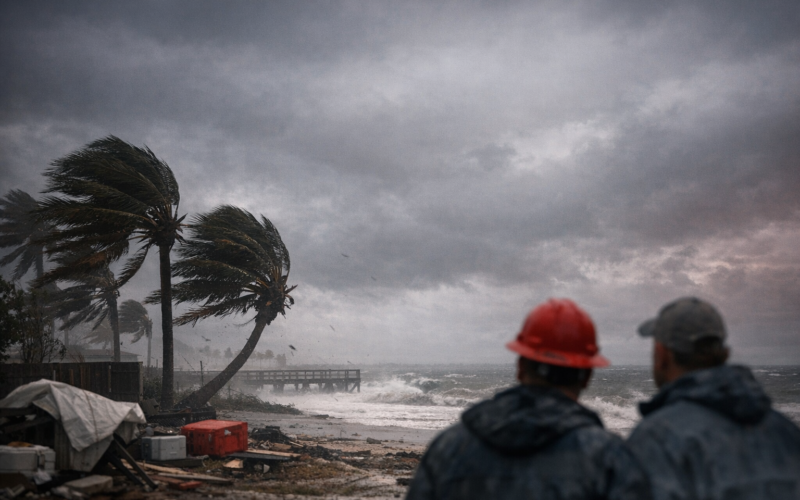
Storm or water damage? Crews are on call 24/7.24/7 emergency crews

Technician testing an HVAC unit with a handheld meter
Crews Available Now - 24/7
Environmental

Indoor Air Quality Testing

Breathe easy with science-backed air testing.

24/7 live dispatch Insurance-ready documentation Residential + commercial response

What to expect from our Indoor Air Quality Testing team

First Priority Protect the property, control the damage, and document the condition accurately.
Typical Conditions Residential, multifamily, HOA, and commercial losses that need a fast, orderly response.
Project Flow Clear communication from emergency stabilization through the next recovery phase.
Technician using a moisture meter and phone near a cabinet toe-kick

Indoor Air Quality Testing in SW Florida

The air inside your home or business can be two to five times more polluted than outdoor air, according to the EPA – and in Florida’s humid, sealed-up, air-conditioned environments, indoor air quality (IAQ) problems are particularly prevalent. Mold spores, volatile organic compounds (VOCs), particulates, allergens, and off-gassing from building materials can cause respiratory problems, allergic reactions, headaches, fatigue, and long-term health issues. WrightWay Emergency Services provides professional indoor air quality testing throughout Sarasota, Bradenton, Venice, Fort Myers, Naples, and all of SW Florida – giving you the data needed to identify problems and implement solutions.

Mold Spores & Microbial Contamination

Mold spore sampling uses calibrated spore trap cassettes and compares indoor spore counts and types with an outdoor baseline to show whether mold is actively growing inside. In Florida that sampling, and the clearance test after remediation, is done by an independent licensed mold assessor rather than by the company doing the cleanup. We coordinate the assessor for you; see the section on air quality testing after mold remediation below.

Volatile Organic Compounds (VOCs)

VOCs are emitted by paints, adhesives, cleaning products, furnishings, and building materials. Elevated VOC levels cause headaches, eye irritation, and respiratory symptoms. Testing identifies specific compounds and concentrations, guiding remediation strategies.

Particulate Matter

Fine particulates from construction activity, smoke damage, dust, and deteriorating materials are measured with real-time particle counters. Elevated particulate levels are common during and after restoration projects and in buildings with inadequate filtration.

Allergens & Biological Contaminants

Dust samples can be analyzed for common allergens including dust mite antigens, pet dander, cockroach allergens, and rodent proteins. These tests are valuable for occupants with allergies, asthma, or unexplained respiratory symptoms.

Carbon Dioxide & Ventilation Assessment

Elevated CO2 levels indicate inadequate ventilation – a common problem in tightly sealed Florida buildings. We measure CO2 concentrations and assess ventilation rates against ASHRAE standards to identify fresh air deficiencies.

When to Request Air Quality Testing

  • Unexplained respiratory symptoms, allergies, or “sick building” complaints
  • Musty odors suggesting hidden mold growth
  • Mold concerns, where we coordinate an independent licensed mold assessor for sampling and clearance
  • Post-fire or smoke exposure to verify air safety before reoccupancy
  • New construction or renovation off-gassing concerns
  • Real estate transactions – pre-purchase IAQ assessment
  • Workplace health complaints in commercial or healthcare settings
  • Post-restoration verification that the building is safe for occupants

1. Client Interview & Building Assessment

We discuss your concerns, review building history (age, renovations, known water events), and inspect the HVAC system, ventilation, and potential contamination sources. This information guides our sampling strategy.

2. Sample Collection

Calibrated sampling equipment collects air, surface, and dust samples appropriate to your concerns. Outdoor control samples are collected simultaneously for comparison. All samples are collected following established protocols (ASTM, NIOSH, or EPA methods) and shipped to accredited laboratories.

3. Laboratory Analysis

Accredited labs analyze samples using microscopy, chromatography, or immunoassay techniques depending on the contaminant. Results typically take 3–5 business days for standard analysis, with rush options available.

4. Results Interpretation & Recommendations

We deliver a clear report explaining findings in context – comparing results to published guidelines (EPA, OSHA, ASHRAE, WHO) and providing specific, actionable recommendations. If the results point to a problem we fix, such as particulates, smoke residue or poor ventilation, we can start the work. If mold is the issue, an independent licensed mold assessor writes the protocol and clears the job, and we perform the mold remediation under Florida mold remediator license MRSR1433.

Why Choose WrightWay?

  • Calibrated, professional-grade sampling equipment
  • Accredited laboratory partnerships for reliable, defensible results
  • Experienced interpretation – we explain what results mean and what to do about them
  • Full-service follow-through – we fix what testing finds, with mold assessment and clearance kept independent as Florida law requires
  • IICRC and ICRA 2.0 certified – qualified for healthcare facility IAQ work
  • Insurance-ready reports supporting coverage for identified contamination

Service Area

WrightWay Emergency Services provides indoor air quality testing throughout Sarasota, Bradenton, Lakewood Ranch, Venice, Nokomis, Englewood, North Port, Port Charlotte, Cape Coral, Fort Myers, Bonita Springs, and Naples. Understand what is in your air – call (941) 379-8669 to schedule testing.

Air Quality Testing After Mold Remediation in Florida

After a mold job, the question owners ask is simple: is the air back to normal? In Florida the answer has to come from someone other than the company that did the work. Section 468.8419 of the Florida Statutes bars a licensed mold remediator from performing a mold assessment on a structure it remediated in the previous 12 months, and bars an assessor from remediating a structure it assessed. The point is to keep the company that gets paid for the cleanup from also grading it.

Here is how that works on a WrightWay mold project:

  • Before: an independent, state-licensed mold assessor inspects the property, takes air and surface samples, and writes the remediation protocol. We can recommend assessors and schedule them, but they work for you, not for us.
  • During: we perform the remediation under Florida mold remediator license MRSR1433, following the assessor’s protocol and the IICRC S520 standard, with containment and HEPA filtration in place.
  • After: the assessor returns for post-remediation clearance testing. Indoor spore levels and types are compared with an outdoor baseline, and the job is not closed until the assessor issues a written clearance.

If a remediation company offers to test, remove and then clear its own mold job, ask for the assessor’s name and license number. A clearance report written by the same company that did the work is exactly what the law is designed to prevent, and an insurance adjuster or a future buyer may not accept it.

For air quality concerns that are not mold, such as dust and particulates during reconstruction, smoke residue after a fire, or a building that simply feels stuffy, call us at (941) 379-8669 and we will tell you whether it is a problem we can fix or one that needs a specialist.

Stabilize the Loss. Carry the Project Forward.

Tell us what happened and we’ll help you understand the next move, whether you need emergency mitigation, a rebuild plan, or both. If the situation cannot wait, call (941) 379-8669 for immediate dispatch.

24/7 Live dispatch
1 team Mitigation to rebuild
Homes + commercial Property types served
Free on-site inspection Insurance coordination support Residential and commercial response
  • Clear recommendations based on the actual condition of the property
  • Documentation and scopes built for adjusters, owners, and property managers
  • One accountable team from emergency work through reconstruction when needed
Need help right now? (941) 379-8669

Talk with a live coordinator about the damage, property type, and what we should prepare before arrival.

Request an Assessment

Share the basics and we’ll take it from there.

We use this information to route the right team, equipment, and response plan before we arrive.

No-obligation first contact Insurance-aware triage Response routing before arrival
Prefer to talk first?

Call (941) 379-8669 and we can help triage the property before you submit the form.

This field is for validation purposes and should be left unchanged.

A WrightWay team member will follow up as quickly as possible to confirm the scope and next steps.

Used to route the right crew and scope A real WrightWay coordinator follows up Call instead if the situation cannot wait
Technician using a thermal imaging camera to inspect a wall for hidden moisture
Technician checking wall moisture beside a window opening
Technician checking equipment settings beside a dehumidifier and air mover
Common Questions

Frequently Asked Questions

Common timing, documentation, and service questions answered in a clearer format so owners and managers can make confident decisions faster.

Fast response guidance Insurance-aware answers Local service expectations

Mold can begin to grow on damp surfaces in as little as 24 to 48 hours under the right conditions. Florida’s warm, humid climate accelerates this timeline significantly, which is why rapid water extraction and structural drying are critical after any water event. If you suspect mold growth following water damage, call WrightWay at (941) 379-8669 for a professional assessment.

While not every species of mold is toxic, all mold growth indoors should be taken seriously. Even common molds can trigger allergic reactions, asthma attacks, and respiratory irritation, especially in children, the elderly, and individuals with compromised immune systems. WrightWay recommends professional testing and remediation any time visible mold covers an area greater than ten square feet or when musty odors persist.

Mold removal refers simply to eliminating visible mold, while mold remediation is a comprehensive process that includes containment, air filtration, removal of contaminated materials, antimicrobial treatment, and moisture control to prevent recurrence. WrightWay follows IICRC S520 standards for mold remediation, which means we address both the mold itself and the underlying moisture source that allowed it to grow in the first place.

WrightWay coordinates with independent, certified industrial hygienists to conduct air-quality sampling and surface testing that identifies the type and concentration of mold spores present. Independent testing ensures unbiased results that are accepted by insurance companies and regulatory agencies. Based on the lab results, we develop a targeted remediation plan specific to your property.

Small areas of mold on non-porous surfaces, typically less than ten square feet, can sometimes be cleaned with household products. However, larger infestations, mold behind walls, and mold on porous materials like drywall and insulation require professional remediation to ensure complete removal and proper containment. Improper DIY cleanup can actually spread mold spores to unaffected areas of your home, making the problem worse.

Florida’s high humidity, frequent rain, and warm temperatures create an ideal environment for mold growth year-round. Common indoor causes include plumbing leaks, poor ventilation in bathrooms and attics, air conditioning condensation issues, and water intrusion from storms. Maintaining indoor humidity below 60 percent and addressing leaks promptly are the most effective ways to keep mold from taking hold in your Southwest Florida home.

Preventing mold recurrence starts with eliminating the moisture source that caused the original growth. WrightWay identifies and repairs the underlying issue, whether it is a roof leak, plumbing failure, or HVAC deficiency, as part of every remediation project. We also apply antimicrobial treatments to affected surfaces, recommend proper ventilation improvements, and can install dehumidification solutions to keep humidity levels in check long after our work is complete.

Insurance Claims Assistance

WrightWay coordinates directly with your insurance company - Xactimate estimates, adjuster meetings, documentation, and supplemental claims. One less thing to worry about.

Adjuster-ready scopes Supplement support One accountable contact
  • Xactimate estimates in insurance-standard format
  • Direct adjuster coordination and scope agreement
  • Complete photo and moisture documentation
  • Supplemental claims for hidden damage
Google Reviews
4.7

Excellent Based on 448 reviews

Related Articles

Helpful reads for owners and managers who want more context around indoor air quality testing, response timing, and the decisions that shape the recovery plan.

Emergency Response

Need Emergency Restoration?

Our team is standing by 24/7 to help stabilize the property, document the loss, and move the job forward fast.

  • 24/7 live dispatch and emergency response
  • Insurance-ready documentation and coordination
  • Mitigation, contents, and rebuild under one roof
Call Now Request emergency restoration service