Understanding Flood Zone Maps in Southwest Florida
Southwest Florida is one of the most flood-prone regions in the United States. The combination of low-lying coastal topography, frequent tropical weather systems, tidal influences, and an extensive network of canals and waterways means that flooding is not limited to beachfront properties. Homes and businesses miles inland can be at significant risk – and many property owners do not realize it until it is too late.
Federal Emergency Management Agency (FEMA) flood zone maps are the primary tool for assessing flood risk, determining insurance requirements, and guiding construction standards. This guide from WrightWay Emergency Services explains how to read those maps, what each zone designation means, and what SW Florida property owners should do with that information.
What Are FEMA Flood Zone Maps?
FEMA produces Flood Insurance Rate Maps (FIRMs) that divide communities into zones based on the level and type of flood risk. These maps are used by insurance companies to set flood insurance premiums, by lenders to determine insurance requirements, and by local governments to enforce building codes and land use regulations.
You can look up your property’s flood zone designation for free at FEMA’s Flood Map Service Center (msc.fema.gov) or through your county’s GIS mapping portal. In SW Florida, the relevant counties include Sarasota, Manatee, Lee, Charlotte, and Collier.
Flood Zone Designations Explained
High-Risk Zones (Special Flood Hazard Areas)
| Zone | What It Means | Insurance Required? |
|---|---|---|
| Zone A | High risk, 1% annual chance of flooding (100-year floodplain). No base flood elevation determined. | Yes, if you have a federally backed mortgage |
| Zone AE | High risk with base flood elevations determined. Most common high-risk zone in SW Florida. | Yes |
| Zone AH | High risk of shallow flooding (1-3 feet), typically from ponding. | Yes |
| Zone AO | High risk of shallow flooding from sheet flow on sloped terrain. | Yes |
| Zone VE | High risk coastal area subject to storm surge and wave action. The most dangerous flood zone. | Yes, with stricter building requirements |
Moderate-to-Low Risk Zones
| Zone | What It Means | Insurance Required? |
|---|---|---|
| Zone X (shaded) | Moderate risk – 0.2% annual chance of flooding (500-year floodplain) | Not required, but recommended |
| Zone X (unshaded) | Minimal risk – outside both the 100-year and 500-year floodplains | Not required |
SW Florida Flood Risk by Area
Understanding general flood risk patterns helps put your specific property in context.
Highest Risk Areas
- Barrier islands: Siesta Key, Longboat Key, Anna Maria Island, Fort Myers Beach, Sanibel, Captiva, Marco Island – virtually all properties are in Zone VE or AE. Storm surge of 6-15+ feet is possible in major hurricanes.
- Coastal mainland: Properties within 1-2 miles of the coast in Sarasota, Bradenton, Fort Myers, Naples, and Punta Gorda are predominantly Zone AE.
- Canal communities: Cape Coral’s extensive canal system places large portions of the city in Zone AE. Many Cape Coral homeowners who believed they were in low-risk zones were flooded by Hurricane Ian when canal levels rose dramatically.
- River corridors: Properties along the Myakka River, Peace River, and Caloosahatchee River are at risk from both rainfall flooding and tidal surge backup during hurricanes.
Moderate Risk Areas
- Inland Sarasota and Manatee counties: Areas east of I-75 are generally Zone X (shaded or unshaded) but can still experience flooding from poor drainage, overwhelmed stormwater systems, and tropical rain events.
- East Fort Myers and Lehigh Acres: Lower coastal surge risk but vulnerable to rain-driven flooding and canal overflow.
Why Your Flood Zone Designation Matters
Insurance Requirements and Costs
- Mandatory purchase: If you have a federally backed mortgage (FHA, VA, USDA, or conventional through a federally regulated lender) and your property is in a high-risk zone (A or V zones), federal law requires you to carry flood insurance.
- NFIP premiums: Under FEMA’s Risk Rating 2.0 methodology (implemented in 2023), premiums are based on individual property characteristics rather than just zone designation. Factors include distance to water, building elevation, flood frequency, and reconstruction cost.
- Typical costs: SW Florida flood insurance premiums range from $500-$1,500 annually for moderate-risk properties to $3,000-$10,000+ for high-risk coastal properties under Risk Rating 2.0.
- Even in Zone X: Over 20% of NFIP flood claims come from properties outside high-risk zones. FEMA recommends flood insurance for every property in Florida regardless of zone designation.
Building Code Requirements
- Zone AE: New construction and substantial improvements must elevate the lowest floor to or above the base flood elevation (BFE)
- Zone VE: Structures must be elevated on pilings or columns, with the lowest horizontal structural member at or above BFE. No enclosed areas below BFE except for parking, building access, and storage with breakaway walls.
- Substantial improvement rule: If you are renovating or repairing a building and the cost exceeds 50% of the building’s market value, the entire structure must be brought into compliance with current flood zone building standards. This affects many storm-damaged homes.
What to Do With Your Flood Zone Information
WrightWay documents every loss to insurance standards, photos, moisture logs, and itemized scopes your adjuster can approve without back-and-forth.
If You Are in a High-Risk Zone
- Purchase flood insurance if you do not already have it – even if your mortgage does not require it. Standard homeowner’s insurance does NOT cover flood damage.
- Know your elevation certificate: Request one from your county or hire a licensed surveyor. Your elevation relative to the BFE directly affects your insurance premium and your actual flood risk.
- Elevate mechanical systems: Raise HVAC units, water heaters, and electrical panels above BFE. This reduces damage and may lower your insurance premium.
- Develop an evacuation plan: Know your county’s evacuation zones (different from flood zones) and evacuation routes. Monitor storm surge forecasts during tropical weather events.
- Pre-position restoration services: Establish a relationship with a restoration company before hurricane season so you have priority response when flooding occurs.
If You Are in a Moderate or Low-Risk Zone
- Still consider flood insurance: Risk Rating 2.0 premiums for Zone X properties are often surprisingly affordable ($300-$800 annually) and provide critical protection against the unexpected.
- Do not assume you are safe: Hurricane Ian’s storm surge reached areas that had never flooded in recorded history. Hurricane Helene in 2024 produced record storm surge along the Sarasota coast. Climate patterns and development patterns change flood risk over time.
- Maintain proper drainage: Keep swales, gutters, and stormwater features clear to minimize rain-driven flooding risk.
After the Flood: Professional Restoration Is Critical
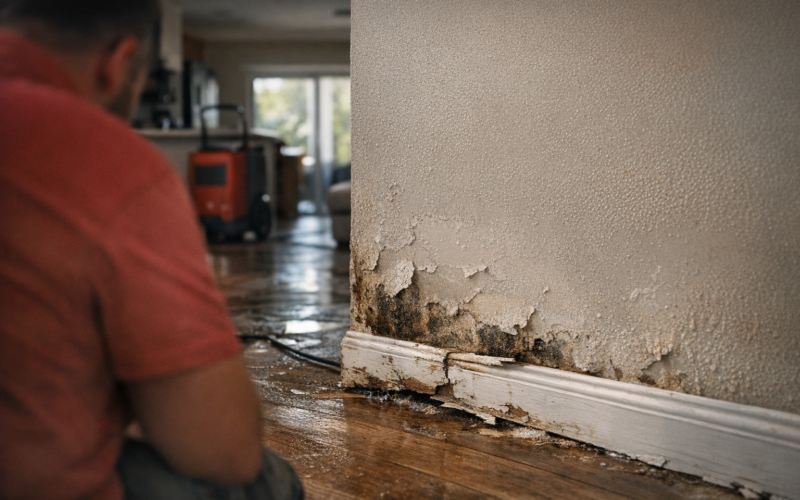
Floodwater is classified as Category 3 (grossly contaminated) water by the IICRC. It contains sewage, chemicals, bacteria, and debris that make it a serious health hazard. Flood-damaged materials – drywall, insulation, carpet, padding – must be professionally removed and the structure must be thoroughly dried, treated with antimicrobial agents, and verified safe before reconstruction begins.
WrightWay Emergency Services provides 24/7 flood damage cleanup and storm damage restoration across all of Southwest Florida. Our IICRC-certified technicians handle everything from initial water extraction through complete reconstruction, including full insurance claims documentation.
Know Your Risk. Protect Your Property.
Take 10 minutes today to look up your property’s flood zone designation. If you discover you are in a higher-risk zone than you expected, take action now – before hurricane season begins June 1. And if a flood damages your property, call WrightWay Emergency Services immediately at (941) 379-8669. The faster restoration begins, the more of your home and belongings we can save.
WrightWay handles every restoration job from emergency response through licensed reconstruction.
One IICRC-certified team, one project manager, one phone call. Available 24/7 across Sarasota, Manatee, Charlotte, Lee, and Collier counties.