The Fire You Cannot See: How Electrical Fires Start Inside Your Walls
Most house fires announce themselves with visible flames, but electrical fires are different. They often begin silently inside wall cavities, behind outlets, or within electrical panels — smoldering for hours or even days before producing enough heat or smoke to trigger an alarm. By the time you see smoke or flames, the fire may have already traveled through wall cavities, along wiring runs, and into the attic or crawl space.
Electrical fires account for approximately 13 percent of all residential structure fires, according to the National Fire Protection Association. In Florida, where aging housing stock, high humidity, and frequent lightning strikes create additional electrical stress, the risk is even more significant. Many homes across Sarasota, Fort Myers, and Naples were built decades ago with wiring that was never designed to handle modern electrical loads.
Common Causes of Electrical Fires in Florida Homes
Understanding why electrical fires start helps explain why the damage they cause is so difficult to detect and repair:
Overloaded Circuits
Older Florida homes were wired for the electrical demands of a different era. Adding modern appliances, charging stations, home offices, and powerful air conditioning systems to circuits designed for far less load creates chronic overheating. Over time, overloaded wires deteriorate, insulation breaks down, and connections loosen — all precursors to fire.
Deteriorated Wiring
Homes built before the 1970s may contain aluminum wiring, knob-and-tube wiring, or early-generation Romex with insulation that has become brittle with age. Florida’s heat accelerates this deterioration. When wire insulation cracks or crumbles, bare conductors can arc against framing members, metal junction boxes, or each other.
Loose Connections
Every wire connection in your home — at outlets, switches, junction boxes, and the electrical panel — is a potential failure point. Thermal cycling (expansion and contraction from heating and cooling), vibration, and corrosion from Florida’s humid salt air gradually loosen connections. A loose connection creates resistance, resistance creates heat, and heat creates fire.
Rodent Damage
Rats and squirrels frequently chew through wire insulation in attics and wall cavities. The resulting bare wire is a direct short circuit and fire hazard. Florida’s warm climate supports year-round rodent activity, and attic spaces provide attractive nesting sites.
Lightning-Induced Surges
Florida is the lightning capital of the United States. Even with surge protectors, a nearby lightning strike can send voltage spikes through your home’s wiring that damage insulation, fuse connections, and create arc fault conditions that manifest as fire days or weeks later.
Why Electrical Fire Damage Extends Far Beyond What You See
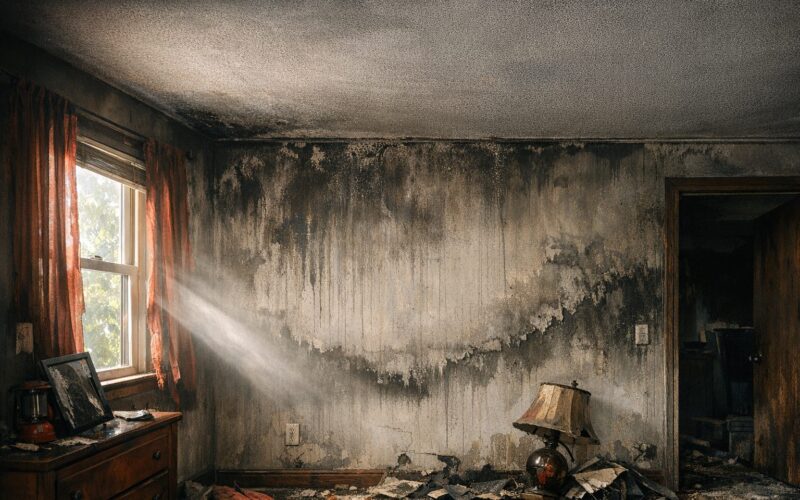
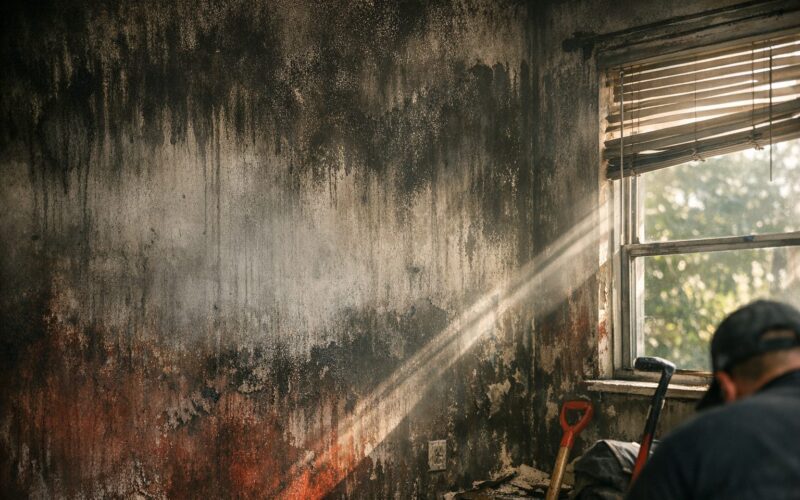
When an electrical fire breaks through a wall and becomes visible, the natural assumption is that the fire started where you can see the damage. In reality, the fire may have originated at a completely different location and traveled through the wall cavity to emerge where it did. This is critically important for restoration because:
- Fire travels along wiring paths: Burning wire insulation acts like a fuse, carrying fire from one junction box to the next, through wall cavities, and between floors
- Charring may exist in multiple wall bays: The fire may have burned inside several wall sections simultaneously before being detected
- Attic and crawl space involvement: Wiring runs through these spaces, and fire can smolder in insulation for extended periods without detection
- Heat damage to adjacent wiring: Even wiring that did not ignite may have sustained heat damage to its insulation, creating future fire risk
- Structural damage to framing: Charred studs, joists, and top plates may have lost significant structural capacity
Warning Signs That Preceded the Fire
In most electrical fire cases, warning signs were present for weeks or months before the fire occurred. If your home is showing any of these symptoms, take action before a fire starts:
- Burning smell with no identifiable source — a faint burning or “hot electrical” odor, especially near outlets or the electrical panel
- Discolored or warm outlets and switch plates — heat radiating from an outlet or brown/yellow discoloration around it indicates an overheating connection
- Flickering lights — intermittent dimming or flickering suggests loose connections or overloaded circuits
- Frequently tripping breakers — breakers that trip repeatedly are doing their job by interrupting dangerous overcurrent conditions
- Buzzing or crackling sounds from outlets, switches, or the electrical panel
- Sparking when plugging in or unplugging devices
- Scorch marks on outlets, cords, or plugs
If you notice any of these signs, contact a licensed electrician immediately. Do not wait.
Professional Restoration After an Electrical Fire
Restoring a home after an electrical fire requires a more investigative approach than other types of fire damage. At WrightWay Emergency Services, our fire damage restoration process for electrical fires includes:
Comprehensive Damage Assessment
We work with licensed electricians and, when necessary, fire investigators to trace the fire’s path through the structure. This includes:
- Thermal imaging to detect hidden hot spots and charred materials behind intact surfaces
- Opening walls along wiring runs to inspect for fire travel and heat damage
- Evaluating all wiring in the fire’s path for damage that could cause reignition
- Assessing structural framing for fire damage and load-bearing capacity
Complete Electrical Evaluation
All wiring in the affected area — and potentially the entire house — must be evaluated by a licensed electrician before power is restored. This evaluation determines:
- Which circuits must be completely replaced
- Whether the electrical panel itself was damaged or was the origin of the fire
- Whether code upgrades are required as part of the repair (Florida Building Code may require bringing the entire electrical system to current standards when significant repairs are made)
Smoke and Soot Remediation
Electrical fires produce particularly acrid smoke because burning wire insulation (PVC) releases hydrochloric acid, dioxins, and other toxic compounds. This type of smoke and soot damage is corrosive and can damage metal surfaces, electronics, and finishes throughout the home if not cleaned promptly.
Structural Repair
Charred framing must be evaluated by a structural engineer or experienced contractor to determine whether it can be sistered and reinforced or must be replaced entirely. Florida Building Code requirements for wind resistance make this evaluation particularly important in our hurricane-prone region.
Reconstruction
Reconstruction after an electrical fire typically includes new drywall, insulation, wiring, outlets, switches, and finishes. When the fire originated in the electrical panel, a complete panel upgrade to modern standards is required.
Insurance Considerations for Electrical Fires
Need restoration help in Southwest Florida right now? WrightWay dispatches in 60 to 90 minutes from three Florida offices, and we answer with a live human.
Homeowner’s insurance covers accidental electrical fires. However, claims can become complicated when the insurance company investigates whether the fire resulted from deferred maintenance or known electrical problems. To protect your claim:
- Do not disturb the fire origin area until the insurance adjuster and any investigators have examined it
- Document everything with photographs and video before any cleanup begins
- Preserve any failed electrical components — the insurance company or their investigators may want to examine them
- Work with a restoration company experienced in insurance claims documentation to ensure the full scope of hidden damage is captured in the claim
Protect Your Home — Call WrightWay
Electrical fire damage is deceptive. The visible damage is almost never the full extent of the problem. Cutting corners during restoration — failing to trace the fire’s full path, leaving heat-damaged wiring in place, or neglecting to address smoke contamination throughout the structure — creates ongoing safety risks and potential for future fire.
WrightWay Emergency Services provides thorough, professional electrical fire restoration throughout Southwest Florida. We coordinate with licensed electricians, work directly with your insurance company, and ensure every aspect of the damage is properly addressed. Call us at (941) 379-8669 for 24/7 emergency response.
WrightWay handles every restoration job from emergency response through licensed reconstruction.
One IICRC-certified team, one project manager, one phone call. Available 24/7 across Sarasota, Manatee, Charlotte, Lee, and Collier counties.
Add us as a preferred source and our storm updates, claim guides and restoration answers show up higher when you search.