Toilet Overflow: More Dangerous Than You Think
A toilet overflow seems like a simple plumbing nuisance — grab a plunger, mop up the water, and move on. But from a health and safety perspective, a toilet overflow can range from a minor cleanup to a biohazard event that requires professional decontamination, depending on what was in the bowl and how far the water spread.
Toilet overflows are one of the most common water damage events in Florida homes, and they are also one of the most frequently mishandled. Homeowners underestimate the contamination risk, clean up the visible water without addressing what soaked into porous materials, and end up with mold, bacterial growth, and persistent odors weeks later.
Understanding the Contamination Level
Not all toilet overflows are created equal. The IICRC (Institute of Inspection, Cleaning and Restoration Certification) classifies the water based on its contamination level, and this classification determines the cleanup approach:
Category 1 — Clean Water (Tank Overflow Only)
If the overflow was caused by a stuck fill valve or faulty flapper and only tank water (the clean water reservoir behind the bowl) spilled, this is Category 1 — clean water with no significant contamination. Cleanup is straightforward and can often be handled by the homeowner for small spills.
Category 2 — Gray Water (Urine, No Feces)
If bowl water containing urine (but no fecal matter) overflowed, this is Category 2 — gray water. It contains bacteria and chemical contaminants that pose a moderate health risk. Porous materials contacted by this water (carpet pad, drywall, unsealed wood) need antimicrobial treatment or removal.
Category 3 — Black Water (Fecal Matter Present)
If the overflow involved fecal matter — whether from a clogged toilet, a sewer line backup, or a septic system failure — the water is Category 3 (black water). This is the most hazardous classification. The water contains potentially dangerous bacteria including E. coli, Salmonella, Hepatitis A, and other pathogens. Category 3 water damage requires professional biohazard cleanup. This is not a DIY situation.
Health Risks of Toilet Overflow Water
The health risks depend on the contamination category, but for Category 2 and especially Category 3, the concerns are serious:
- Bacterial infections: E. coli, Salmonella, Shigella, and Campylobacter from fecal matter can cause severe gastrointestinal illness, particularly dangerous for children, elderly adults, and immunocompromised individuals.
- Viral pathogens: Hepatitis A and Norovirus can survive on contaminated surfaces for days or weeks and are transmitted through contact with contaminated materials.
- Parasitic organisms: Giardia and Cryptosporidium can be present in sewage-contaminated water and cause prolonged illness.
- Secondary mold growth: In Florida’s warm, humid conditions, mold begins growing on sewage-contaminated materials within 24 hours, adding respiratory health risks to the biological contamination.
- Airborne hazards: As contaminated water evaporates or is disturbed during cleanup, bacteria and mold spores become airborne and can be inhaled.
Immediate Steps After a Toilet Overflow
- Stop the water flow. Turn the shutoff valve at the base of the toilet clockwise. If it is stuck or there is no valve, lift the tank lid and raise the float ball or cup to stop the fill valve. If the overflow is from a sewer backup (water coming up through the drain), you cannot stop it at the toilet — call a plumber immediately.
- Do NOT flush again. If the toilet is clogged and overflowing, a second flush adds more water to the problem.
- Assess the contamination. Is this clean tank water, urine-only gray water, or black water with fecal matter? Your cleanup approach depends entirely on this determination.
- Keep children and pets away. Contaminated water is a health hazard. Restrict access to the affected area until cleanup is complete.
- Ventilate the area. Open windows and turn on the bathroom exhaust fan to promote air circulation.
- Protect yourself. If cleaning up Category 2 or 3 water, wear rubber gloves, rubber-soled shoes, and ideally a face mask. Avoid touching your face during cleanup.
DIY Cleanup: When It Is Appropriate
You can handle the cleanup yourself only if all of the following are true:
- The water is Category 1 (clean tank water) or minor Category 2 (urine only, very small volume)
- The water is confined to the bathroom floor (tile or vinyl — non-porous surfaces)
- The water has not spread to adjacent rooms, carpet, or under cabinets
- Cleanup can be completed within a few hours
DIY Cleanup Steps for Minor Overflows
- Remove standing water with towels, mop, or wet/dry vacuum.
- Clean all affected surfaces with a disinfectant. Use a bleach solution (1/2 cup household bleach per gallon of water) or a commercial disinfectant rated for bathroom pathogens.
- Pay attention to grout lines, caulk seams, and the base of the toilet where water pools.
- Dry the area thoroughly with fans and dehumidification.
- Launder all towels and clothing that contacted the water in hot water with bleach.
- Wash your hands thoroughly with antibacterial soap after cleanup.
When Professional Cleanup Is Required
Call a professional restoration company immediately if:
- Fecal matter is present in the water (Category 3). Professional biohazard protocols are required — PPE, containment, antimicrobial treatment, and proper disposal of contaminated materials.
- Water has spread beyond the bathroom. If contaminated water has reached carpet, hardwood, or an adjacent room, porous materials have absorbed the contaminants and need professional extraction, treatment, or removal.
- Water has been standing for more than 2 hours. Bacteria multiply rapidly in standing sewage water at room temperature. Extended exposure means deeper material contamination.
- The overflow was caused by a sewer line backup. Sewer backups involve water from the municipal sewer or septic system, which carries pathogens from the entire system — not just your household. This is always Category 3.
- Subfloor damage is suspected. If water has seeped through the tile grout or around the toilet base and reached the subfloor, the subfloor needs to be assessed and potentially treated or replaced.
The Professional Biohazard Cleanup Process
If water reached walls, flooring seams, or sat overnight, fans alone rarely save the materials. A free moisture inspection tells you exactly what is wet and what it costs to fix.
When WrightWay Emergency Services responds to a Category 3 toilet overflow or sewer backup, the process follows strict IICRC S500 and S540 (biohazard) standards:
- Containment: The affected area is isolated with physical barriers and negative air pressure to prevent cross-contamination to the rest of the home.
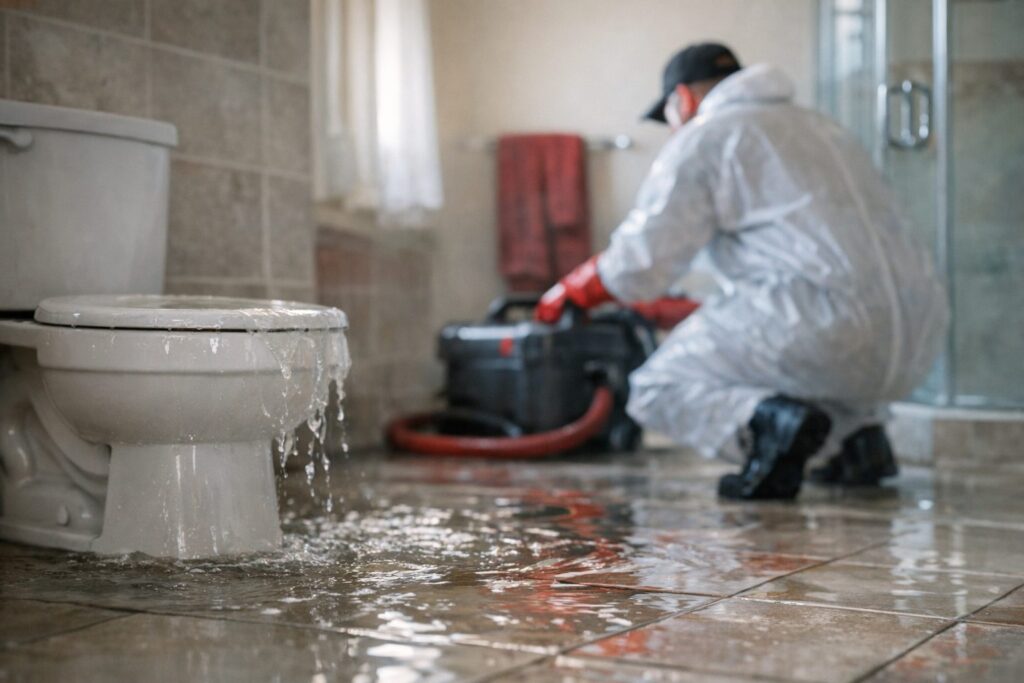
- PPE: Technicians wear full personal protective equipment — Tyvek suits, N95 or P100 respirators, gloves, and eye protection.
- Extraction: Contaminated water is extracted using equipment dedicated to sewage cleanup (not the same equipment used for clean water events).
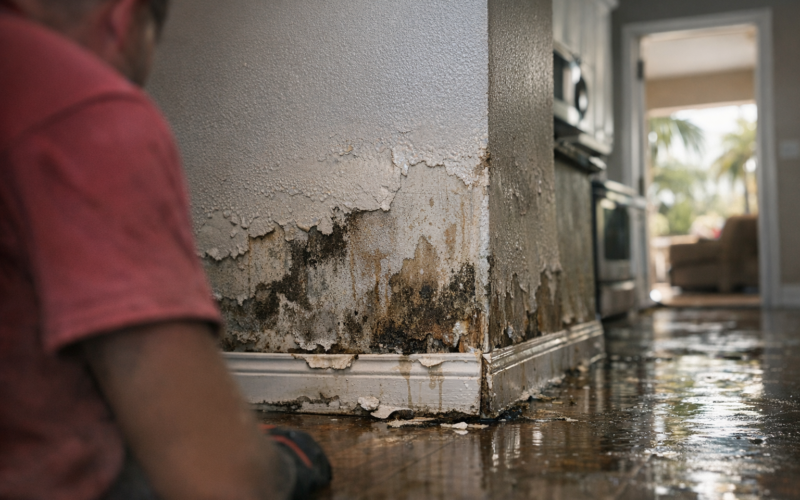
- Removal of porous materials: Carpet, pad, drywall, baseboards, and any other porous material contacted by black water is removed and disposed of as biohazardous waste.
- Disinfection: All remaining surfaces are treated with hospital-grade disinfectant and EPA-registered biocides.
- Structural drying: Commercial dehumidifiers and air movers dry all affected structural materials.
- Verification: Post-cleanup ATP testing or visual inspection confirms surfaces have been adequately decontaminated.
- Reconstruction: Replacement of removed materials — flooring, drywall, baseboards, paint — returns the bathroom to pre-loss condition.
Preventing Toilet Overflows
- Never flush items that do not dissolve. Only human waste and toilet paper belong in a toilet. Wipes (including those labeled “flushable”), feminine products, cotton swabs, and paper towels cause clogs.
- Maintain your sewer line. In older Florida homes, tree roots infiltrate clay and cast iron sewer lines. Have your main sewer line scoped (camera inspection) every 2 to 3 years.
- Check fill valve and flapper. A stuck fill valve causes the most common clean-water overflow. Test by lifting the float — if water does not stop, replace the fill valve.
- Know your shutoff valve. Test the toilet shutoff valve annually to make sure it is not seized. If it is hard to turn, replace it.
Toilet Overflow Emergency? Call WrightWay
Whether it is a minor clean-water overflow or a full sewage backup, WrightWay Emergency Services has the training, equipment, and biohazard certifications to handle it safely. We respond 24/7 across Sarasota, Bradenton, Fort Myers, Cape Coral, Naples, and all of Southwest Florida.
Call (941) 379-8669 for immediate response. Your health and your home deserve professional cleanup — not a mop and a prayer.
WrightWay handles every restoration job from emergency response through licensed reconstruction.
One IICRC-certified team, one project manager, one phone call. Available 24/7 across Sarasota, Manatee, Charlotte, Lee, and Collier counties.
Add us as a preferred source and our storm updates, claim guides and restoration answers show up higher when you search.