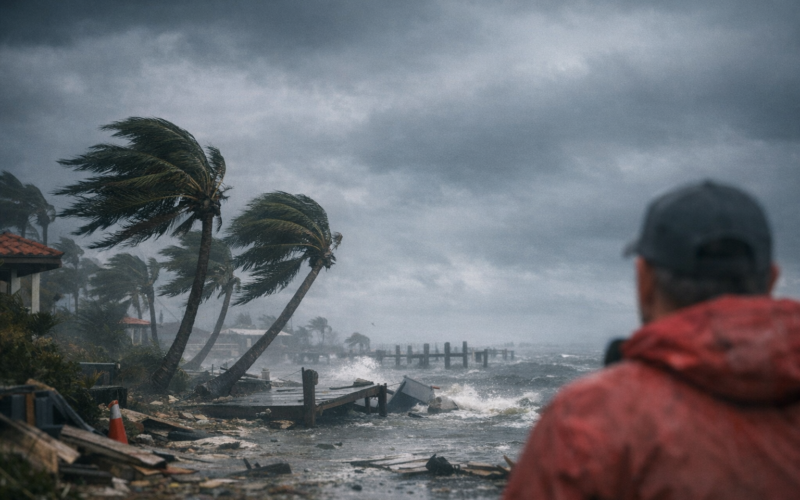
2026 hurricane season is here. NOAA’s official outlook calls for 8 to 14 named storms, 3 to 6 hurricanes, and 1 to 3 majors, with El Nino moderating the season. Read the full breakdown for Sarasota, Manatee, Charlotte, Lee, and Collier counties: NOAA’s 2026 Atlantic Hurricane Season Outlook for Southwest Florida.
Returning Home After Hurricane Evacuation: A Safety-First Guide
You evacuated. You waited out the storm at a shelter, a hotel, or a friend’s home away from the coast. Now authorities are allowing residents to return, and the anxiety of not knowing what you will find is overwhelming. Before you rush home, take a breath and read this guide. The hazards that exist inside and around a storm-damaged home can be just as dangerous as the hurricane itself.
After responding to thousands of storm-damaged properties across Sarasota, Lee, Charlotte, Manatee, and Collier counties following Hurricane Ian (2022), Hurricane Helene (2024), and Hurricane Milton (2024), the team at WrightWay Emergency Services has seen how post-storm hazards injure homeowners who return too quickly or without proper precautions. In our experience, more people are hurt in the days after a hurricane than during the storm itself — and most of those injuries are preventable with proper planning and awareness.
Before You Leave Your Evacuation Location
Wait for Official Clearance
- Do not return until local authorities lift the evacuation order for your zone. Re-entry may be staged — barrier islands and heavily damaged areas may remain restricted for days while mainland areas open first.
- Check road conditions through your county’s emergency management website. Flooded roads, downed power lines, and debris can make routes impassable.
- Fuel up before you go. Gas stations near the affected area may be without power or out of fuel. After Hurricane Ian, fuel was unavailable across much of Lee County for 5-7 days.
- Check if utilities are restored. Your electric utility’s outage map shows whether power is back in your neighborhood.
Pack Essential Supplies for the Return Trip
Do not assume you can buy supplies near your home. Stores may be closed, damaged, or sold out. Bring:
- Drinking water and non-perishable food (enough for 2-3 days)
- Heavy-duty work gloves, closed-toe boots, and long pants
- Flashlights with extra batteries
- First aid kit and prescription medications
- Phone charger (car charger and portable battery pack)
- Insect repellent and sunscreen
- N95 masks (essential for mold spores, dust, and debris)
- Heavy-duty trash bags and basic tools (pry bar, cordless drill, utility knife)
Approaching Your Property
- Never drive through standing water. Six inches of moving water can knock you down. Twelve inches can carry away a vehicle. Floodwater hides road washouts, open manholes, and submerged debris.
- Watch for downed power lines on or near the road. Assume any downed line is energized and stay at least 35 feet away.
- Approach your home slowly and scan for hazards: leaning trees, damaged neighboring structures, displaced propane tanks, and unstable debris piles.
Assessing Your Home From the Outside
Do NOT enter the building until you have walked the full exterior and confirmed these safety points. Our technicians follow this same exterior-first protocol on every storm damage response — it is not overcautious; it is professional practice.
Critical Exterior Checks
- Structural integrity: If the home is visibly leaning, walls are bowed, or the roof is partially collapsed, do NOT enter. Look for cracks in the foundation, separation between walls and roof line, and shifted door/window frames.
- Utility hazards: Check for damaged gas meters or the smell of gas. If present, do not enter — call 911 from a safe distance.
- Standing water: Floodwater is Category 3 (grossly contaminated) under IICRC standards — it contains sewage, chemicals, and may carry live electrical current from submerged outlets. Do not wade through it without protective boots.
- Wildlife: Floodwater displaces snakes (including venomous water moccasins), fire ants, rats, and spiders into homes and yards. Check carefully before reaching into debris piles or dark spaces.
Entering Your Home Safely
- Turn off the main electrical breaker before entering if you can access the panel safely from outside or in a dry area. If the electrical panel is submerged or water-damaged, do not touch it — call an electrician.
- Open doors and windows to ventilate. If the home has been sealed with shutters and water damage has occurred, mold spores and toxic gases (from decomposing organic material and contaminated water) may have accumulated to dangerous levels.
- Wait 10-15 minutes after opening before entering to allow air exchange.
- Use flashlights only — no candles, matches, or open flame until gas leaks are ruled out and the building is ventilated.
- Do not turn on light switches, appliances, or electronics until a licensed electrician confirms the system is safe. Water-damaged electrical systems can arc, short circuit, or cause electrocution.
- Wear an N95 mask if you see or smell mold or if floodwater entered the home. Mold can begin growing within 24-48 hours in Florida’s climate, and by the time you return, mold spores may be significantly elevated.
- Watch your step. Wet floors are slippery. Flooring may be buckled, tiles loosened, or subfloor weakened. Step carefully and test each surface before putting full weight on it.
Documenting Damage for Insurance
WrightWay documents every loss to insurance standards, photos, moisture logs, and itemized scopes your adjuster can approve without back-and-forth.
Before you clean up, move items, or make any changes, document everything. This is one of the most important things you will do in your entire recovery process. Our IICRC-certified technicians emphasize this point to every homeowner: the documentation you create during this initial walk-through becomes the foundation of your entire insurance claim.
- Photograph every room from multiple angles — wide shots showing overall condition
- Take close-up photos of specific damage: water lines on walls, ceiling stains, broken windows, roof penetrations
- Record video walking through the entire home with spoken narration describing what you see, smell, and feel (dampness, odor, temperature)
- Document the high-water mark on walls with a measuring tape visible in the photo for scale
- Photograph damaged personal property before discarding anything — open drawers, closets, and cabinets
- Save all receipts for emergency supplies, temporary housing, emergency repairs, and fuel
Upload all documentation to cloud storage immediately. Email copies to yourself. Do not rely on your phone alone — if the phone is lost or damaged, your documentation goes with it.
Immediate Priorities After Assessment
- Stop ongoing water intrusion with emergency board-up and tarping — every hour an opening remains in your building envelope allows more water damage and accelerates mold growth
- Remove standing water with professional water extraction — commercial truck-mounted extractors remove hundreds of gallons per hour, far exceeding what residential wet/dry vacuums can manage
- Ventilate and begin drying — open all windows and doors, and contact a restoration company to set up commercial dehumidifiers and air movers
- Address food safety — discard all refrigerated food if power has been out more than 4 hours. Discard any food that contacted floodwater, including sealed cans with dented seams.
- Do not attempt to live in a flood-damaged home until it has been professionally assessed. Category 3 floodwater contamination creates serious health risks including bacterial infections and mold-related respiratory illness.
WrightWay Is Here When You Return
WrightWay Emergency Services (CBC license #CBC1253650, IICRC-certified) provides 24/7 storm damage restoration across Sarasota, Fort Myers, Cape Coral, Naples, Bradenton, and all of Southwest Florida. When you return home and find damage, call us at (941) 379-8669. We respond with commercial-grade equipment and certified technicians to stabilize your home, extract water, begin structural drying, and start the restoration process — all coordinated with your insurance from day one.
Coming home after a hurricane is hard enough. Let professionals handle the restoration so you can focus on your family.
WrightWay handles every restoration job from emergency response through licensed reconstruction.
One IICRC-certified team, one project manager, one phone call. Available 24/7 across Sarasota, Manatee, Charlotte, Lee, and Collier counties.