Ground Floor Condos and Flood Risk in Florida
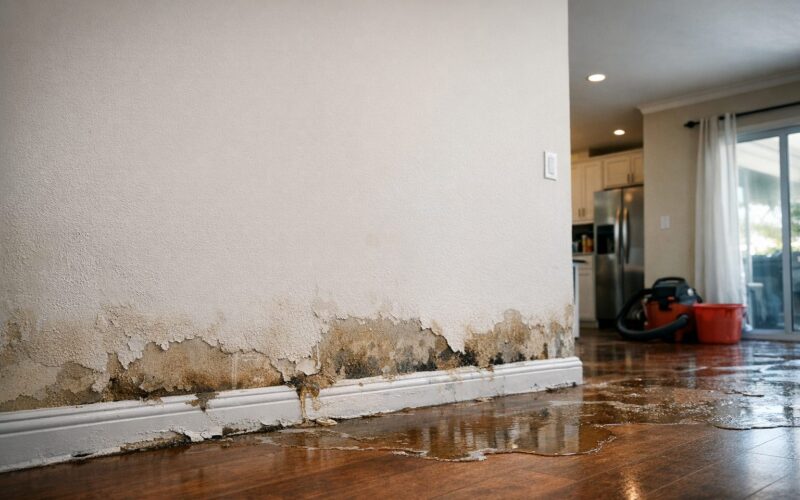
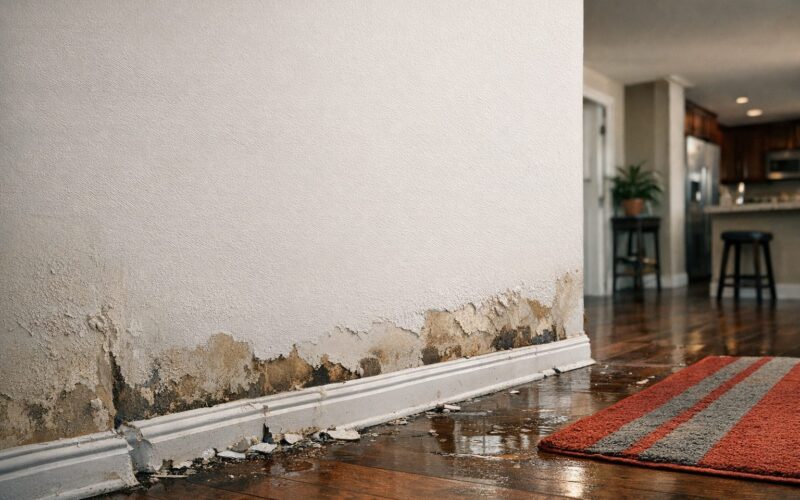
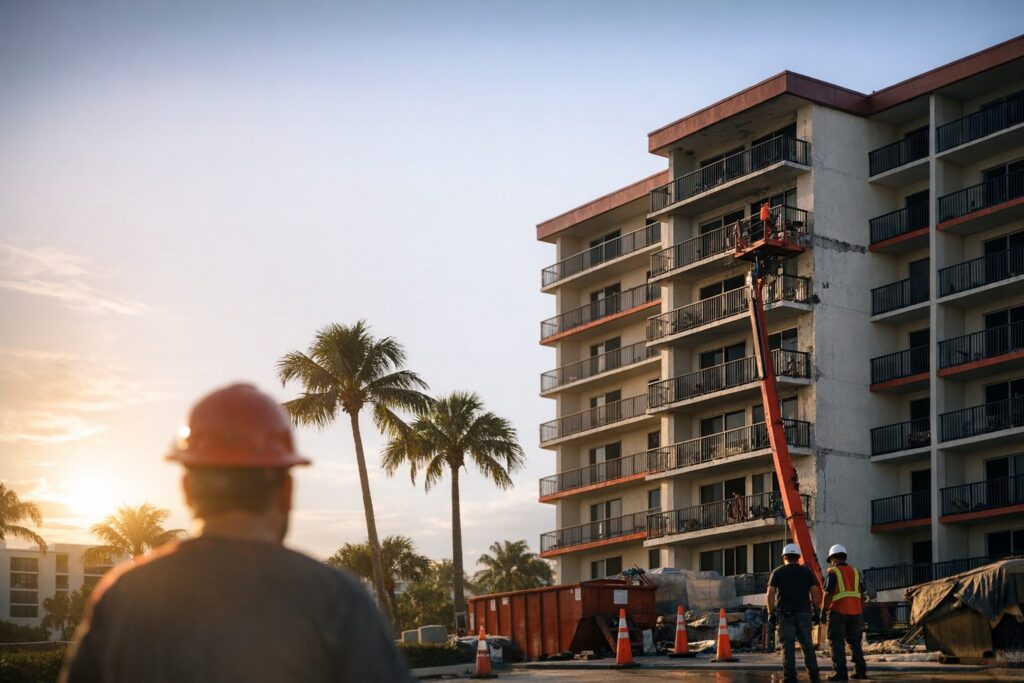
Ground-floor condominium units in Southwest Florida face disproportionate flood risk compared to units on higher floors. Storm surge, flash flooding, and even routine heavy rain can send water into ground-level units while the rest of the building remains untouched. When this happens, condo owners face a frustrating and often confusing question: who is financially responsible for the damage — the unit owner or the homeowners association?
The answer depends on the type of damage, the cause of the water intrusion, the association’s master insurance policy, and the unit owner’s individual coverage. Understanding these layers before a flood event saves enormous stress and financial uncertainty after one.
How Condo Insurance Works in Florida
Condo insurance in Florida operates on a two-layer system:
The HOA Master Policy
The condominium association carries a master insurance policy that covers the building’s common elements and structure. In Florida, master policies come in two basic forms:
- “Bare walls” coverage: The master policy covers the building structure from the exterior walls inward to the unfinished interior surfaces — studs, drywall (unfinished side), concrete, plumbing within walls, and electrical wiring. Everything inside the unit (flooring, cabinets, fixtures, appliances, paint, wall coverings, personal property) is the unit owner’s responsibility.
- “All-in” coverage: The master policy covers everything a bare-walls policy covers plus the interior finishes — flooring, cabinets, countertops, fixtures, and built-in appliances as originally installed or as described in the declarations. The unit owner is responsible for upgrades, improvements, and personal property.
Florida Statute 718.111(11) governs condominium insurance requirements, and your condo’s Declaration of Condominium specifies exactly what the master policy covers. Read your declaration — it is the definitive document.
The Unit Owner’s HO-6 Policy
Your individual condo insurance policy (HO-6) covers what the master policy does not: your personal property, improvements and upgrades you have made, and the interior of your unit to the extent not covered by the master policy. It also provides liability coverage and loss assessment coverage (which helps pay your share of the master policy deductible when the association makes a claim).
The Flood Insurance Complication
Here is where ground-floor condo owners face the biggest gap: neither the HOA master policy nor your HO-6 policy covers flood damage. Both are standard property insurance policies that explicitly exclude flooding (rising water from external sources).
Flood coverage for condos requires separate flood insurance policies at both levels:
RCBAP (Residential Condominium Building Association Policy)
This is the NFIP flood policy for the condominium association. It covers the building structure (including the ground floor units’ structural elements) against flood damage. However, it does not cover unit owners’ personal property, interior improvements, or the interior finishes in a bare-walls building.
Individual NFIP or Private Flood Policy
Unit owners can purchase an individual NFIP flood policy or a private flood policy that covers:
- Contents (personal property): Up to $100,000 under NFIP
- Building property within the unit: Improvements, alterations, and interior finishes up to $250,000 under NFIP
Many ground-floor condo owners in Florida do not carry individual flood insurance because they assume the association’s coverage protects them. This assumption can be devastatingly wrong.
Who Pays for What: Common Scenarios
Scenario 1: Pipe Burst in a Common Area Floods Ground Floor Units
A common-area pipe (within the building’s walls, not inside a unit) bursts and floods three ground-floor units:
- Structural damage to walls, slab, framing: HOA master policy (this is a covered water damage event from a common element)
- Interior finishes (flooring, cabinets, paint): HOA master policy if “all-in” coverage; unit owner’s HO-6 if “bare walls” coverage
- Personal property (furniture, electronics, clothing): Unit owner’s HO-6 policy
- Master policy deductible: Often assessed to the association and may be passed through to unit owners via special assessment. Your HO-6 loss assessment coverage can help pay your share.
Scenario 2: Storm Surge Floods Ground Floor Units
A hurricane pushes storm surge into the ground floor of the building:
- Structural damage: HOA’s RCBAP flood policy (if the association has one)
- Interior finishes and improvements: Unit owner’s individual flood insurance policy
- Personal property: Unit owner’s individual flood insurance policy (contents coverage)
- If the HOA has no RCBAP: Structural flood damage may be uninsured, potentially resulting in a massive special assessment to unit owners for building repairs
- If the unit owner has no flood insurance: All interior damage and personal property loss is out of pocket
Scenario 3: Flash Flooding From Heavy Rain
Intense rain overwhelms drainage and water enters ground-floor units from under doors and through sliding glass door tracks:
- This is flood damage (rising water from an external source)
- Same coverage breakdown as the storm surge scenario above
- Homeowners and HO-6 policies will not cover this
- Only flood insurance (RCBAP for the building, individual flood policy for unit interiors and contents) applies
The Special Assessment Trap
We handle both sides of condo losses, the association side and the unit-owner side, and document everything so responsibility is clear. Free damage assessment, live answer 24/7.
When a condo association faces a large uninsured loss — such as flood damage to the building without an RCBAP policy — the association must find a way to pay for repairs. The most common mechanism is a special assessment levied against all unit owners. After Hurricane Ian, some Southwest Florida condo associations levied special assessments of $20,000 to $100,000 or more per unit to cover uninsured flood damage to buildings and common areas.
As a ground-floor unit owner, you could face:
- The full cost of restoring your unit interior (if you lack individual flood insurance)
- A special assessment for your share of building structural repairs (if the HOA lacks adequate flood coverage)
- Loss of personal property (if you lack contents coverage)
The total exposure can easily exceed $50,000 to $100,000 for a single ground-floor unit.
How to Protect Yourself as a Ground-Floor Condo Owner
- Read your Declaration of Condominium. Understand exactly what the master policy covers and what is your responsibility.
- Confirm the HOA carries an RCBAP flood policy. Ask your board or property manager for proof of the association’s flood coverage and its limits. If the association does not have flood insurance, advocate strongly for purchasing it.
- Purchase individual flood insurance. Whether through the NFIP or a private carrier, individual flood coverage for your unit is essential. Cover both contents and building property (your interior improvements).
- Maximize your HO-6 coverage. Ensure your HO-6 policy includes adequate loss assessment coverage ($25,000 to $50,000) to help pay special assessments resulting from master policy claims.
- Document your improvements. Photograph and inventory all improvements you have made to the unit (new flooring, kitchen remodel, bathroom upgrades). This documentation supports your individual flood claim if those improvements are damaged.
After Flooding: Coordinating the Restoration
Ground-floor condo flood restoration involves coordination between the unit owner, the HOA, the master policy insurer, and individual insurers. WrightWay Emergency Services has extensive experience with multi-party condo restorations and handles:
- Emergency flood extraction and structural drying for both common elements and individual units
- Documentation that clearly delineates building damage (master policy/RCBAP) from unit interior damage (owner’s policy)
- Coordination with multiple adjusters and insurance carriers
- Full reconstruction from bare slab through finished unit
Call (941) 379-8669 for 24/7 emergency flood response for your condo. We work with HOAs, property managers, and individual owners across Southwest Florida.
WrightWay handles every restoration job from emergency response through licensed reconstruction.
One IICRC-certified team, one project manager, one phone call. Available 24/7 across Sarasota, Manatee, Charlotte, Lee, and Collier counties.