The Maintenance Exclusion: The Most Common Reason Water Damage Claims Get Denied
You discover water damage behind a bathroom wall or under a kitchen cabinet. You file an insurance claim expecting your homeowners policy to cover the repairs. Then you receive a denial letter with language you did not expect: “This damage is excluded under the maintenance exclusion as the result of gradual deterioration, wear and tear, or failure to maintain the property.”
The maintenance exclusion is the single most common reason Florida homeowners see their water damage claims denied. Insurance companies use it aggressively, and in some cases, they apply it to situations where homeowners had no reasonable way to know a problem existed. Understanding this exclusion is essential to protecting yourself before and after water damage occurs.
What Is the Maintenance Exclusion?
Every standard homeowners insurance policy in Florida contains an exclusion for damage caused by wear, tear, deterioration, or failure to maintain the property. The underlying principle is straightforward: homeowners insurance is designed to cover sudden, unexpected events, not the gradual breakdown of building components over time.
Common policy language reads something like:
“We do not insure for loss caused directly or indirectly by: wear and tear, marring, deterioration; mechanical breakdown; settling, shrinking, bulging, or expansion of pavements, patios, foundations, walls, floors, roofs, or ceilings; or decay, smog, rust, mold, wet or dry rot.”
In practical terms, the exclusion means your insurance company is not responsible for damage caused by components that slowly failed over time because they were old, corroded, or not properly maintained.
How Insurers Apply the Maintenance Exclusion to Water Damage
Insurance adjusters look for specific evidence to justify applying the maintenance exclusion. Here is what they examine:
Signs of Gradual Damage
- Corrosion or mineral buildup: Pipes or fittings that show years of corrosion suggest a slow, progressive failure rather than a sudden event
- Staining patterns: Old water stains on ceilings or walls that indicate the leak has been present for an extended period
- Mold growth: Established mold colonies behind walls or under flooring suggest moisture has been present for weeks or months, not hours
- Deteriorated materials: Rotting wood, crumbling drywall, or delaminated flooring indicates long-term water exposure
- Visible neglect: Missing caulk, deteriorated grout, unsealed roof penetrations, or disconnected downspouts that should have been addressed through routine maintenance
Common Scenarios Where the Exclusion Is Applied
| Scenario | Why Insurer Denies It |
|---|---|
| Slow leak under a bathroom vanity | Corrosion on the supply line suggests the leak developed gradually |
| Roof leak causing ceiling damage | Adjuster finds deteriorated flashing or missing shingles that should have been repaired |
| Water damage behind a shower wall | Failed grout and caulk allowed water to penetrate over months or years |
| Water heater leak | Rust and sediment buildup indicate the unit was beyond its service life |
| AC condensate line overflow | Clogged drain line from lack of annual maintenance |
When the Maintenance Exclusion Does NOT Apply
The maintenance exclusion has limits. It should not be used to deny claims where the damage truly was sudden and accidental, even if the underlying component was aging. Here are important distinctions:
- A pipe can be old and still fail suddenly. The fact that a supply line was 15 years old does not automatically make its failure gradual. Pipes can function normally for years and then fail abruptly.
- The exclusion targets the cause, not the effect. If a sudden pipe burst causes water damage to your floors and walls, the damage itself was sudden even though the pipe may have been corroding internally.
- Hidden leaks are not always “maintenance” issues. A leak behind a wall or under a slab that you could not see or detect through reasonable inspection is different from a visible drip you ignored.
- Manufacturer defects are not maintenance failures. If a supply line or appliance component fails due to a manufacturing defect, the cause is not lack of maintenance.
How to Fight a Maintenance Exclusion Denial
If your water damage claim is denied under the maintenance exclusion, you have several options:
1. Request the Full Denial Explanation
Ask your insurer for the specific policy language they are relying on, the adjuster’s report, and any photos or evidence that support their position. Under Florida law, you are entitled to this information.
2. Get an Independent Expert Opinion
Hire a licensed plumber, engineer, or restoration professional to inspect the failed component and provide a written opinion on whether the failure was sudden or gradual. Expert opinions often contradict the adjuster’s assessment, especially when the adjuster is not a plumbing or engineering professional.
3. Review Your Restoration Company’s Documentation
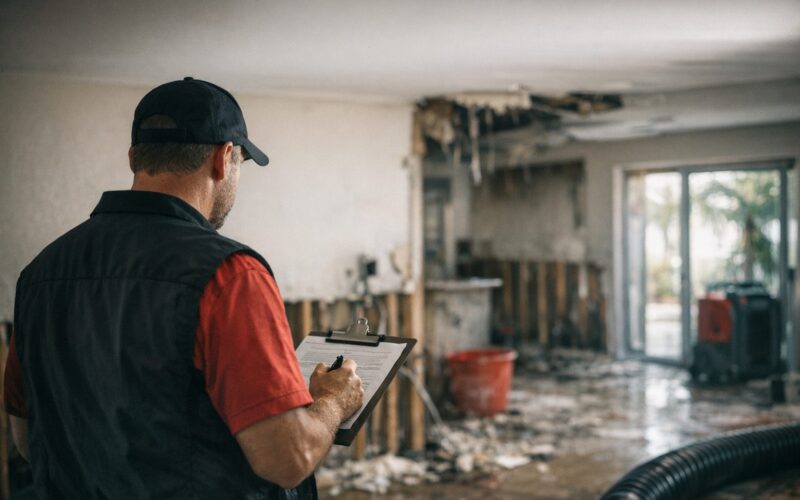
Professional restoration companies document the conditions they find upon arrival. Moisture readings, photographs, and damage assessments taken at the time of loss provide critical evidence of the damage timeline. At WrightWay Emergency Services, our documentation includes photos of the failed component, moisture mapping, and categorization of the water source, all of which help establish whether the event was sudden.
4. File a Complaint with the Florida Department of Financial Services
If you believe the denial is unreasonable, file a complaint with the state regulator. This creates a formal record and may prompt the insurer to reconsider.
5. Consult a Property Insurance Attorney
For significant claims, an attorney who specializes in Florida property insurance can evaluate the denial, negotiate with the insurer, or file suit if necessary. Many work on contingency, meaning you pay nothing unless they recover money for you.
Preventing Maintenance Exclusion Problems
WrightWay documents every loss to insurance standards, photos, moisture logs, and itemized scopes your adjuster can approve without back-and-forth.
The best defense against a maintenance exclusion denial is proactive home maintenance. Keep records that demonstrate you care for your property:
- Schedule annual plumbing inspections and keep the inspection reports
- Replace water heaters before they reach the end of their expected lifespan (8-12 years for tank units)
- Inspect and maintain your roof annually, especially before hurricane season
- Replace washing machine and dishwasher supply hoses every 5 years
- Maintain your HVAC system with regular service calls and keep the condensate line clear
- Re-caulk and re-grout bathrooms and kitchens when sealants deteriorate
- Keep receipts and records of all maintenance work performed on your home
These records demonstrate that you fulfilled your maintenance obligations, undermining any insurer argument that you neglected the property.
Act Fast When Damage Occurs
Rapid response to water damage also helps your case. When you call WrightWay Emergency Services immediately after discovering damage, our quick response and thorough documentation establish that the damage was a new event, not a long-standing condition. We serve homeowners across Sarasota, Fort Myers, Naples, and surrounding Southwest Florida communities.
Call (941) 379-8669 for 24/7 emergency response and insurance claims support.
WrightWay handles every restoration job from emergency response through licensed reconstruction.
One IICRC-certified team, one project manager, one phone call. Available 24/7 across Sarasota, Manatee, Charlotte, Lee, and Collier counties.
Add us as a preferred source and our storm updates, claim guides and restoration answers show up higher when you search.