The Most Expensive Misunderstanding in Homeowners Insurance
Every year, thousands of Florida homeowners discover — after disaster strikes — that the insurance policy they have been paying for does not cover the damage they just suffered. The reason is a distinction that insurance companies draw very clearly but that most homeowners never think about: flood damage and water damage are not the same thing under insurance law, and they are covered by completely different policies.
Understanding this distinction before you need it can save you tens of thousands of dollars. Getting it wrong can leave you personally responsible for your entire loss.
How Insurance Defines Water Damage
Your standard homeowners insurance policy (HO-3 in Florida) covers water damage that results from sudden, accidental events originating inside or above your home. Covered water damage typically includes:
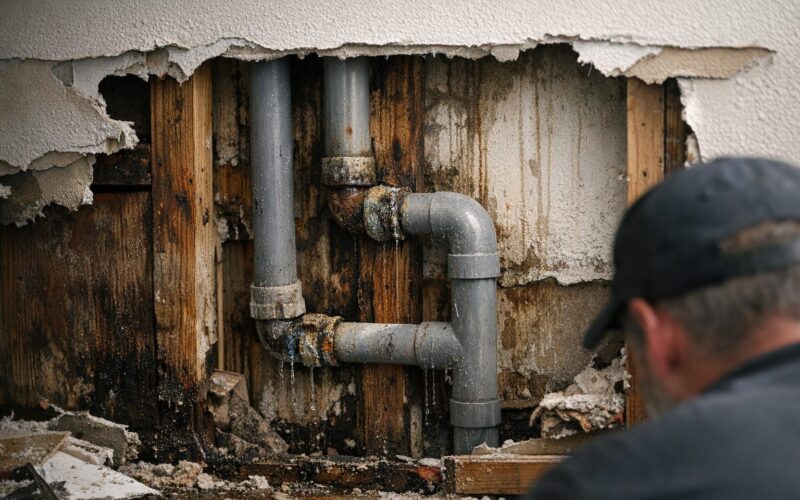
- Burst pipes and supply line failures — a pipe breaks inside a wall and water floods the room
- Appliance malfunctions — your water heater ruptures, your washing machine hose bursts, your dishwasher leaks
- Accidental overflows — a bathtub overflows, a toilet malfunctions
- Roof leaks from covered perils — wind damage to the roof allows rain to enter (the wind damage must be the proximate cause)
- Fire suppression water — water used by firefighters to extinguish a fire causes damage to areas not affected by the fire itself
- HVAC system failures — a drain pan overflows or a condensate line clogs, causing water damage to ceilings and walls
The key characteristic of covered water damage is that it comes from inside or above the home due to a sudden, accidental event. Your homeowners policy is designed to cover these internal water events.
How Insurance Defines Flood Damage
Flood damage is defined by insurance as damage caused by rising water from an external source that inundates normally dry land. This includes:
- Storm surge — ocean water pushed inland by a hurricane or tropical storm
- River and creek overflow — waterways that exceed their banks and flood surrounding areas
- Heavy rainfall runoff — water that accumulates on the ground surface and flows into your home from outside
- Mudflow — a river of liquid mud (classified as a flood event under NFIP definitions)
- Storm drain backup caused by flooding — when municipal systems are overwhelmed by flood conditions
The critical distinction is direction: flood damage comes from outside and below, entering through doors, windows, foundations, and any opening at or below ground level. It is explicitly excluded from every standard homeowners insurance policy sold in Florida.
The Gray Areas That Cause Disputes
Some water damage scenarios fall into gray areas where the line between “water damage” and “flood damage” is not clear-cut. These disputes are common in Florida and can determine whether your claim is paid or denied:
Wind-Driven Rain vs. Rising Water
During a hurricane, your home may be damaged by both wind-driven rain entering through a damaged roof (covered by homeowners insurance) and rising storm surge entering through the ground floor (flood damage, not covered by homeowners insurance). If both occur, determining which damage was caused by which source becomes a major point of contention.
Insurance companies will often attribute as much damage as possible to the flood component — which they do not cover — while homeowners and their advocates argue the damage was caused by wind-driven rain, which is covered. Thorough documentation of the damage timeline and patterns is critical for resolving these disputes.
Sewer Backup: Water Damage or Flood?
When a sewer line backs up into your home, the coverage depends on the cause:
- Backup caused by a blockage in your lateral line: Potentially covered under the water backup endorsement on your homeowners policy
- Backup caused by flooding overwhelming the municipal sewer system: This is flood damage, requiring a flood insurance policy
The same sewage coming through the same drain can be classified differently depending on whether the cause was an internal blockage or an external flood event. This distinction matters enormously at claim time.
Groundwater Seepage
When the water table rises during heavy rain and moisture seeps through your slab or foundation walls, this is typically excluded by both homeowners insurance (which excludes “water below the surface of the ground”) and flood insurance (which requires surface flooding). This gap in coverage catches many Florida homeowners by surprise.
Real-World Cost of Getting It Wrong
Consider these scenarios that Florida homeowners face regularly:
Scenario 1: Hurricane Flooding Without Flood Insurance
A Sarasota homeowner with $350,000 in homeowners coverage but no flood insurance sustains $80,000 in damage when storm surge enters the first floor during a hurricane. The homeowners policy denies the claim because rising water is excluded. The homeowner is responsible for the entire $80,000 — enough to drain most families’ savings or force them into debt.
Scenario 2: Flash Flood Assumed to Be Covered
A Fort Myers homeowner experiences 8 inches of water in the home after an intense thunderstorm overwhelms the street drainage. They assume their homeowners insurance covers it — after all, it was “just rain.” But because the water accumulated on the ground surface and entered the home from outside (the definition of flooding), the homeowners policy denies the claim. Without a separate flood policy, the $45,000 in damage is the homeowner’s responsibility.
Scenario 3: Both Policies Save the Day
A Naples homeowner carries both homeowners insurance and a private flood insurance policy. During Hurricane Ian, the home sustains roof damage that allows wind-driven rain to damage the second floor (homeowners claim: $25,000) and storm surge that floods the first floor (flood claim: $60,000). Both policies pay their respective approved claims. The homeowner’s out-of-pocket costs include deductibles on each policy plus any amounts excluded or not covered.
How to Protect Yourself
WrightWay documents every loss to insurance standards, photos, moisture logs, and itemized scopes your adjuster can approve without back-and-forth.
- Purchase flood insurance. Every Florida homeowner should carry flood insurance regardless of flood zone designation. Even low-risk zones flood. Preferred Risk Policies for X-zone properties cost as little as $300 to $600 per year.
- Add the water backup endorsement. Make sure your homeowners policy includes coverage for sewer and drain backup. This low-cost endorsement (typically $30 to $100 per year) covers an otherwise excluded peril.
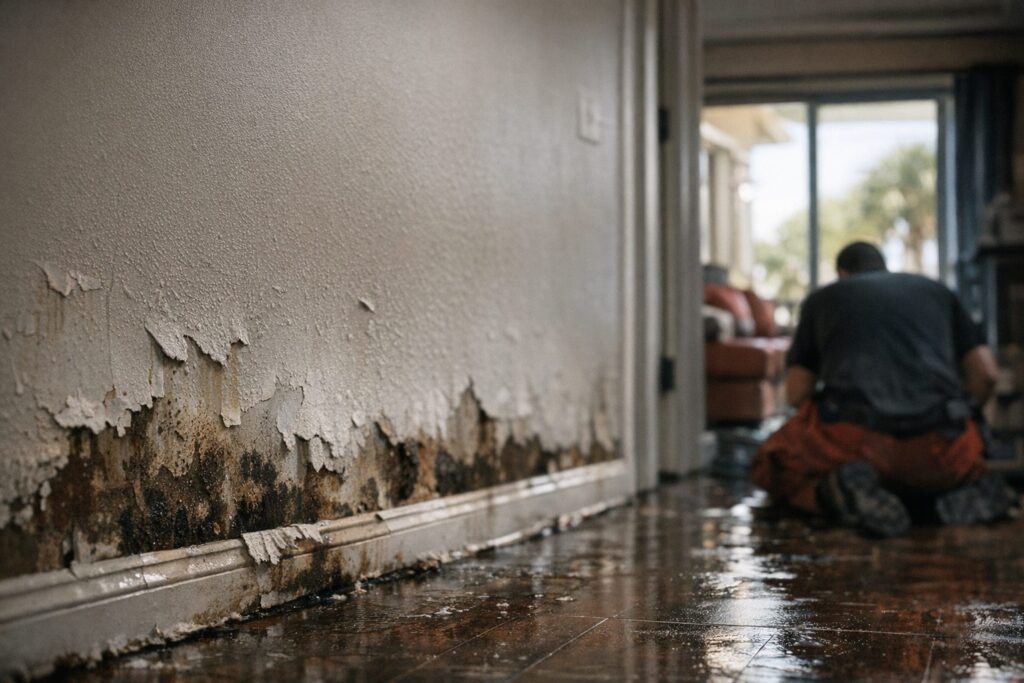
- Document damage thoroughly. After any water event, photograph and video everything before cleanup begins. Note the direction the water came from, the source, and the timeline. This documentation is your evidence if there is a coverage dispute.
- Hire a restoration company that understands insurance. Professional documentation of water source, category, and damage patterns strengthens your claim and helps prevent coverage disputes.
- Review your policies annually. Understand exactly what each policy covers and where the gaps are. Ask your agent to walk you through flood vs. water damage exclusions in plain language.
WrightWay Documents Every Detail for Your Claim
When WrightWay Emergency Services responds to water damage, one of our first priorities is documenting the source and cause of the water intrusion. This documentation is critical for insurance claims because it determines which policy applies. Our technicians are trained to identify and record:
- Water entry points and flow patterns
- Water category and source identification
- High-water marks and depth measurements
- Timeline of the water event
- Photographic and moisture meter documentation at every stage
This evidence-based approach protects our clients during the claims process and helps ensure you receive the coverage you are entitled to — from the right policy.
Call (941) 379-8669 for 24/7 emergency water and flood damage response. WrightWay Emergency Services serves Sarasota, Bradenton, Fort Myers, Naples, and all of Southwest Florida.
WrightWay handles every restoration job from emergency response through licensed reconstruction.
One IICRC-certified team, one project manager, one phone call. Available 24/7 across Sarasota, Manatee, Charlotte, Lee, and Collier counties.