When the Power Goes Out, Your Home’s Clock Starts Ticking
In Southwest Florida, power outages after major storms are not a matter of if but when. After hurricanes, tropical storms, and severe thunderstorms, hundreds of thousands of homes across Sarasota, Fort Myers, Naples, and surrounding communities can lose power for days or even weeks. While most people focus on the inconvenience of no air conditioning, no lights, and no refrigeration, the real danger is what is happening to your property in the dark.
Without electricity, your home loses the systems that keep it healthy: air conditioning that controls humidity, sump pumps that prevent flooding, and dehumidifiers that keep moisture levels in check. In a climate where outdoor humidity regularly exceeds 80 percent, a home without climate control becomes a breeding ground for mold, moisture damage, and deterioration.
The Hidden Risks of Extended Power Outages in Florida
Humidity and Mold Growth
This is the number-one threat during a Florida power outage. Your air conditioning system does double duty: it cools your home and removes moisture from the air. When the AC stops running, indoor humidity can climb from a comfortable 45 to 50 percent to 70, 80, or even 90 percent within hours. At those levels, mold can begin colonizing on drywall, wood, fabric, and other porous surfaces within 24 to 48 hours.
During Hurricane Ian in 2022, many SW Florida homes that survived the storm with minimal structural damage developed serious mold problems during the extended power outages that followed. The storm damage was manageable; the mold remediation that resulted from two weeks without AC was not.
Sump Pump Failure
If your home has a sump pump, it requires electricity to operate. During the exact time your pump is most needed — when storm water is saturating the ground around your foundation — it is powerless. Homes with below-grade areas, low-lying lots, or poor drainage are at significant risk of flooding when sump pumps go offline.
Refrigeration Loss and Contamination
A refrigerator keeps food safe for approximately four hours without power if the door stays closed. A freezer maintains temperature for 24 to 48 hours depending on how full it is. After that, food begins spoiling, creating odors that permeate the appliance and surrounding cabinetry. Leaking liquids from thawing foods can damage flooring. In severe cases, biological contamination from spoiled food requires professional cleanup.
Water System Failures
If your home is on a well system, you lose water pressure when the power goes out because the well pump is electric. This means no flushing toilets, no running water for cleaning, and no ability to wash contaminated areas. For homes on municipal water, the supply usually continues, but water treatment facilities running on backup generators may issue boil-water advisories.
Step-by-Step Protection Plan During a Power Outage
Immediate Actions (First 2 Hours)
- Open interior doors: Allow air to circulate throughout the home. Closed rooms trap humidity and accelerate mold growth.
- Open windows strategically: If the storm has passed and outdoor conditions are safe, open windows on opposite sides of the home to create cross-ventilation. Do not open windows if it is still raining or if outdoor humidity is extreme.
- Unplug sensitive electronics: Power surges when electricity is restored can damage computers, televisions, and other electronics. Unplug them now and plug them back in through surge protectors when power returns.
- Check for water intrusion: Inspect your home for any storm-related water entry: roof leaks, window leaks, door seals, and plumbing issues. Address these immediately to prevent compounding moisture problems.
- Consolidate refrigerated food: Move essential items to a cooler with ice. Keep refrigerator and freezer doors closed to maintain temperature as long as possible.
Short-Term Actions (2 to 24 Hours)
- Use battery-powered fans: Even small fans can move air and reduce moisture buildup in critical areas
- Place desiccant products: Commercially available moisture absorbers (DampRid, silica gel) can help in closets and small rooms
- Remove area rugs: Rugs trap moisture against flooring. Roll them up and store them in a dry area if possible
- Elevate furniture: If there is any standing water risk, place aluminum foil or plastic blocks under furniture legs to prevent wicking
- Monitor for musty odors: A musty smell is an early indicator of mold growth. If you detect odors within 24 hours, mold may already be developing in hidden areas
Extended Outage Actions (24+ Hours)
- Dispose of spoiled food: After 24 hours without refrigeration in Florida heat, most perishable food should be discarded. Bag it in heavy garbage bags and remove it from the house to prevent odors and contamination.
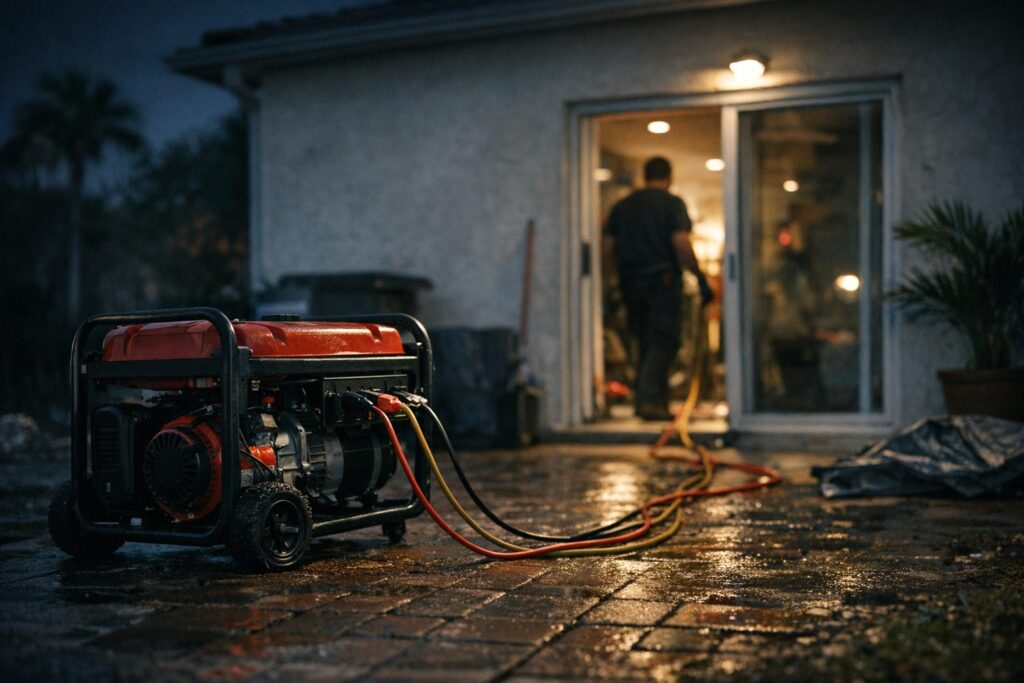
- Consider a generator: If you have a portable generator, prioritize powering your refrigerator and one or two fans for air circulation. Never run a generator indoors, in a garage, or near windows.
- Inspect daily for mold: Check behind furniture, inside closets, under sinks, and on ceiling surfaces for any signs of mold growth. Black, green, or white fuzzy patches on surfaces indicate active colonization.
- Relocate if possible: If the power outage is expected to last more than 72 hours and you have no generator, seriously consider relocating to a friend, family member, or hotel. Your home is at increasing risk with every day without climate control.
Generator Safety: A Critical Warning
WrightWay documents every loss to insurance standards, photos, moisture logs, and itemized scopes your adjuster can approve without back-and-forth.
Portable generators save properties during extended outages, but they also kill people every year. Carbon monoxide from generator exhaust is odorless and lethal. During and after every major Florida hurricane, emergency rooms see carbon monoxide poisoning cases from generators run indoors or too close to homes.
- Never run a generator inside your home, garage, carport, or enclosed patio
- Place generators at least 20 feet from any window, door, or vent
- Install battery-powered carbon monoxide detectors on every level of your home
- Do not refuel a running or hot generator
- Use heavy-duty outdoor extension cords rated for the generator’s output
When to Call a Restoration Professional
Call a restoration company if you experience any of the following during or after a power outage:
- Visible mold growth on any surface
- Standing water from storm intrusion or sump pump failure
- Musty odors that persist after power is restored and AC is running
- Water stains on ceilings or walls that appeared during the outage
- Warping, buckling, or cupping in hardwood floors
- Contamination from sewage backup or spoiled food
The sooner you address these issues, the less extensive and expensive the restoration will be. Mold that is caught early can often be remediated without major demolition. Mold that goes undetected for weeks requires extensive remediation and reconstruction.
Prepare Now, Protect Later
The best time to prepare for a power outage is before one happens. Consider investing in a whole-home generator or a quality portable generator, battery-powered fans, and an emergency response program with a trusted restoration company. Having a plan and a relationship with a professional team means faster response when you need it most.
If you are dealing with property damage from a power outage, storm, or any emergency, call WrightWay Emergency Services at (941) 379-8669. We serve homeowners and businesses across SW Florida with 24/7 emergency response and complete restoration services.
WrightWay handles every restoration job from emergency response through licensed reconstruction.
One IICRC-certified team, one project manager, one phone call. Available 24/7 across Sarasota, Manatee, Charlotte, Lee, and Collier counties.
Add us as a preferred source and our storm updates, claim guides and restoration answers show up higher when you search.