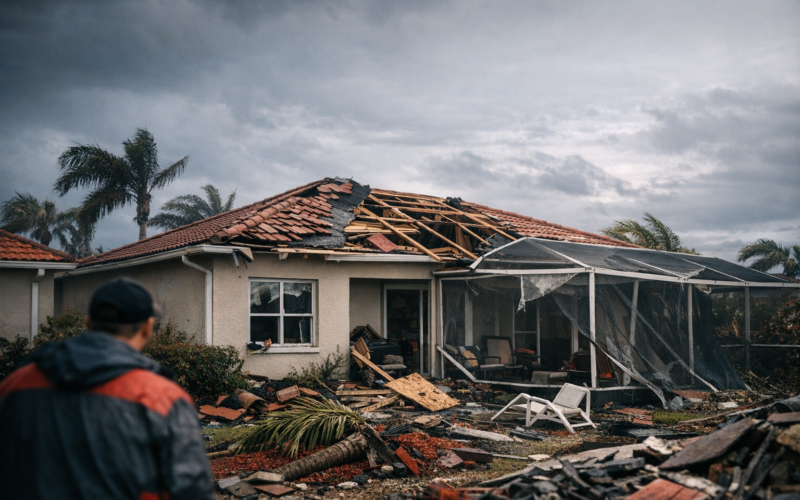
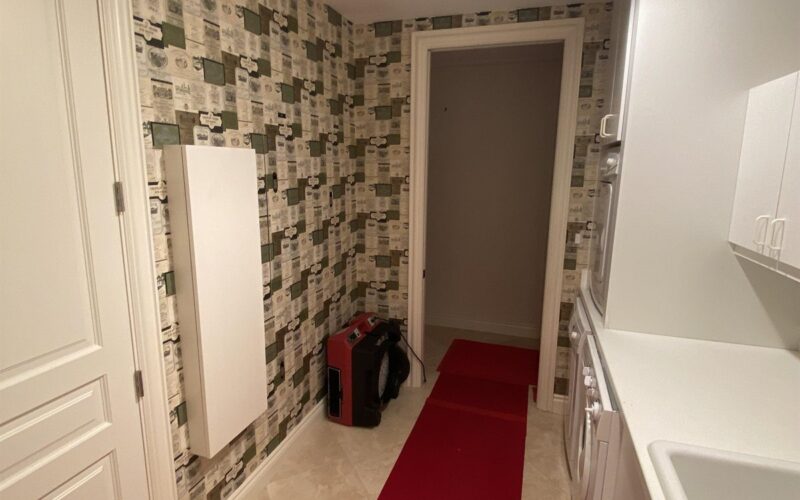
In Southwest Florida’s relentlessly humid climate, the gap between a fast, complete dry-out and a slow, incomplete one is often the gap between a clean repair and a full mold remediation project. At the center of that difference is the choice of dehumidification equipment. LGR (Low Grain Refrigerant) dehumidifiers and conventional refrigerant dehumidifiers are not interchangeable tools – they perform very differently when wet structural materials and high ambient moisture are involved. This guide breaks down how each type works, why WrightWay Emergency Services runs LGR-only drying systems, and what that means for Florida homeowners and property managers dealing with water damage.
How Refrigerant Dehumidification Works
Both LGR and conventional dehumidifiers operate on the refrigeration cycle. A fan draws humid air across cold evaporator coils. When the air temperature drops below its dew point, water vapor condenses on the coils and drains away as liquid. The now-drier air is reheated slightly and returned to the room, where it picks up more moisture from wet materials and surfaces. That cycle repeats continuously until the target moisture levels are reached.
The critical variable is how cold those evaporator coils can get – and how much moisture the unit can pull out of the air before the air is already too dry for the coils to do more work. That is where LGR and conventional units diverge sharply.
LGR vs. Conventional Dehumidifiers: The Real Difference
A conventional refrigerant dehumidifier cools incoming air in a single pass over the evaporator. It works reasonably well when relative humidity is moderate, but it hits a performance ceiling as the job progresses. Once the air in a drying space drops below roughly 50 grains per pound (GPP), a conventional unit cannot depress moisture levels further because its coils cannot get cold enough relative to the already-dry incoming air.
LGR dehumidifiers solve this by pre-cooling the incoming air before it ever reaches the primary evaporator coils. That double-stage cooling process allows the coils to wring far more moisture out of each cubic foot of air. The result is grain depression of 40-60 grains per pound – compared to 20-30 GPP for conventional units. In practical terms:
- LGR extraction rates: Commercial LGR units like the Dri-Eaz LGR 6000Li remove up to 25 gallons of water per day; the LGR 7000XLi removes up to 29 gallons per day at operating conditions. Models rated for full saturation conditions can reach 35 gallons per day.
- Conventional limitations: Conventional units plateau once the ambient grain level drops into the range needed for deep structural drying. They can maintain moderate humidity but cannot achieve the low-grain environment required to pull moisture out of wet framing, subfloor, and wall cavities.
- Deep structural drying: According to industry structural drying guidance, LGR units are specifically designed for water damage restoration because they sustain effective dehumidification at the low-grain levels where the real structural moisture lives.
The IICRC S500 Standard and Why It Matters
The IICRC S500 Standard and Reference Guide for Professional Water Damage Restoration (currently in its Fifth Edition, 2021) is the governing technical standard for the restoration industry. It defines equipment requirements, drying protocols, psychrometric documentation, and acceptable dry standards for structural materials.
The S500 uses equipment sizing factors tied to both the type of dehumidifier and the class of water damage. For LGR units, the S500-based dehumidifier factor chart uses divisors of 100 (Class 1), 50 (Class 2), and 40 (Class 3 and Class 4) to calculate required pint capacity from room volume. For conventional refrigerant units, those same classes use divisors of 100, 40, and 30 – meaning more conventional units are needed for the same space, and Class 4 losses (wet materials with very low porosity) are not a valid application for conventional dehumidifiers at all.
This is why professional restorers who adhere to S500 standards rely on LGR equipment as their primary drying tool. WrightWay Emergency Services (license CBC1253650) builds every drying plan around S500 psychrometric requirements and uses LGR-only equipment on every job.
Drying Timeline: LGR vs. Conventional in Florida Conditions
Under Florida’s typical post-damage conditions – elevated temperatures, high baseline humidity, and wet structural materials – drying timelines differ substantially between equipment types.
- LGR drying timeline: Professional LGR systems, properly sized and placed, typically achieve the dry standard for Category 1 and Category 2 residential losses in 3 to 5 days.
- Conventional drying timeline: Conventional equipment, plateauing at higher grain levels, often requires 5 to 10 days for the same scope – and may never reach the required moisture content in dense materials like engineered wood subfloor or solid wood framing.
Every additional day of drying is a day mold has to establish itself. In Florida’s warm climate, that is not an abstract concern.
The Mold Math: Why 24-48 Hours Is the Real Window in Florida
The draft of this post originally cited 72 hours as the mold activation window. Research from Florida-specific restoration sources and mold growth timeline studies corrects that: in Florida’s warm, humid climate, mold spores begin to colonize damp drywall, insulation, and wood framing in as little as 24 to 48 hours. Visible colonies can appear within 48 to 72 hours, and within 3 to 7 days the growth spreads far beyond the original wet area.
The threshold that matters most for wood framing and structural lumber is 16% moisture content. Restoration and remediation industry research confirms that wood exposed to 80% relative humidity will absorb moisture until it reaches 16% – precisely the threshold at which mold can grow. The IICRC’s published position is that bringing materials below 16% moisture content within 24 hours dramatically reduces the likelihood of active mold colonization.
Florida’s baseline outdoor humidity of 70-90% means wet materials do not dry passively. Without active dehumidification, wood framing in a wet wall cavity will sit at or above 16% moisture indefinitely. Florida-specific restoration guidance consistently identifies the first 24-48 hours as the critical intervention window after any flooding or water intrusion event.
What the EPA and Florida DOH Say About Moisture and Mold
The U.S. Environmental Protection Agency is clear that mold control is moisture control. The EPA recommends keeping indoor relative humidity below 60% – ideally between 30% and 50% – and emphasizes that wet materials should be dried within 24 to 48 hours to prevent mold growth. The EPA recognizes that porous materials like drywall and insulation that remain wet longer than 48 hours should generally be replaced rather than dried in place.
The Florida Department of Health’s indoor air quality guidance specifically addresses the state’s mold risk, noting that Florida’s warm temperatures and high humidity make mold a persistent concern in residential and commercial buildings. The department recommends prompt professional drying after any water intrusion and notes that mold growth can pose serious health risks, particularly for individuals with respiratory conditions.
Psychrometrics 101: What Restoration Technicians Are Measuring
Psychrometrics is the science of air and its moisture content. Professional restoration technicians take daily readings to track drying progress and to calibrate equipment. The key measurements are:
- GPP (Grains Per Pound): The actual mass of water vapor in a pound of air. This is the most meaningful moisture measurement for drying because it is not affected by temperature the way relative humidity is.
- Relative Humidity (RH): The percentage of moisture in the air compared to the maximum it can hold at that temperature. Useful for mold risk assessment and equipment monitoring, but not sufficient on its own for drying verification.
- Temperature: Warmer air holds more moisture. Higher temperatures also increase the rate at which wet materials release moisture into the air, which is why controlled heat drying can accelerate timelines.
- Vapor Pressure Differential (VPD): The pressure difference between the moisture in the air and the moisture in structural materials. A high VPD means materials release moisture quickly. As the space dries and GPP drops, VPD decreases, which is why properly sized LGR capacity matters throughout the job, not just at the start.
- Wood Moisture Content (MC): Measured directly with a pin or pinless moisture meter. The S500 dry standard for structural lumber is 16% or below; for wood flooring and cabinets it is 6-9%.
Air Movers and LGR Dehumidifiers: A Synergistic System
Licensed mold remediation with containment, HEPA filtration, and clearance-ready documentation. Get a real price range before anyone starts cutting drywall.
LGR dehumidifiers work in combination with axial air movers (high-velocity fans) rather than independently. Air movers create turbulent airflow across wet surface areas – walls, floors, ceilings – which dramatically increases the rate at which moisture evaporates from materials into the air. The LGR dehumidifier then pulls that moisture-laden air down to the low-grain environment needed to drive more evaporation from the structure.
The ratio of air movers to dehumidifiers, and their placement, is calculated based on the class and category of water damage per S500 guidelines. Getting this ratio wrong – too many air movers for the dehumidification capacity, for example – can actually slow drying by raising GPP faster than the dehumidifier can remove it, spreading moisture into unaffected areas in the process.
How Drying Logs Support Insurance Claims
Every day of a professional drying project, WrightWay technicians record temperature, RH, and GPP readings inside and outside the drying chamber, along with moisture meter readings at documented material locations. These drying logs serve two purposes. First, they allow the project manager to adjust equipment – adding or removing dehumidifiers or air movers – based on actual psychrometric progress rather than guesswork. Second, they create a documented record for your insurance claim.
Adjusters reviewing a water damage claim want to see evidence that restoration was performed to a measurable standard. Daily psychrometric logs showing progressive GPP reduction and moisture content decline toward the S500 dry standard demonstrate that the work was professional, necessary, and complete. Claims without this documentation are more vulnerable to disputes over whether drying was adequate or equipment was appropriately deployed.
Why Faster Drying Saves You Money
The financial case for LGR drying is straightforward. A 3 to 5 day drying timeline versus a 7 to 10 day timeline means:
- Fewer equipment rental days on your claim
- Lower labor costs for daily monitoring visits
- Significantly reduced probability of mold colonization requiring separate remediation (which can add thousands of dollars to the total project cost)
- Less secondary damage to finished surfaces from prolonged moisture exposure
- Faster return to occupancy for tenants, family members, or business operations
LGR dehumidifiers cost more to purchase and operate than conventional units. That cost differential disappears entirely when you compare it against even a modest mold remediation scope. Professional restoration research consistently demonstrates that faster, deeper drying reduces overall project costs by limiting secondary damage.
Why Some Companies Don’t Use LGR Equipment
Commercial LGR dehumidifiers cost $2,000 to $4,000 per unit versus $500 to $1,500 for conventional models. For companies that compete on price rather than outcome, the equipment investment is a barrier. Some national franchise networks also deploy standardized equipment packages that do not account for regional climate differences – a drying protocol adequate in the Midwest may be wholly inadequate in Southwest Florida’s heat and humidity.
WrightWay Emergency Services runs LGR-only because Florida’s climate does not leave room for compromise. The same humidity that makes this a great place to live is the same humidity that drives mold growth, and the equipment has to match the environment.
For 24/7 emergency water damage response across SW Florida – Sarasota, Manatee, Charlotte, Lee, and Collier counties – call WrightWay at (941) 379-8669. IICRC certified. Licensed contractor CBC1253650.
Frequently Asked Questions
What is the main advantage of LGR dehumidifiers over conventional ones?
LGR dehumidifiers achieve deeper grain depression – 40 to 60 grains per pound versus 20 to 30 GPP for conventional units. This means they can continue pulling moisture from structural materials at the low-grain levels where conventional units plateau. In Florida’s climate, where ambient humidity is already high, this depth of dehumidification is what separates a complete dry-out from one that stops short and leaves moisture in framing and wall cavities.
How does the IICRC S500 standard affect restoration practices?
The IICRC S500 standard defines the equipment sizing formulas, daily monitoring requirements, acceptable dry standards for different materials, and the documentation practices that professional restoration must follow. It distinguishes between equipment types and damage classes when calculating required dehumidification capacity. Adherence to S500 means your restoration is conducted to a measurable, nationally recognized standard – which matters both for outcomes and for insurance claim support.
Does mold really start in 24-48 hours, or is it 72 hours?
In Florida’s warm, humid climate, mold spore activation can begin within 24 to 48 hours – not 72 hours. Seventy-two hours is often cited as a general national guideline, but Florida’s temperatures (commonly 77 to 86 degrees F) and high baseline humidity push growth toward the faster end of that range. Visible mold colonies can appear within 48 to 72 hours of a water intrusion event. The action window is the first 24 hours – that is when calling a professional matters most.
What moisture content in wood signals a mold risk?
The critical threshold for structural lumber is 16% moisture content. Wood held at or above 16% MC in a warm, humid environment will support mold growth. The S500 dry standard for structural framing is 16% or below. WrightWay technicians measure material MC daily at documented locations and do not close a job until readings are consistently at or below that benchmark.
How do drying logs help with insurance claims?
Daily psychrometric logs document temperature, relative humidity, and grains per pound inside and outside the drying chamber, along with material moisture content readings. This creates a verifiable record that drying progressed to the S500 dry standard – not just that equipment was placed in the space. Adjusters and independent appraisers use this documentation to evaluate whether the restoration scope was appropriate and whether the drying was complete.
Why doesn’t every restoration company use LGR dehumidifiers?
Equipment cost is the primary barrier. Commercial LGR units cost two to three times as much as conventional dehumidifiers to purchase and maintain. For companies focused on low-bid pricing, the investment is a barrier. WrightWay absorbs that investment because the alternative – running slow or inadequate drying equipment in a Florida water damage loss – carries a far higher risk of mold callbacks, dissatisfied clients, and incomplete claims.
WrightWay handles every restoration job from emergency response through licensed reconstruction.
One IICRC-certified team, one project manager, one phone call. Available 24/7 across Sarasota, Manatee, Charlotte, Lee, and Collier counties.
Add us as a preferred source and our storm updates, claim guides and restoration answers show up higher when you search.