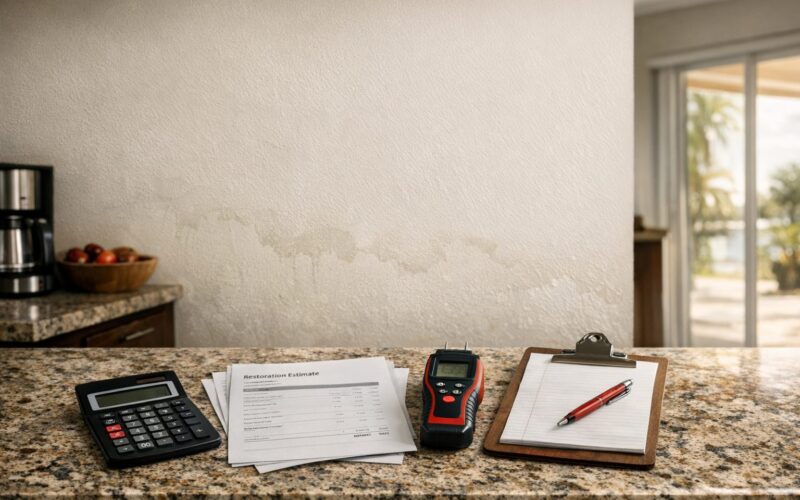
Understanding Water Damage in Bradenton and Manatee County Homes
Manatee County is known for its beautiful coastal landscapes and warm Gulf climate, but that same environment creates real risks for local homeowners. With an average of 55 inches of annual rainfall tracked by the Southwest Florida Water Management District, over 90% relative humidity during summer months, and a coastline directly in the path of Atlantic and Gulf storm systems, Bradenton-area homes face water damage threats that most of the country never sees. In 2024 alone, Hurricane Debby dropped over 11 inches of rain in a single day across parts of the county – one of the highest single-day totals on record. In this guide, we walk through the five most common sources of water damage specific to Bradenton and Manatee County homes, what to watch for, and how WrightWay Emergency Services can help you recover fast.
1. HVAC Condensate Overflows
In Florida, air conditioning is not a luxury – it is a necessity that runs nearly year-round. In Bradenton homes, that constant use creates a water damage risk most homeowners overlook: condensate overflow. Every air handler produces moisture as it dehumidifies your indoor air, and that moisture drains through a condensate line. When that line clogs with algae or debris, water backs up into the drain pan. When the pan fills, it overflows onto your ceiling, into your walls, and down into your subfloor.
This issue is especially common in homes across West Bradenton and Lakewood Ranch, where older HVAC equipment may lack modern overflow shutoff switches. A single weekend of neglect during peak cooling season can produce enough water to saturate drywall, encourage mold growth, and damage flooring systems. The IICRC S500 Standard for Professional Water Damage Restoration classifies condensate overflow as a Category 1 (clean water) loss, but secondary contamination from mold can elevate that classification quickly if the moisture is not extracted within 24-48 hours.
Prevention is straightforward: have your HVAC serviced annually, keep condensate lines clear with a diluted bleach flush each spring, and install a float switch that shuts the system down if the drain pan fills. If you come home to a wet ceiling or warped flooring near an air handler, that is your signal to call a restoration professional immediately.
2. Cast Iron Drain Pipe Failures
Many homes in East and West Bradenton built between the 1940s and 1970s still have their original cast iron drain and sewer lines beneath the slab. These pipes were built to last 40 to 60 years – and in much of the country, that lifespan holds. In Florida, it does not. Manatee County’s humidity, acidic sandy soil, and salt air accelerate corrosion from the inside out. Florida restoration specialists have documented cast iron pipe failures in as few as 25 years in coastal environments, well short of their design life.
When cast iron drains fail, they do not give much warning. Pipes thin at the bottom, develop pinhole cracks, and eventually collapse. Sewage and drain water seep into the soil beneath your slab before you ever see a wet spot on a floor. By the time water appears at a tile grout line or a toilet starts gurgling, the damage below can be significant. Older neighborhoods including downtown Bradenton, Palmetto, and the East Manatee corridor along US-301 carry the highest concentration of at-risk homes.
If your home was built before 1975, a plumbing camera inspection is worth the few hundred dollars it costs. Catching a failing cast iron system before it fails completely can save tens of thousands in slab removal, remediation, and re-pipe work. If the pipe has already failed, WrightWay handles the water extraction and structural drying while your licensed plumber completes the re-pipe.
3. Roof Leak-to-Interior Damage
Manatee County’s rainy season runs from June through October, delivering the bulk of those 55 annual inches in a compressed five-month window of afternoon thunderstorms, tropical depressions, and full hurricanes. Roof systems take the brunt of every storm, and the damage they sustain does not always announce itself immediately. A cracked tile, a lifted shingle tab, or a failed flashing at a chimney or dormer can allow water to enter slowly – wicking through decking and insulation for weeks before a stain appears on a ceiling.
Tile roofs, common in Lakewood Ranch and the Palma Sola area, resist wind better than asphalt shingles, but the underlayment beneath the tiles degrades over time. When that underlayment fails, a seemingly intact tile roof can leak badly during a driving rain. Shingle roofs in older Bradenton neighborhoods are vulnerable to wind-lifted tabs and granule loss, both of which are hard to spot from the ground.
After any significant storm event, a visual roof inspection from a safe vantage point – or a professional inspection if you see any signs of movement or missing material – can catch problems before they become interior damage claims. FEMA’s DisasterAssistance.gov is worth bookmarking for any federally declared disaster affecting Manatee County, as federal assistance programs may cover temporary repairs and emergency lodging when a roof failure makes a home uninhabitable.
4. Slab Leaks
Slab leaks are a growing concern throughout Manatee County. Homes built on concrete slabs – the dominant foundation type in Southwest Florida – run copper supply lines embedded in or beneath the slab. Over decades, those copper pipes corrode from the outside in, driven by soil chemistry, electrolysis, and the repeated stress of Florida’s wet-dry seasonal cycles. Soil movement from major storm events, including the storms of 2024, can shift the ground enough to stress already-weakened pipe joints.
Areas like Anna Maria Island and Palmetto, where older homes on coastal soils are common, see a higher rate of slab leak calls, but no neighborhood is immune. Signs of a slab leak include an unexplained jump in your water bill, warm or damp spots on tile or wood floors, the sound of running water when every faucet in the house is off, and low water pressure at fixtures. Any one of these symptoms warrants an immediate call to a licensed plumber for leak detection.
When a slab leak goes undetected for days or weeks, the water that migrates up through the slab or along interior walls creates conditions ideal for mold growth within 48 to 72 hours. WrightWay teams are equipped with thermal imaging cameras and moisture meters to map the full extent of hidden moisture – critical for making sure the drying scope covers everything before walls are closed up.
5. Appliance Supply Lines
Dishwashers, refrigerators with ice makers, washing machines, and water heaters are among the most common sources of water damage in Manatee County homes, and they are also among the most preventable. Braided stainless steel supply hoses look durable, but the rubber lining inside degrades over time. Older woven supply lines, common in homes with original appliances, are a known failure point – and when they fail, they often fail at full supply pressure, flooding a kitchen, laundry room, or utility area in minutes.
In neighborhoods with older housing stock throughout downtown Bradenton and Palmetto, it is not uncommon to find dishwashers or washing machines still running on supply lines installed 15 or more years ago. The IICRC recommends replacing appliance supply lines every five to seven years regardless of visible condition. Stainless braided lines with brass fittings are the current best practice for longevity. Water heaters over 10 years old should be inspected for tank corrosion and anode rod condition – a failing tank can release 40 to 80 gallons of water into a garage or utility room before the supply valve is located and shut.
Manatee County-Specific Water Damage Challenges
Beyond the five common sources above, Manatee County homes face several regional challenges that compound water damage risk.
Saltwater intrusion near Tampa Bay and the Manatee River accelerates corrosion in both plumbing systems and structural fasteners, meaning that coastal homes in areas like Bradenton Beach and Palmetto face higher baseline deterioration rates than inland properties. The manufactured and mobile home stock concentrated in parts of Palmetto and eastern Manatee County presents unique water damage risks: vapor barriers beneath these structures can trap moisture against wood framing, and older manufactured homes may have flexible supply lines that are particularly prone to rupture.
The county’s dense concentration of 1960s and 1970s construction – particularly in West Bradenton and the older sections of Oneco and Bayshore Gardens – means a large share of the housing stock is simultaneously dealing with aging plumbing, aging HVAC systems, and roofs that have been through multiple major storm cycles.
Quick Response Times from WrightWay
When water damage occurs, the clock starts immediately. Mold can begin colonizing wet materials within 24 to 48 hours, and structural materials like OSB subfloor and paper-faced drywall absorb water aggressively during that window. WrightWay Emergency Services, based in Nokomis, typically reaches Bradenton homes in under 45 minutes of your call. Our IICRC-certified technicians arrive with truck-mounted extraction equipment, industrial air movers, and LGR dehumidifiers sized to meet the psychrometric demands of Southwest Florida’s humid climate.
We work directly with your insurance adjuster, document the loss to IICRC S500 standards, and provide a complete drying log for your claim file. License CBC1253650. Available 24 hours a day, 7 days a week. Call (941) 379-8669.
Building Codes, Permits, and Recovery Programs
Manatee County requires permits for most post-water-damage structural repairs, and for good reason. The Manatee County Building Division enforces the Florida Building Code for all restoration and reconstruction work, and their floodplain management section applies additional rules for properties in Special Flood Hazard Areas.
One rule every Manatee County homeowner should know: the FEMA 50% Substantial Damage Rule. If the cost to restore your home to its pre-damage condition equals or exceeds 50% of the structure’s market value, the entire building must be brought into compliance with current flood elevation requirements – regardless of how little the damage actually looks from the outside. For a flood-zone home appraised at $250,000, that threshold can be reached faster than many homeowners expect. Manatee County Development Services can be reached at (941) 748-4501 ext. 3800 for substantial damage determinations.
For homeowners still dealing with storm damage from Hurricanes Debby, Helene, or Milton, the Lasting Manatee Home Recovery Program launched in May 2026 with $252.7 million in federal CDBG-DR funding from the U.S. Department of Housing and Urban Development. The program provides repair, reconstruction, and elevation assistance for eligible storm-damaged homes. Applications are accepted at LastingManatee.org. For federal disaster assistance in future declared events, DisasterAssistance.gov is the starting point for FEMA registration.
All repair work performed by WrightWay Emergency Services is executed under Florida contractor license CBC1253650 and pulls all required permits. We never ask a homeowner to pull their own permits to save costs – that practice shifts liability to you and can create problems when you sell the property.
Frequently Asked Questions
If water reached walls, flooring seams, or sat overnight, fans alone rarely save the materials. A free moisture inspection tells you exactly what is wet and what it costs to fix.
What should I do immediately after discovering water damage in my home?
First, ensure safety by turning off electricity to any affected areas before entering. Then call WrightWay at (941) 379-8669 for immediate 24/7 response. Document the damage with photos and video before any cleanup begins – this record is essential for your insurance claim. If you can safely locate the water source, shut it off. Do not run fans or attempt to dry walls yourself before a professional assesses the moisture extent, as improper drying can drive moisture deeper into building assemblies.
How can I prevent HVAC condensate overflows?
Schedule annual HVAC maintenance each spring before the cooling season begins. Ask your technician to flush the condensate drain line and inspect the drain pan for cracks or rust. Install a float switch on your air handler – a simple device that shuts the system down if the pan water level rises too high. These switches cost $15 to $40 and can prevent thousands in ceiling and flooring damage.
Are there specific signs of a slab leak I should watch for?
Yes. Watch for unexplained increases in your water bill (a 20% or more jump with no change in usage is a red flag), warm or damp spots on tile floors, a persistent sound of running water when all fixtures are off, low water pressure at multiple fixtures simultaneously, and cracks appearing in tile or grout lines. If you suspect a slab leak, contact a licensed plumber for non-invasive leak detection before WrightWay mobilizes for extraction and drying.
What are the benefits of using a licensed contractor for water damage repairs?
In Manatee County, work performed by unlicensed contractors is not enforceable under Florida law – meaning you may have no legal recourse if the work is done incorrectly, and the contractor’s agreements cannot be enforced. Licensed contractors like WrightWay (CBC1253650) carry the required liability insurance, pull proper permits, and complete work that passes county inspection. This protects your investment, keeps your insurance coverage valid, and avoids complications when you sell the property.
How does the Manatee County Home Recovery Program assist homeowners?
The Lasting Manatee Home Recovery Program, launched in 2026 with $252.7 million in federal HUD funding, provides repair, reconstruction, and elevation assistance to homeowners whose properties were damaged by Hurricanes Debby, Helene, or Milton. Eligible residents can apply at LastingManatee.org. The program prioritizes the most severely impacted households and includes an eligibility review, home inspection, and funding award process. For future federally declared disasters, register at DisasterAssistance.gov as soon as the declaration is issued – early registration typically results in faster processing.
For 24/7 emergency restoration across SW Florida, call WrightWay at (941) 379-8669.
WrightWay handles every restoration job from emergency response through licensed reconstruction.
One IICRC-certified team, one project manager, one phone call. Available 24/7 across Sarasota, Manatee, Charlotte, Lee, and Collier counties.
Add us as a preferred source and our storm updates, claim guides and restoration answers show up higher when you search.