The Science of Structural Drying in Water Damage Restoration
If water reached walls, flooring seams, or sat overnight, fans alone rarely save the materials. A free moisture inspection tells you exactly what is wet and what it costs to fix.
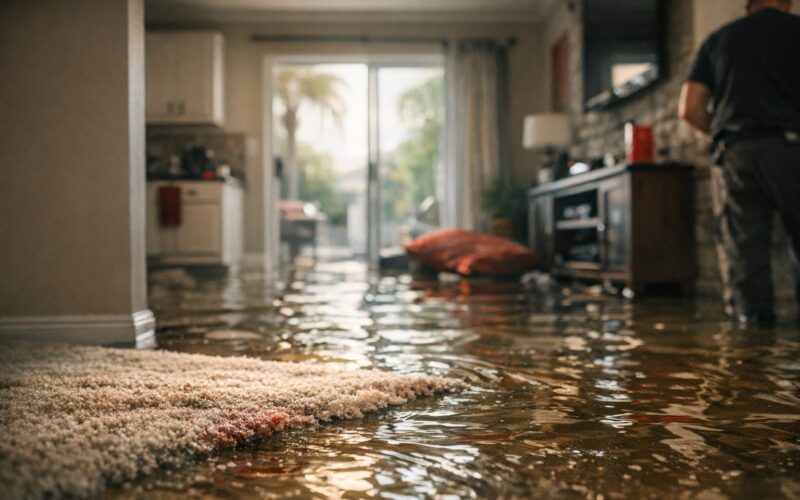
When water damages your home, simply removing the standing water is only the first step. The water that has been absorbed into drywall, wood framing, subfloor, and other building materials must also be removed through a controlled process called structural drying. At WrightWay Emergency Services, our IICRC-certified Water Restoration Technicians (WRT) and Applied Structural Drying (ASD) specialists use the science of psychrometry : the study of air and moisture relationships : to create optimal drying conditions in your home. This is the core of professional water damage restoration, and understanding how it works helps you appreciate why it is so critical to the outcome.
Why Professional Drying Matters
Opening windows and running household fans is not sufficient to properly dry a water-damaged structure, especially in SW Florida where ambient humidity averages 70 to 80 percent. In our experience, some of the worst mold remediation projects we encounter in Sarasota, Fort Myers, and Naples started as relatively minor water losses where the homeowner tried to dry the area themselves using box fans and open windows. Without controlled drying:
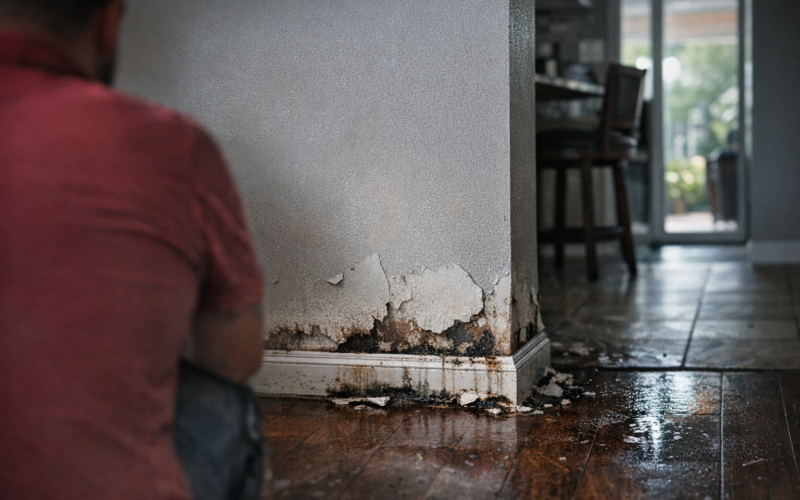
- Mold begins growing within 24 to 48 hours on wet materials
- Drywall loses structural integrity when wet for extended periods
- Wood framing begins to warp, swell, and eventually rot
- Secondary damage spreads to previously unaffected areas through moisture migration
- Category 1 (clean) water escalates to Category 2 or 3 as bacteria multiply in stagnant moisture
The Three Principles of Structural Drying
Effective structural drying relies on three interconnected principles that must be managed simultaneously. The IICRC S500 Standard for Professional Water Damage Restoration provides the framework for these principles:
1. Evaporation
Moisture trapped in building materials must be converted from liquid to vapor. High-velocity air movers create airflow across wet surfaces, breaking the boundary layer of stagnant air and accelerating evaporation. The air movers are positioned at specific angles and distances based on the type of material being dried : hardwood floors require different air mover placement than drywall or concrete. For example, drying hardwood floors typically requires air movers positioned flat and blowing across the surface, while wall drying uses air movers angled upward at roughly 15 to 45 degrees to direct airflow across the wet drywall surface.
2. Dehumidification
As moisture evaporates from materials into the air, the relative humidity in the space rises. Dehumidifiers remove this moisture from the air, creating a vapor pressure differential that pulls additional moisture out of wet materials. Professional restoration uses Low Grain Refrigerant (LGR) dehumidifiers that can remove 17 or more gallons of water per day : far exceeding the 2 to 3 gallons a residential unit handles. In SW Florida, dehumidification is especially critical because our outdoor air is already moisture-laden. Simply circulating humid outdoor air through a wet structure accomplishes little; you must actively remove moisture from the closed system.
3. Temperature Management
Warm air holds more moisture than cool air, and warmer temperatures increase the rate of evaporation from wet materials. Professional drying maintains temperatures between 70 and 90 degrees Fahrenheit for optimal drying efficiency. Both dehumidifiers and air movers generate heat, which contributes to maintaining appropriate temperatures. Our technicians balance this carefully : running the air conditioning too aggressively cools the space and slows evaporation, but allowing temperatures to rise unchecked can make the home uncomfortable and stress temperature-sensitive contents.
SW Florida’s Unique Drying Challenges
Structural drying in our region presents challenges that technicians in drier climates do not face:
- High ambient humidity: With outdoor humidity regularly exceeding 80 percent, every time a door opens, moisture-laden air enters the drying environment. Maintaining a closed drying system is essential.
- Slab-on-grade construction: Most SW Florida homes are built on concrete slabs, which can hold moisture for weeks. Drying concrete requires specialized techniques including the use of desiccant dehumidifiers and mat systems that direct heat and airflow directly into the slab surface.
- Stucco exterior walls: Stucco retains moisture and can slow the drying of exterior wall cavities, requiring longer drying times than frame-and-siding construction.
- Tile over concrete: The most common flooring configuration in our area, tile over thin-set mortar over concrete, creates multiple layers that trap moisture at each interface.
Monitoring the Drying Process
Professional structural drying is not a set-it-and-forget-it process. Our technicians take daily readings using calibrated instruments:
- Moisture meters: Pin-type and pinless meters measure moisture content in wood, drywall, and other materials. Readings are compared to dry reference standards from unaffected areas of the home.
- Thermo-hygrometers: Measure temperature and relative humidity in the drying environment. Target relative humidity is typically below 40 percent within the closed drying system.
- Thermal imaging: Infrared cameras verify that all wet areas are being effectively reached by the drying equipment and identify any pockets of trapped moisture that may need additional attention.
- Drying logs: Daily readings are documented on drying logs that track the progress of each material toward its dry standard. These logs also serve as important documentation for insurance claims, providing evidence that the drying process followed IICRC protocols.
When Is Drying Complete?
Drying is complete when all affected materials reach moisture content levels within the IICRC acceptable range : generally within 2 to 3 percentage points of the dry reference readings taken from unaffected areas of the structure. This typically takes 3 to 5 days for standard water damage, though some materials like concrete and hardwood may require 7 to 10 days or longer. Premature removal of drying equipment : before materials have actually reached the dry standard : is one of the most common mistakes made by less experienced restoration companies and frequently leads to mold growth weeks later.
For professional structural drying services in SW Florida, contact WrightWay Emergency Services at (941) 379-8669. Our ASD-certified technicians respond 24/7 throughout Sarasota, Fort Myers, Naples, and surrounding areas in Manatee, Charlotte, and Collier counties.
WrightWay handles every restoration job from emergency response through licensed reconstruction.
One IICRC-certified team, one project manager, one phone call. Available 24/7 across Sarasota, Manatee, Charlotte, Lee, and Collier counties.
Add us as a preferred source and our storm updates, claim guides and restoration answers show up higher when you search.