How Slab Leaks Cause Damage
Many Florida homes are built on concrete slab foundations with water supply and drain lines running beneath or through the concrete. When these buried pipes fail, water has nowhere to go but up:
- Copper pipe corrosion - Florida’s high water table and soil chemistry corrode copper pipes from the outside in (external corrosion) or from mineral buildup inside (internal corrosion)
- Cast iron drain pipe deterioration - homes built before ~1975 often have cast iron drain lines under the slab that corrode and collapse over time
- Soil shifting - Florida’s sandy soils and limestone karst geology allow foundation movement that stresses rigid pipes
- CPVC and polybutylene failure - certain plastic pipes used in 1980s–90s construction become brittle and crack, especially at connections
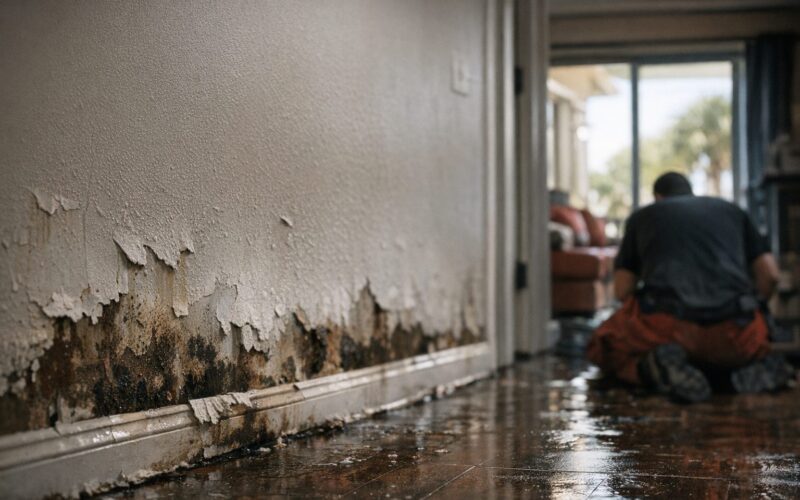
Signs of a slab leak include: unexplained water bill increases, warm spots on floors, the sound of running water when all fixtures are off, cracks in flooring or walls, and persistent musty odors. Slab leaks can run for weeks or months before discovery, resulting in extensive damage to flooring, drywall, and mold growth.
- Check your water meter. Turn off all fixtures and appliances. If the meter is still moving, you have an active leak.
- Shut off the main water supply to stop the leak from causing further damage. Your main shut-off is typically near the meter at the street.
- Call WrightWay at (941) 379-8669 - we provide leak detection services and coordinate with licensed plumbers for the pipe repair while handling all water damage restoration.
- Do not attempt to break up the slab yourself - reinforced concrete demolition requires proper tools and knowledge of pipe locations to avoid additional damage.
- Document the timeline - when you first noticed signs and when you discovered the leak. This timeline affects insurance coverage.
Our Slab Leak Restoration Process
- Electronic leak detection - acoustic and electromagnetic detection equipment pinpoints the leak location without unnecessary demolition
- Moisture assessment - mapping the full extent of water migration through flooring, walls, and adjacent areas
- Flooring removal - tile, wood, laminate, or carpet above the affected area must be removed to access the slab and allow drying
- Plumber coordination - WrightWay coordinates with licensed plumbers for the pipe repair (spot repair, re-route, or full re-pipe depending on the extent)
- Concrete restoration - the slab break is filled and leveled after pipe repair
- Structural drying - commercial dehumidifiers and air movers dry the slab, walls, and remaining materials. Slab drying can take 7–14 days due to the mass of concrete.
- Mold assessment - long-duration slab leaks frequently develop mold in wall cavities and under cabinets
- Full reconstruction - flooring, drywall, baseboards, paint, and cabinet repairs to restore your home
Insurance Coverage for Slab Leaks
Slab leak coverage in Florida is complex and often disputed:
- Resulting water damage is typically covered - even if the pipe itself is excluded, the damage caused by the escaping water is usually a covered loss
- Pipe repair may or may not be covered. Many policies cover “tearing out and replacing” the portion of the building needed to access and repair the leak.
- “Sudden and accidental” vs. “gradual” - carriers often argue slab leaks are gradual. Evidence that the leak was recently discovered (recent bill spike, no prior signs) supports the “sudden” characterization.
- Slab leak coverage endorsements are available on some Florida policies and can expand coverage for detection, access, and repair costs
- Keep your water bills - a sudden spike in water usage is strong evidence of a sudden failure rather than a gradual leak
Preventing Slab Leak Damage
- Monitor your water bill for unexplained increases - a spike of 20%+ warrants investigation
- Install a whole-home water monitor (Flo by Moen, Phyn) that detects micro-leaks and shuts off water automatically
- Consider a re-pipe if your home has polybutylene or aging copper in corrosive soil conditions
- Maintain consistent water pressure - install a pressure regulator if incoming pressure exceeds 80 PSI
- Schedule a camera inspection of drain lines every 5–10 years to detect deterioration before failure
Don’t Wait - Call Now
Water damage compounds every hour. Mold growth begins within 48 hours in Florida’s climate. The sooner professional extraction and drying begins, the less damage, disruption, and cost you’ll face. Call WrightWay at (941) 379-8669 for immediate 24/7 response.