How Appliance Leaks Cause Damage
Household appliances are responsible for approximately 1 in 5 residential water damage claims. The most common appliance failures include:
Washing Machines
- Burst supply hoses - rubber supply hoses deteriorate and can burst under pressure, releasing water until someone discovers it. Second-floor laundry rooms multiply the damage.
- Drain hose disconnection - vibration during spin cycles can dislodge the drain hose from the standpipe
- Door seal failure (front-load) - damaged or moldy door gaskets allow water to leak during cycles
Dishwashers
- Door gasket failure - worn gaskets allow water to seep onto kitchen flooring with every cycle
- Supply line failure - the braided or copper supply line under the dishwasher can corrode and leak
- Drain line blockage - clogged disposal connection or drain hose causes backup and overflow
Refrigerators
- Ice maker supply line - the ¼" copper or plastic line running to the ice maker is prone to kinking, cracking, and connection failure
- Drain pan overflow - the defrost drain pan under the unit can overflow if the drain is clogged
- Shut off water to the appliance. Individual shut-off valves are typically located behind the appliance or under the sink (dishwasher). If you can’t reach them, use the main shut-off.
- Unplug the appliance or turn off its breaker to eliminate electrical hazard.
- Stop the spread - use towels or barriers to prevent water from spreading to adjacent rooms and hardwood flooring.
- Call WrightWay at (941) 379-8669 - kitchen and laundry room water damage often migrates under cabinets, behind walls, and into adjacent rooms before it’s visible.
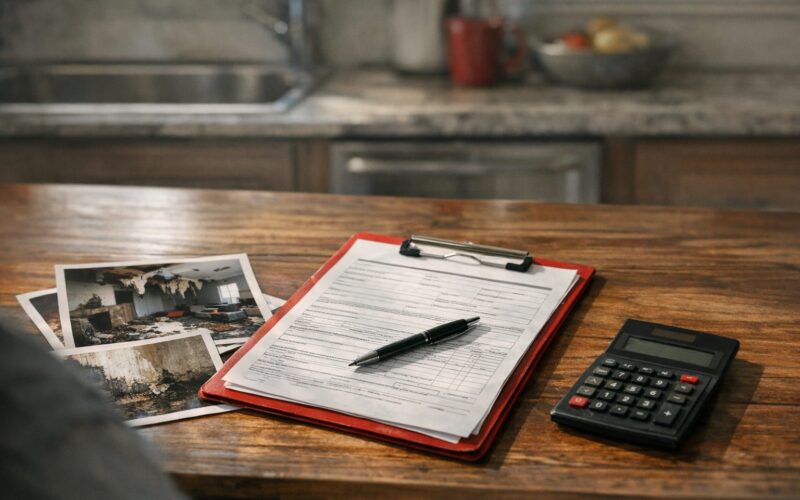
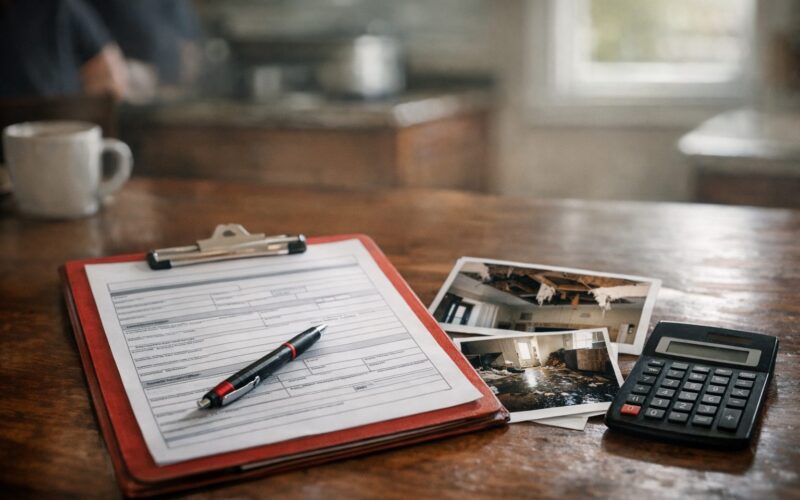
- Document everything including the appliance age, failure point, and all affected areas.
Our Appliance Damage Restoration Process
- Moisture investigation - appliance leaks often run under cabinets, behind kick plates, and into adjacent rooms. Thermal imaging reveals the full extent.
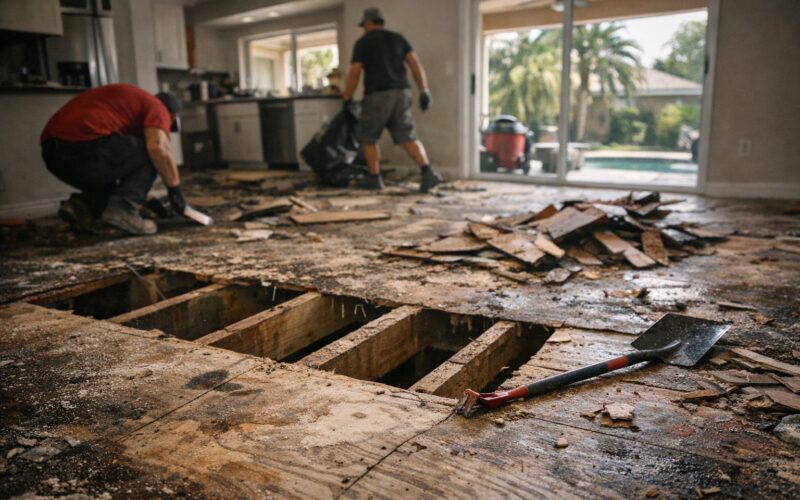
- Water extraction - removal of standing water from flooring, subfloor, and cabinet toe-kicks
- Cabinet assessment - particleboard cabinet bases swell and delaminate when wet. We determine repair vs. replacement for each cabinet.
- Flooring evaluation - hardwood floors require specialized drying with floor mat systems. Laminate and engineered wood typically require replacement.
- Structural drying - dehumidifiers and air movers dry walls, subfloor, and remaining cabinets
- Mold prevention - antimicrobial treatment behind cabinets and under flooring where moisture was trapped
- Reconstruction - cabinet, flooring, drywall, and trim replacement as needed
Insurance Coverage for Appliance Leaks
- Sudden failures (burst hose, sudden gasket blow-out) are typically covered
- Slow, chronic leaks are often denied - if the carrier finds evidence of long-term water staining, warped flooring, or mold growth suggesting the leak persisted for weeks or months
- Appliance replacement is not covered - only the resulting property damage
- Tip: If you discover water damage from an appliance, file the claim immediately and describe it as “discovered today” rather than speculating about how long the leak may have existed
Preventing Appliance Water Damage
- Replace rubber washing machine hoses with braided stainless steel - this one $15 upgrade prevents the most common catastrophic appliance failure
- Turn off washing machine valves when the machine is not in use (or install lever-style quarter-turn valves for easy operation)
- Replace the dishwasher supply line when installing a new unit
- Replace refrigerator ice maker lines with braided stainless steel (never use the thin plastic lines included with most fridges)
- Install water leak sensors behind the washing machine, under the dishwasher, and behind the refrigerator
- Inspect all visible hoses and connections annually for bulging, cracking, or corrosion
Don’t Wait - Call Now
Water damage compounds every hour. Mold growth begins within 48 hours in Florida’s climate. The sooner professional extraction and drying begins, the less damage, disruption, and cost you’ll face. Call WrightWay at (941) 379-8669 for immediate 24/7 response.