The Shower Wall Mold Problem in Florida
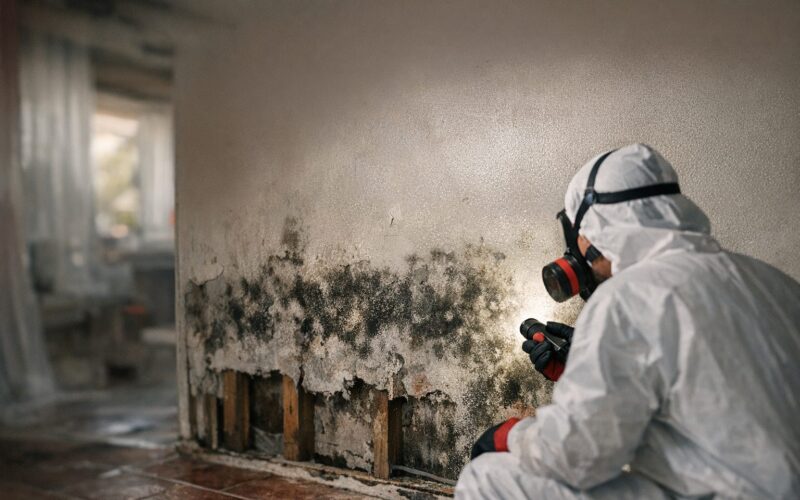
Bathrooms are the most moisture-intensive rooms in any home, and in Florida, where ambient humidity is already elevated, the moisture challenge is compounded. While most homeowners focus on visible mold on grout lines, caulking, and tile surfaces, the more serious problem is what is growing behind the walls — where moisture penetrates tile assemblies, saturates drywall and framing, and supports extensive mold colonies that are completely invisible from the bathroom side.
At WrightWay Emergency Services, shower wall mold is one of the most frequent mold remediation projects we perform across Southwest Florida. The pattern is remarkably consistent: by the time the homeowner notices signs of a problem, mold has been growing behind the shower walls for months or years.
How Moisture Gets Behind Shower Walls
Understanding the moisture pathways is essential to understanding why this problem is so prevalent in Florida.
Failed Grout and Caulk
Grout between tiles and caulk at seams and corners are the primary water barriers in a tiled shower. Over time, these materials crack, shrink, and deteriorate. In Florida’s climate, the constant cycle of hot shower steam followed by air-conditioned cooling accelerates this deterioration. Once grout or caulk develops gaps — even hairline cracks that are barely visible — water from every shower penetrates behind the tile.
Inadequate Waterproofing Membrane
Behind the tile, a waterproofing membrane (such as Kerdi, RedGard, or a traditional hot-mop membrane) should prevent any moisture that gets past the tile from reaching the wall substrate. However, many Florida homes — especially those built before modern waterproofing standards became common — have inadequate or absent waterproofing. In these cases, the tile is installed directly on cement board or even regular drywall, and any water that penetrates the grout reaches absorbent materials behind the wall.
Plumbing Penetrations
Where the shower valve, spout, and showerhead penetrate the wall, there are openings that must be properly sealed. Loose escutcheon plates, deteriorated pipe seals, and minor drips from valve connections allow water to enter the wall cavity at these penetration points. Slow leaks from supply lines or valve bodies behind the wall contribute additional moisture that homeowners never see.
Shower Pan Failures
In tiled shower stalls (as opposed to prefabricated units), the shower pan or floor membrane collects water and directs it to the drain. When this membrane fails — due to age, settling, or installation defects — water seeps beneath the shower floor and migrates into adjacent wall cavities, subfloor, and framing.
Warning Signs of Mold Behind Shower Walls
Hidden shower mold reveals itself through several indicators that homeowners should learn to recognize:
- Musty odor in the bathroom that persists despite regular cleaning and does not come from visible surfaces
- Loose or hollow-sounding tiles — tap on the tile surface and listen for a hollow sound, which indicates the tile has separated from the substrate due to moisture damage behind it
- Soft or spongy drywall adjacent to the shower — press on the wall next to the shower surround and feel for give
- Discoloration or staining on the wall or ceiling in the room adjacent to the bathroom, or on the other side of the shower wall
- Baseboards pulling away from the wall near the shower or tub
- Recurring mold on grout or caulk that returns within days of cleaning — this indicates a moisture source behind the surface that keeps materials perpetually damp
- Peeling paint or wallpaper on walls adjacent to the shower area
- Warped or buckling flooring near the shower or tub base
What Is Growing Behind the Wall
The space behind shower tile provides ideal conditions for multiple mold species. Common findings during remediation include:
- Stachybotrys chartarum (black mold): Thrives on the paper face of drywall that has been chronically wet
- Aspergillus: Colonizes a wide range of building materials and produces allergenic spores
- Penicillium: Common on water-damaged drywall and wood, produces blue-green growth
- Chaetomium: Frequently found on chronically wet drywall, produces a strong musty odor
These mold species do not remain confined to the shower wall cavity. Spores migrate into the bathroom through gaps around tiles, through the HVAC return vent in the bathroom, and through any opening in the wall surface. From there, they circulate throughout the home.
The Remediation Process
Addressing mold behind shower walls requires more than surface cleaning. Professional mold remediation for this type of problem typically involves:
Assessment
A professional inspector uses moisture meters to measure moisture levels in the wall assembly and may perform mold testing (air and surface samples) to confirm the presence and type of mold. Thermal imaging can reveal moisture patterns behind tile without demolition.
Containment
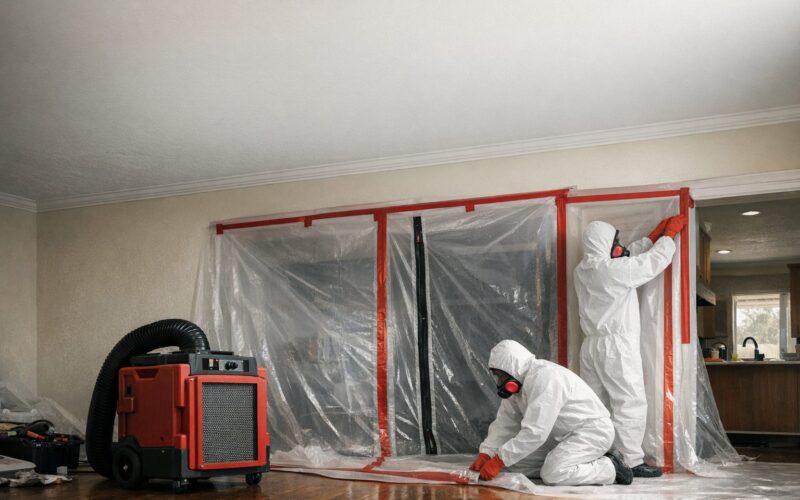
The bathroom is isolated with plastic sheeting and negative air pressure to prevent spore release into the rest of the home during demolition and remediation. HEPA-filtered air scrubbers run continuously.
Demolition
Tile, backer board, and water-damaged drywall are removed to expose the wall cavity. Wet or mold-damaged insulation is removed. In many cases, mold growth extends beyond the immediate shower area into adjacent walls, requiring expanded demolition.
Remediation and Treatment
- All mold-affected framing is cleaned by HEPA vacuuming, sanding, or media blasting
- Antimicrobial treatment is applied to all exposed framing and subfloor
- Framing is dried to acceptable moisture levels using targeted drying equipment
- Any structurally compromised framing is sistered or replaced
Reconstruction with Proper Waterproofing
This is the critical step that prevents recurrence. Reconstruction should include:
- Cement board substrate (never paper-faced drywall in wet areas)
- Liquid-applied or sheet membrane waterproofing on all shower wall and floor surfaces
- Proper sealing at all penetrations, corners, and transitions
- Quality installation of tile, grout, and caulk with appropriate materials for wet environments
Post-Remediation Verification
Independent air quality testing confirms that mold spore levels have returned to normal before the project is considered complete.
Preventing Shower Wall Mold in Florida
Licensed mold remediation with containment, HEPA filtration, and clearance-ready documentation. Get a real price range before anyone starts cutting drywall.
Proactive maintenance can prevent mold from establishing behind your shower walls:
- Inspect grout and caulk annually. Replace cracked, crumbling, or missing grout. Remove old caulk and reapply at all seams, corners, and transitions.
- Use the bathroom exhaust fan during every shower and for 20 to 30 minutes afterward. Ensure the fan actually vents to the exterior, not into the attic.
- Squeegee shower walls after use to remove water from tile surfaces before it can work into grout joints.
- Monitor the wall on the other side of the shower for staining, soft spots, or musty odors.
- Address loose tiles immediately. A loose tile means water is getting behind it.
- Keep indoor humidity below 60 percent to reduce moisture stress on bathroom surfaces.
Get Professional Help — Call WrightWay
If you suspect mold behind your shower walls — musty odors, loose tiles, staining on adjacent walls, or recurring surface mold that will not stay away — WrightWay Emergency Services provides expert mold inspection, testing, remediation, and bathroom reconstruction across Sarasota, Fort Myers, Naples, and all of Southwest Florida.
Call us at (941) 379-8669 to schedule a shower mold assessment. We will determine the extent of the problem and develop a remediation and reconstruction plan that eliminates the mold and prevents it from coming back.
WrightWay handles every restoration job from emergency response through licensed reconstruction.
One IICRC-certified team, one project manager, one phone call. Available 24/7 across Sarasota, Manatee, Charlotte, Lee, and Collier counties.