

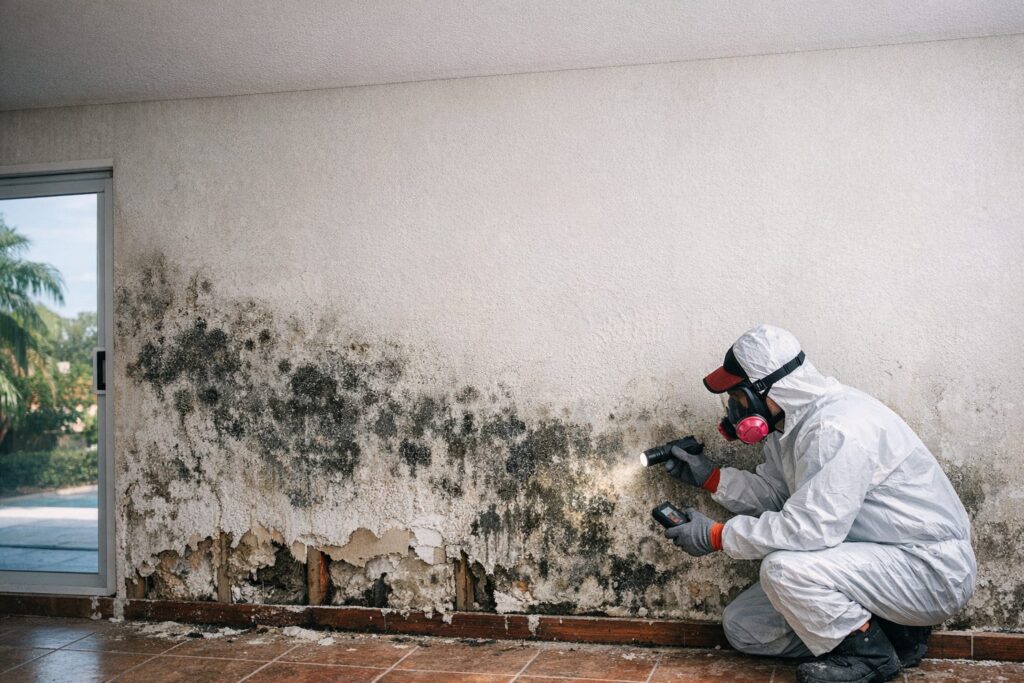
Preventing Mold Growth After Water Damage in Florida
In Florida’s warm, humid climate, mold growth after water damage is not just possible : it is virtually certain if moisture is not addressed within 24 to 48 hours. The combination of warm temperatures (typically 75 to 95 degrees year-round) and high ambient humidity creates ideal conditions for rapid mold colonization. At WrightWay Emergency Services, mold prevention is a core part of every water damage restoration project we handle across SW Florida.
The 24-to-48-Hour Window
Mold spores are naturally present in all indoor and outdoor environments. They only become a problem when they land on a wet surface with organic material to feed on : which describes nearly every building material in your home. Research shows that mold colonization can begin within 24 hours under optimal conditions, and by 48 hours, visible mold growth may already be present on drywall, wood, and other cellulose-based materials.
Immediate Steps to Take (First 4 Hours)
- Stop the water source: If the water damage is from a plumbing leak or appliance failure, shut off the water supply immediately. For storm damage, this step may not be possible until the weather passes.
- Remove standing water: Use a wet vacuum, mop, or towels to remove as much standing water as possible. For significant flooding, call a professional restoration company with extraction equipment.
- Move wet contents: Remove saturated furniture, rugs, and belongings from the affected area. Place aluminum foil or plastic blocks under furniture legs on wet carpeting to prevent staining.
- Increase airflow: Open interior doors and use fans to begin air circulation. However, do not open windows if outdoor humidity is higher than indoor humidity, which is common in Florida.
Professional Mold Prevention Steps
A professional restoration company takes mold prevention significantly further:
- Commercial-grade extraction: Truck-mounted and portable extractors remove water from carpet, padding, and hard floors far more effectively than consumer equipment
- Controlled drying: Industrial dehumidifiers reduce indoor humidity below 40 percent : a level that inhibits mold growth : while air movers accelerate evaporation from wet materials
- Antimicrobial treatment: EPA-registered antimicrobial solutions are applied to all affected surfaces, including the back side of drywall, subfloor, and framing, to inhibit mold growth during the drying process
- Moisture monitoring: Daily moisture readings verify that materials are drying on schedule and identify any areas where moisture is lingering
- Targeted demolition: When materials are too saturated to dry effectively : particularly drywall, insulation, and carpet padding : removing them eliminates the substrate mold needs to grow
Materials Most Susceptible to Mold
Some building materials support mold growth more readily than others. Prioritize drying these materials first:
- Paper-faced drywall (both the paper face and paper backing)
- Carpet and carpet padding
- Ceiling tiles
- Cardboard and paper products
- Wood framing and subfloor (especially OSB and plywood)
- Insulation (fiberglass batts with kraft paper backing)
When Mold Prevention Becomes Mold Remediation
Despite best efforts, if mold growth is discovered during the water damage restoration process, the project transitions from prevention to mold remediation. Under Florida law, mold remediation must be performed by a licensed MRSR (Mold-Related Services Registration) contractor and must follow the IICRC S520 Standard for Professional Mold Remediation. The remediation process includes full containment of the affected area, HEPA air filtration, removal of mold-contaminated materials, antimicrobial treatment, and post-remediation verification by an independent licensed mold assessor. This process adds 3 to 7 days and $3,000 to $10,000 or more to the overall restoration cost : which is why preventing mold through immediate water damage response is so much more cost-effective than remediating it after the fact.
Long-Term Mold Prevention
After the immediate water damage is addressed, take these steps to prevent future mold issues in your SW Florida home:
- Fix any ongoing moisture sources : leaking pipes, poor drainage, condensation on cold surfaces, and improperly sealed windows
- Maintain indoor humidity below 60 percent (ideally 30 to 50 percent) using air conditioning and dehumidification. In SW Florida, running your air conditioning consistently is one of the most effective mold prevention tools : it both cools the air and removes humidity.
- Ensure proper ventilation in bathrooms, kitchens, and laundry areas. Bathroom exhaust fans should vent to the exterior, not into the attic : attic-vented bathroom fans are a common source of mold growth we encounter in Sarasota and Lee County homes.
- Inspect under sinks, behind appliances, and around water heaters regularly for early signs of leaks. A quick monthly check takes five minutes and can catch problems before they become restoration projects.
- Keep HVAC systems properly maintained : dirty coils, clogged drain lines, and poor insulation on ductwork are leading causes of moisture problems in Florida homes
If you have experienced water damage, do not wait. Call WrightWay Emergency Services at (941) 379-8669 for immediate response. Our IICRC-certified team responds within 60 to 90 minutes throughout Sarasota, Fort Myers, Naples, and surrounding communities to begin extraction and mold prevention before the 24-to-48-hour window closes.
WrightWay handles every restoration job from emergency response through licensed reconstruction.
One IICRC-certified team, one project manager, one phone call. Available 24/7 across Sarasota, Manatee, Charlotte, Lee, and Collier counties.


