Emergency Response: Burst Pipe in Your Home
Need restoration help in Southwest Florida right now? WrightWay dispatches in 60 to 90 minutes from three Florida offices, and we answer with a live human.
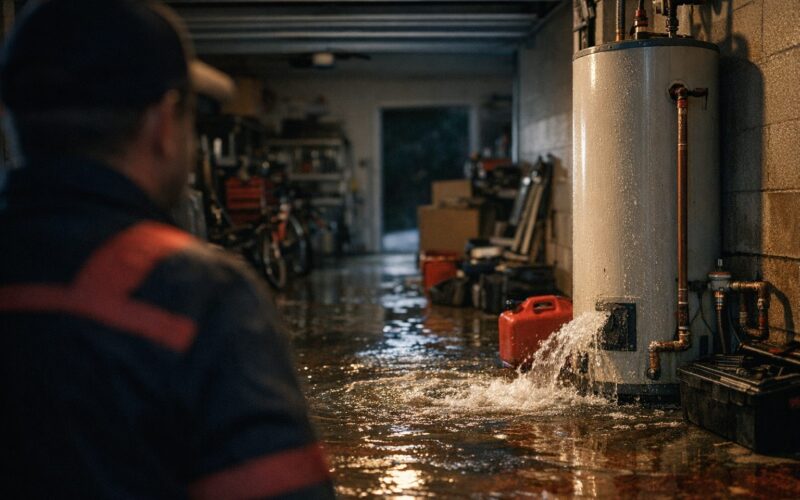
A burst pipe can release 4 to 8 gallons of water per minute : that is up to 500 gallons per hour flooding your home. In the time it takes to drive to the hardware store for supplies, an uncontrolled pipe burst can saturate walls, destroy flooring, and cause thousands of dollars in damage. The actions you take in the first 30 minutes can mean the difference between a manageable cleanup and a catastrophic loss.
Florida homes are particularly vulnerable to pipe bursts due to our high water pressure, corrosive water chemistry in some municipalities, and the polybutylene piping found in many homes built between 1978 and 1995. Here is your minute-by-minute action plan from the restoration professionals at WrightWay Emergency Services.
Minutes 0-5: Stop the Water Flow
Your immediate priority is stopping the flow of water. Every minute of delay means 4-8 more gallons flooding your home:
- Locate your main water shutoff valve : in most Florida homes, this is near the water meter at the front of the property or where the supply line enters the home through the garage or utility closet
- Turn it clockwise to close : if it is a ball valve (lever handle), turn the handle perpendicular to the pipe. If it is a gate valve (round handle), turn it clockwise until it stops.
- If you cannot find or operate the main shutoff, turn off the water at the meter using a meter key (available at any hardware store for approximately $10). Every Florida homeowner should own one and know where their meter is located.
- If the burst is isolated to a specific fixture, close the nearest shutoff valve : under sinks, behind toilets, or on the supply lines to the water heater or washing machine
Minutes 5-10: Eliminate Electrical Hazards
Water and electricity are a lethal combination. Before wading into standing water or touching anything wet:
- If water is near electrical outlets, switches, appliances, or your breaker panel, do NOT step into the water
- If you can safely access your electrical panel without crossing standing water, turn off power to all affected areas at the breaker
- If you cannot safely reach the panel, call your utility company to disconnect power from outside
- Even after power is off, do not touch any electrical equipment or wiring that is wet or submerged
- If in doubt about safety, wait for professionals : no possession is worth an electrocution risk
Minutes 10-20: Protect Your Belongings
Once the water is stopped and electrical hazards are addressed, focus on salvaging what you can:
- Move electronics, computers, important documents, photo albums, and valuables to dry areas or upper floors
- Lift furniture legs onto aluminum foil squares, plastic blocks, or styrofoam to prevent wood staining and water wicking
- Remove area rugs and throw rugs from wet floors before they absorb water and become too heavy to move
- Open cabinet doors and closet doors to allow airflow into enclosed spaces where water may have penetrated
- Move items off closet floors and out of the bottom of cabinets
- Begin photographing and documenting the damage for your insurance claim
Minutes 20-30: Begin Active Mitigation
While waiting for professional help, every bit of water you remove reduces the overall damage:
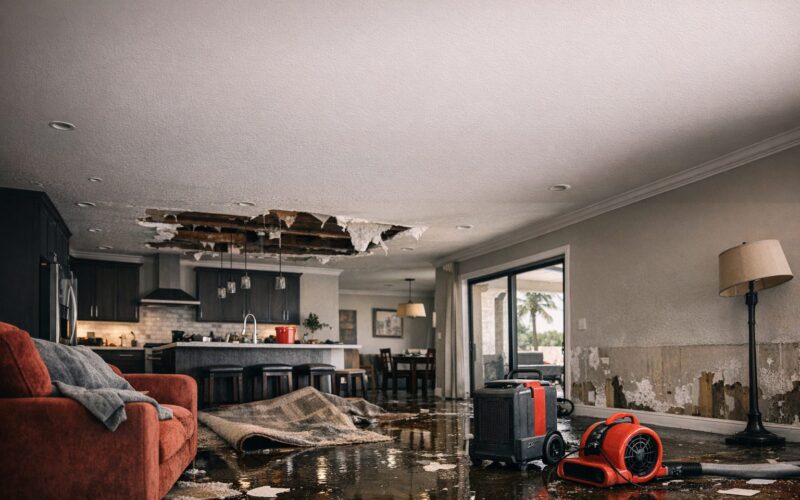
- Use towels, mops, or a wet-dry vacuum to remove standing water from hard surfaces
- Open windows for ventilation if the weather permits and outdoor humidity is below 60%
- Turn on ceiling fans, box fans, and your HVAC system on fan mode to begin air circulation
- If you have a dehumidifier, set it running in the most affected area
- Call a professional restoration company for emergency water extraction : do not wait until morning or until “it does not seem that bad”
What NOT to Do After a Pipe Burst
In the panic of a pipe burst, homeowners commonly make mistakes that increase damage and cost:
- Do not use a regular household vacuum : standard vacuums are not designed for water. They will short-circuit, potentially electrocuting you, and the motor will be destroyed.
- Do not assume it will dry on its own : in Florida’s humidity, “letting it dry naturally” leads to mold growth within 24-48 hours. The moisture trapped inside walls, under flooring, and within cabinets will not evaporate without professional structural drying equipment.
- Do not wait until morning : every hour of delay increases damage exponentially. Water wicks further into materials, saturates more of the structure, and brings you closer to the 24-hour mold window.
- Do not pull up flooring yourself : hardwood and engineered flooring can often be saved with professional drying if treated within the first 12-24 hours. Pulling it up prematurely guarantees a full replacement.
- Do not forget to document : your insurance claim depends on evidence. Take photos and video of the damage, the source of the burst, and the water spread before cleanup begins.
Common Causes of Pipe Bursts in Florida
Understanding why pipes burst in Florida can help you prevent future incidents:
- Polybutylene piping : homes built between 1978 and 1995 often contain this now-banned plastic pipe that deteriorates from chlorine exposure
- High water pressure : Florida municipal water pressure often exceeds 80 PSI, stressing pipe joints and fittings
- Corrosion : copper pipes in areas with aggressive water chemistry develop pinhole leaks that eventually become bursts
- Water heater failures : aging water heaters can rupture catastrophically, releasing 40-80 gallons instantly
- Appliance hose failures : rubber supply hoses for washing machines, dishwashers, and refrigerator ice makers degrade over time
WrightWay Emergency Services responds to pipe burst emergencies 24/7 across Southwest Florida with an average response time under 2 hours. Our truck-mounted extraction units can remove water faster than any rental equipment. Call (941) 379-8669 immediately : every minute matters.
WrightWay handles every restoration job from emergency response through licensed reconstruction.
One IICRC-certified team, one project manager, one phone call. Available 24/7 across Sarasota, Manatee, Charlotte, Lee, and Collier counties.
Add us as a preferred source and our storm updates, claim guides and restoration answers show up higher when you search.