

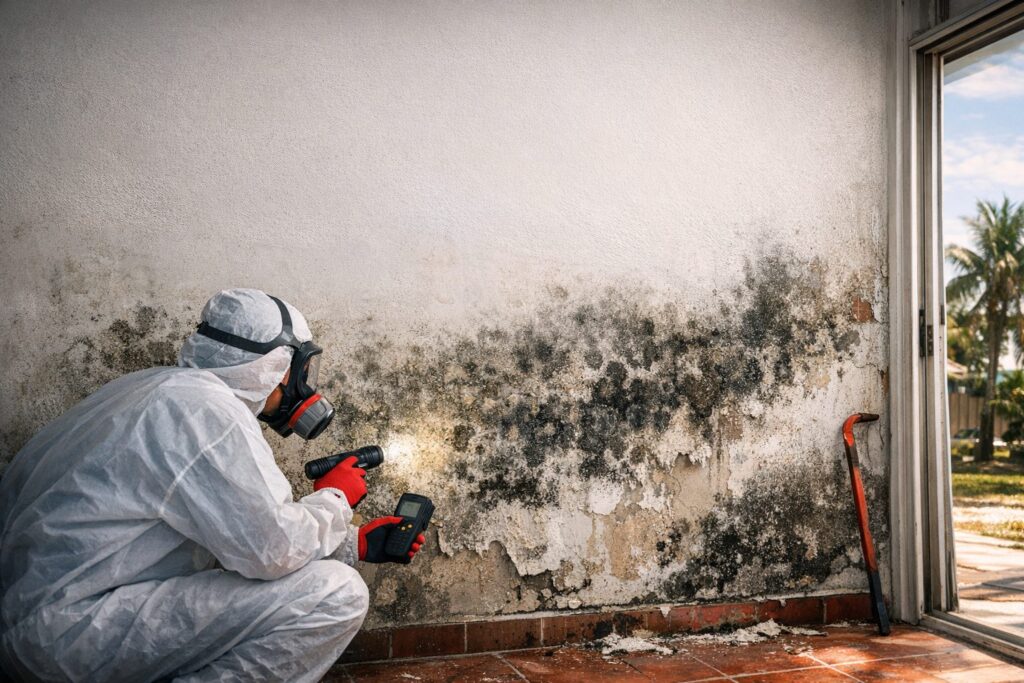
Understanding the Difference Between Black Mold and Common Mold
The term “black mold” causes immediate alarm for most homeowners, but the reality is more nuanced than headlines suggest. While some mold species do produce mycotoxins that pose health risks, not every dark-colored mold is the dreaded Stachybotrys chartarum. As a Florida homeowner dealing with 70 to 80 percent ambient humidity year-round, understanding the differences can save you from both unnecessary panic and dangerous complacency. At WrightWay Emergency Services, our IICRC-certified Applied Microbial Remediation Technicians (AMRT) encounter and remediate every type of mold found in SW Florida homes : and the species our lab results identify most often may surprise you.
What Is Black Mold (Stachybotrys)?
Stachybotrys chartarum, commonly called “toxic black mold,” is a greenish-black mold that thrives on materials with high cellulose content : drywall paper, ceiling tiles, cardboard, and wood : when they remain continuously wet. It grows more slowly than most other mold species and typically requires sustained moisture over a period of one to two weeks before it begins to colonize. It produces mycotoxins called satratoxins and is associated with more severe health symptoms than common household molds.
In our experience across Sarasota, Lee, Charlotte, and Collier counties, Stachybotrys accounts for a relatively small percentage of the mold we encounter. It requires very specific conditions : persistent, uninterrupted moisture on cellulose materials : which is why it is most commonly found behind walls with chronic plumbing leaks or in areas that experienced flooding and were never properly dried.
Common Mold Species in Florida Homes
Florida homes more frequently host these mold species, many of which can also appear dark in color:
- Cladosporium: Olive-green to brown, commonly found on fabrics, wood, and HVAC systems. One of the most common outdoor and indoor molds in Florida. Our technicians frequently find it growing on the supply registers and inside the ductwork of homes where the HVAC system is undersized or where condensation forms on poorly insulated ducts in the attic.
- Aspergillus: Can appear black, green, yellow, or white. Found on walls, insulation, and paper products. Some species produce aflatoxins. Aspergillus niger, in particular, appears dark black and is one of the most commonly misidentified molds : homeowners see it and immediately assume it is Stachybotrys.
- Penicillium: Blue-green to gray, often found on water-damaged carpeting, wallpaper, and insulation. Spreads rapidly in humid environments and produces a strong musty odor.
- Alternaria: Dark gray to black with a velvet-like texture. Commonly grows in showers, under sinks, and around window frames where condensation collects.
- Chaetomium: Initially white, maturing to olive or brown-black. Frequently found on severely water-damaged drywall and has a distinctive musty odor. Often grows alongside Stachybotrys in the same conditions.
Health Effects: How They Compare
All mold species can trigger allergic reactions, including sneezing, runny nose, eye irritation, and skin rashes. However, the health risks differ by species and individual sensitivity:
- Common molds: Allergic reactions, asthma exacerbation, and respiratory irritation in sensitive individuals
- Stachybotrys: Same allergic symptoms plus potential for more severe respiratory issues, chronic fatigue, headaches, and neurological symptoms with prolonged exposure
- Aspergillus: Certain species can cause aspergillosis, a serious lung infection, particularly in people with compromised immune systems or chronic lung conditions
- Immunocompromised individuals: All mold species pose elevated risks for people with weakened immune systems, transplant recipients, and those undergoing chemotherapy
Note that the CDC, EPA, and Florida Department of Health all recommend treating any significant mold growth as a health concern regardless of species. You do not need to confirm Stachybotrys to justify professional remediation : the health risks from any large mold colony are real and should be taken seriously.
Why You Cannot Identify Mold by Color Alone
Visual identification of mold species is unreliable. Many common molds appear black, and Stachybotrys does not always look distinctly different from Aspergillus niger or dark Cladosporium. The only way to confirm the species is through laboratory analysis : either an air sample or a physical sample sent to an accredited mycology lab. At WrightWay Emergency Services, we work with independent licensed mold assessors who collect samples following AIHA guidelines and use accredited labs for all mold identification. Under Florida Statute 468.8419, mold assessment (testing) and mold remediation (removal) must be performed by separately licensed entities to prevent conflicts of interest.
Florida’s Mold Remediation Regulations
Florida is one of the few states that licenses and regulates mold remediation contractors. Any company performing mold remediation in Florida must hold a valid MRSR (Mold-Related Services Registration) license issued by the DBPR. WrightWay Emergency Services maintains an active MRSR license and follows the IICRC S520 Standard for Professional Mold Remediation on every project. Always verify that your remediation contractor is properly licensed before allowing them to begin work.
When to Call a Professional
The Environmental Protection Agency recommends professional remediation when mold covers more than 10 square feet or when mold is present in HVAC systems. In Florida, we recommend calling a professional for any of these situations:
- Visible mold growth larger than a 3-foot by 3-foot area
- Mold growth on or inside walls, indicating hidden moisture
- Recurring mold after previous cleaning attempts
- Mold following a water damage event or flooding
- Occupants experiencing unexplained respiratory symptoms
- Any mold in an HVAC system, which can distribute spores throughout the entire home
Do not attempt to clean suspected Stachybotrys yourself. Disturbing toxic mold without proper containment releases spores into the air and can spread contamination throughout your home. Contact WrightWay Emergency Services at (941) 379-8669 for professional mold remediation across Sarasota, Manatee, Lee, Charlotte, and Collier counties. We coordinate with independent licensed mold assessors for testing and provide full containment, HEPA filtration, and post-remediation verification on every project.
WrightWay handles every restoration job from emergency response through licensed reconstruction.
One IICRC-certified team, one project manager, one phone call. Available 24/7 across Sarasota, Manatee, Charlotte, Lee, and Collier counties.


