Your Washing Machine Just Overflowed — Here Is Your Checklist
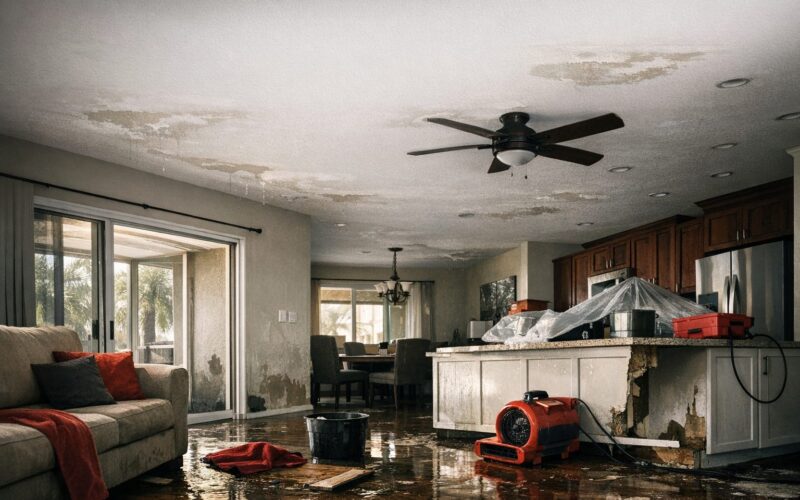
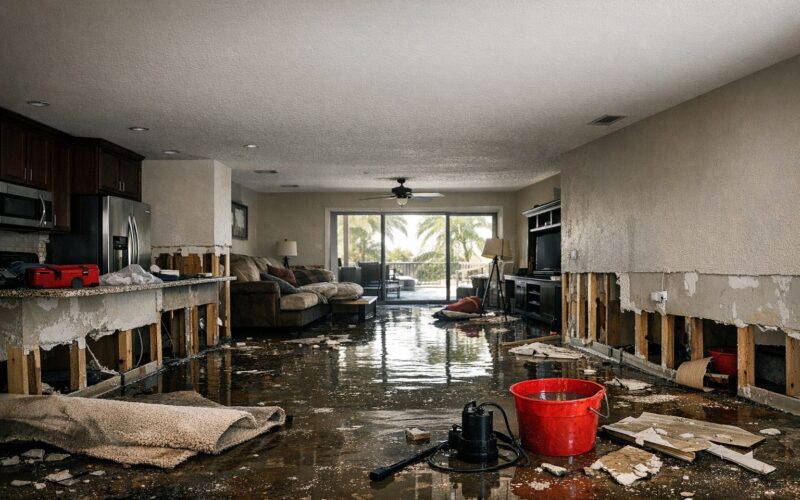
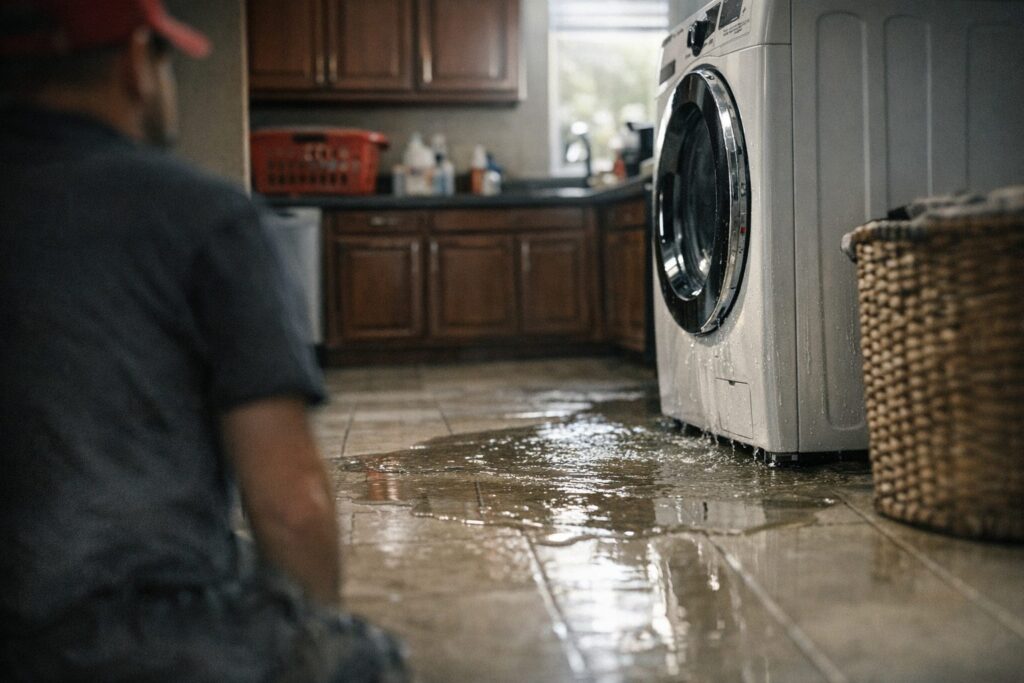
A washing machine overflow is one of the fastest ways to flood a home. Whether it is a burst supply hose, a clogged drain line, or a malfunctioning fill valve, a washing machine can release 15 to 30 gallons per cycle — and if a pressurized supply hose bursts, the flow is continuous until someone shuts it off, potentially dumping hundreds of gallons per hour onto your floor. If the washer is on the second floor, the damage multiplies as water cascades through the ceiling and into the rooms below.
This emergency response checklist from WrightWay Emergency Services gives you a step-by-step plan for the critical first minutes after discovering a washing machine overflow.
Emergency Response Checklist
Step 1: Stop the Water (Minutes 0-3)
Your number one priority is cutting off the water supply to the washing machine:
- Turn off the supply valves. Behind or beside the washing machine, you will find two valves (hot and cold) or a single-lever shutoff box. Turn both valves clockwise until tight, or move the lever to the off position.
- If the valves are stuck or inaccessible (the machine may be pushed against the wall over them), shut off the main water supply to the house. This stops all water flow.
- Cancel the wash cycle. Press the cancel or power button to stop the machine from agitating and introducing more water onto the floor.
- If the hose has burst, the water will keep flowing even after the machine is off — the supply valves are the only solution. Do not waste time unplugging the machine; shutting the valves is what stops the water.
Step 2: Electrical Safety (Minutes 3-5)
- Do not step in standing water that may be in contact with electrical outlets, power cords, or the machine itself.
- Turn off the circuit breaker for the laundry room at your electrical panel if water is near any electrical connections.
- Unplug the washing machine only if you can reach the plug safely without standing in water.
Step 3: Contain the Spread (Minutes 5-10)
With the water source stopped, focus on preventing water from reaching additional rooms:
- Block doorways with rolled towels or blankets to slow water migration into hallways and adjacent rooms.
- Check the floor below (if applicable). If the washing machine is on the second floor, check the ceiling and rooms directly below immediately. Water travels through floors faster than you expect.
- Move area rugs and valuables out of the water’s path. Wet area rugs on hardwood transfer dye and trap moisture.
Step 4: Remove Standing Water (Minutes 10-20)
- Use a wet/dry vacuum if you have one — it is the most effective DIY extraction tool.
- Mop and towels for smaller volumes. Wring towels into a bucket and keep cycling through them.
- Push water toward a drain if your laundry room has a floor drain (many Florida laundry rooms do not).
- Open the garage door if the laundry area is in or adjacent to the garage and water can drain out.
Step 5: Document the Damage (Minutes 20-30)
While the situation is fresh, document everything for your insurance claim:
- Photograph the washing machine, the failed component (burst hose, connection point), and the manufacturer’s label.
- Video the extent of water spread across every affected room.
- Photograph any visibly damaged flooring, walls, baseboards, and belongings.
- Save the failed hose or part — your insurance company or a product liability attorney may want to examine it.
- Note the date, time, and sequence of events while the details are fresh.
Step 6: Call for Professional Help
Call a professional restoration company to assess the damage and begin drying. Even if the visible water seems manageable, moisture behind walls, under flooring, and in subfloor material needs professional extraction and monitoring to prevent mold.
Call WrightWay Emergency Services at (941) 379-8669 — 24 hours a day, 7 days a week.
Common Causes of Washing Machine Overflows
Understanding why the overflow happened helps you prevent it from happening again:
Burst Supply Hose
The most catastrophic failure. Standard rubber supply hoses weaken from heat, constant pressure, and age. In Florida, where garage and laundry room temperatures can exceed 100 degrees in summer, rubber hoses degrade faster. A burst hose releases pressurized water at 40 to 80 PSI until someone shuts the valve — if you are not home, the flood continues for hours.
Fix: Replace rubber hoses with braided stainless steel supply hoses. Cost: under $20 for a pair. This single upgrade eliminates the most common and most destructive washing machine failure.
Clogged or Kinked Drain Hose
If the drain hose is kinked behind the machine, clogged with lint and debris, or not properly secured in the standpipe, drain water backs up and overflows onto the floor during the drain cycle.
Fix: Inspect the drain hose annually. Ensure it has a smooth curve (no sharp kinks) and is inserted 6 to 8 inches into the standpipe without being pushed in so far that it creates a seal.
Malfunctioning Fill Valve or Water Level Switch
The fill valve controls water flow into the tub, and the water level switch (pressure switch) tells the valve when to stop. If either fails, water continues flowing into the drum until it overflows through the door or drum seal.
Fix: If your washer overfills, have the fill valve and pressure switch tested and replaced. These are relatively inexpensive repairs.
Door Seal Failure (Front-Loading Machines)
The rubber gasket around a front-loader’s door degrades with use, heat, and mold. Cracks, tears, or accumulated debris on the seal allow water to leak during the wash and rinse cycles.
Fix: Wipe the door seal after every load to remove moisture and debris. Replace the gasket when you see cracks, tears, or the seal no longer sits flush against the door.
Second-Floor Laundry Rooms: Maximum Risk
Need restoration help in Southwest Florida right now? WrightWay dispatches in 60 to 90 minutes from three Florida offices, and we answer with a live human.
Second-floor laundry rooms are increasingly common in newer Florida homes, and they represent the highest-risk location for washing machine water damage. When a second-floor washer overflows or a supply hose bursts, water:
- Floods the laundry room floor
- Seeps through the subfloor and saturates the ceiling below
- Runs down interior wall cavities between floors
- Pools on the first floor, damaging flooring, baseboards, and furnishings
- Can affect electrical wiring and fixtures in the ceiling and walls between floors
A single burst hose on a second floor with no one home can result in $20,000 to $50,000 or more in damage. If you have a second-floor laundry room, stainless steel hoses, a water sensor with automatic shutoff, and a drain pan are not optional — they are essential.
Prevention Checklist for Washing Machine Water Damage
| Action | Frequency | Cost |
|---|---|---|
| Replace rubber hoses with braided stainless steel | Once (replace every 5 years) | $15-$25/pair |
| Install a water leak sensor behind machine | Once | $15-$30 |
| Install an automatic shutoff valve on supply lines | Once | $100-$250 |
| Install a drain pan under the machine | Once | $20-$40 |
| Inspect hoses for bulges, cracks, and corrosion | Every 3 months | Free |
| Turn off supply valves when washer is not in use | Every use | Free |
| Clean drain hose and lint trap | Annually | Free |
| Never leave home while washer is running | Every use | Free |
Washing Machine Flood? Call WrightWay Now.
If your washing machine has overflowed, burst a hose, or flooded your laundry room, the clock is ticking. In Florida’s humidity, saturated building materials develop mold within 24 to 48 hours. Prompt professional water extraction and drying is the difference between a manageable restoration and a major mold remediation project.
WrightWay Emergency Services responds across Sarasota, Bradenton, Fort Myers, Cape Coral, Naples, and all of Southwest Florida — 24/7, 365 days a year. Call (941) 379-8669 right now. We will be there fast.
WrightWay handles every restoration job from emergency response through licensed reconstruction.
One IICRC-certified team, one project manager, one phone call. Available 24/7 across Sarasota, Manatee, Charlotte, Lee, and Collier counties.