Why Emergency Board-Up and Tarping Is Not Optional
When a storm tears shingles off your roof, a fallen tree punches through a wall, or a fire leaves your property with broken windows and compromised openings, the initial damage is only the beginning. The real threat is what comes next: rain pouring through the exposed roof, wind-driven debris entering through broken windows, animals nesting in unprotected spaces, and opportunistic criminals targeting a visibly damaged property.
This cascading damage, known as secondary damage, often costs more than the original event. In Southwest Florida, where afternoon thunderstorms can follow a morning hurricane and humidity never takes a day off, an unsecured property can suffer tens of thousands of dollars in additional damage within 24 to 48 hours of the initial event.
Emergency board-up and tarping services are the critical first step in breaking that cycle of escalating damage.
What Counts as Secondary Damage
Secondary damage is any damage that occurs after the initial event because the property was left unsecured or unprotected. Insurance adjusters distinguish between primary damage (covered by your policy) and secondary damage (which your insurer may deny if you failed to mitigate). Common types of secondary damage include:
- Water intrusion through roof openings: Rain entering through missing shingles, holes, or compromised flashing saturates insulation, drywall, and structural framing
- Wind damage to interiors: Unprotected openings allow wind to enter the structure, creating internal pressure that can blow out additional walls, windows, and doors
- Mold growth: Moisture from rain intrusion or humidity entering through openings creates ideal conditions for mold colonization within 24 to 48 hours
- Theft and vandalism: Unsecured properties with visible damage are targets for looting, copper theft, and vandalism
- Animal intrusion: Birds, raccoons, squirrels, and insects enter through unprotected openings and cause additional damage
- UV and weather degradation: Exposed interior materials, furniture, and finishes deteriorate rapidly when exposed to sunlight, rain, and humidity
Types of Emergency Board-Up Services
WrightWay Emergency Services provides several types of board-up and tarping based on the nature of the damage:
Window and Door Board-Up
Broken or missing windows and doors are secured using structural-grade plywood cut to fit each opening. The plywood is fastened with screws (not nails) into the surrounding framing to ensure it can withstand wind loads. For commercial properties, we use impact-rated panels when specified by building codes or property managers.
Roof Tarping
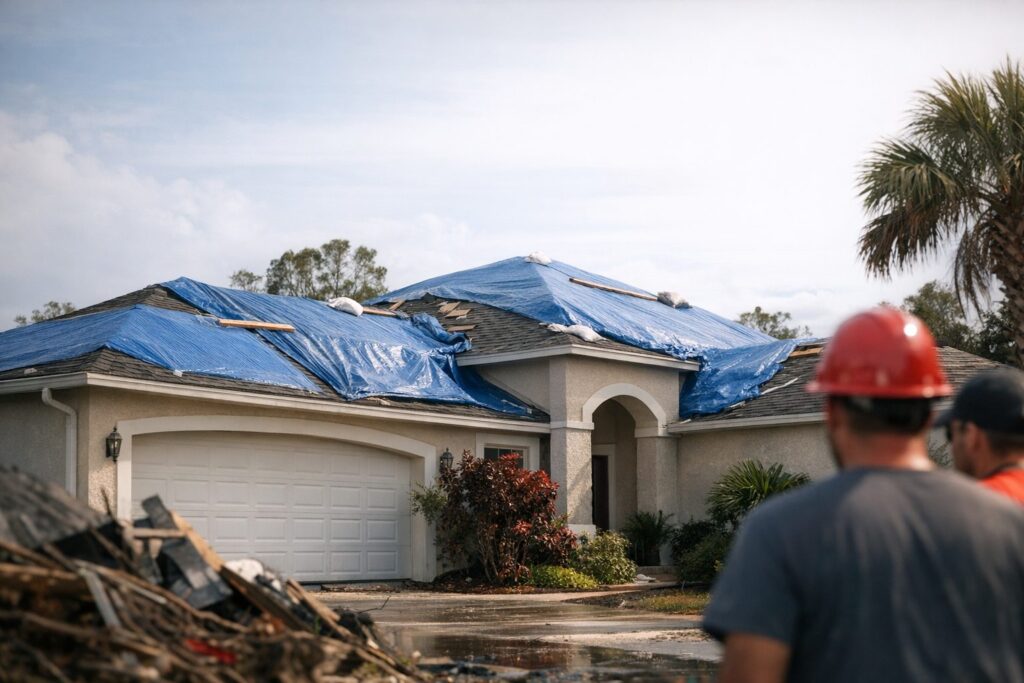
Damaged roof sections are covered with heavy-duty polyethylene tarps secured with furring strips screwed into the roof deck. Proper roof tarping is more than throwing a blue tarp over the hole. It requires:
- Extending the tarp at least four feet beyond the damaged area in all directions
- Securing the tarp at the ridge line to prevent wind from getting underneath
- Using furring strips (2×4 lumber) screwed through the tarp into solid roof decking
- Overlapping multiple tarps when the damaged area is large
- Ensuring proper drainage so water flows off the tarp rather than pooling
Wall and Structural Securing
When a vehicle impact, fallen tree, or explosion creates openings in exterior walls, the affected area is stabilized with temporary shoring and then enclosed with plywood barriers. If structural members are compromised, temporary supports are installed to prevent collapse while permanent repairs are planned.
Fire Damage Board-Up
After a fire, the structure often has multiple compromised openings: windows blown out by heat, doors removed by firefighters, and sections of roof burned through. Fire damage board-up also includes securing the property against unauthorized entry, as fire-damaged properties are frequently targeted by looters and scavengers.
The Board-Up Process Step by Step
When you call WrightWay for emergency board-up, here is what to expect:
- Rapid response: Our crews respond 24/7. We arrive with pre-cut plywood, tarps, fasteners, and all necessary tools so we can begin work immediately.
- Safety assessment: Before any work begins, the crew assesses the structural stability of the building, checks for electrical hazards, and identifies any other safety concerns.
- Damage documentation: All openings and damage are photographed and documented before securing. This documentation supports your insurance claim.
- Securing all openings: Every window, door, wall opening, and roof penetration is secured using appropriate materials and methods.
- Debris removal: Loose debris that poses a safety hazard or could cause further damage is removed from the immediate area.
- Final inspection: The crew performs a walk-around to verify all openings are secured and the property is as weathertight as possible given the damage.
- Owner notification: You receive a complete report with photos showing all work performed, the materials used, and recommendations for permanent repair.
Insurance and Board-Up: What You Need to Know
Need restoration help in Southwest Florida right now? WrightWay is on site in under 2 hours from three Florida offices, and we answer with a live human.
Most homeowner and commercial property insurance policies include a provision for emergency mitigation, which covers board-up and tarping costs. More importantly, most policies contain a clause requiring the policyholder to take reasonable steps to prevent further damage after a loss. Failing to secure your property could give your insurer grounds to deny coverage for secondary damage.
Key insurance points:
- Board-up costs are typically covered as part of the emergency mitigation portion of your claim
- You have a duty to mitigate: Your policy requires you to take reasonable steps to prevent further damage
- Documentation is essential: The photos and reports we provide become part of your claim file and demonstrate you fulfilled your mitigation duty
- Do not wait for adjuster approval before boarding up. Mitigation is expected to happen immediately; the adjuster review happens afterward
DIY Board-Up vs. Professional Service
In a post-storm scenario, hardware stores may be sold out of plywood, and you may be tempted to improvise with whatever materials you can find. While any covering is better than none, there are significant advantages to professional board-up:
| Factor | DIY Board-Up | Professional Service |
|---|---|---|
| Materials | Whatever is available | Pre-stocked structural plywood and commercial tarps |
| Wind resistance | Variable, often insufficient | Engineered for local wind loads |
| Roof work | Extremely dangerous for homeowners | Trained crew with safety equipment |
| Documentation | Self-documented, may be questioned | Professional documentation accepted by insurers |
| Speed | Hours for a single homeowner | Full crew secures property quickly |
| Liability | Homeowner assumes all risk | Licensed and insured company |
After Board-Up: What Comes Next
Board-up and tarping are temporary measures designed to stabilize your property until permanent repairs can begin. After securing the building, the next steps typically include:
- Detailed damage assessment to determine the full scope of repairs needed
- Insurance claim filing with complete documentation of all damage and emergency mitigation
- Water extraction and drying if rain or storm water entered the structure
- Permanent reconstruction through a licensed general contractor
WrightWay handles the entire process from emergency board-up through final reconstruction, providing a single point of accountability for your entire restoration project.
Do Not Wait — Secure Your Property Now
If your property has been damaged and the building envelope is compromised, every hour of delay increases the risk and cost of secondary damage. Call WrightWay Emergency Services at (941) 379-8669 for immediate board-up and tarping anywhere in SW Florida. We respond 24 hours a day, 7 days a week, with fully equipped crews ready to protect your property.
WrightWay handles every restoration job from emergency response through licensed reconstruction.
One IICRC-certified team, one project manager, one phone call. Available 24/7 across Sarasota, Manatee, Charlotte, Lee, and Collier counties.
Add us as a preferred source and our storm updates, claim guides and restoration answers show up higher when you search.